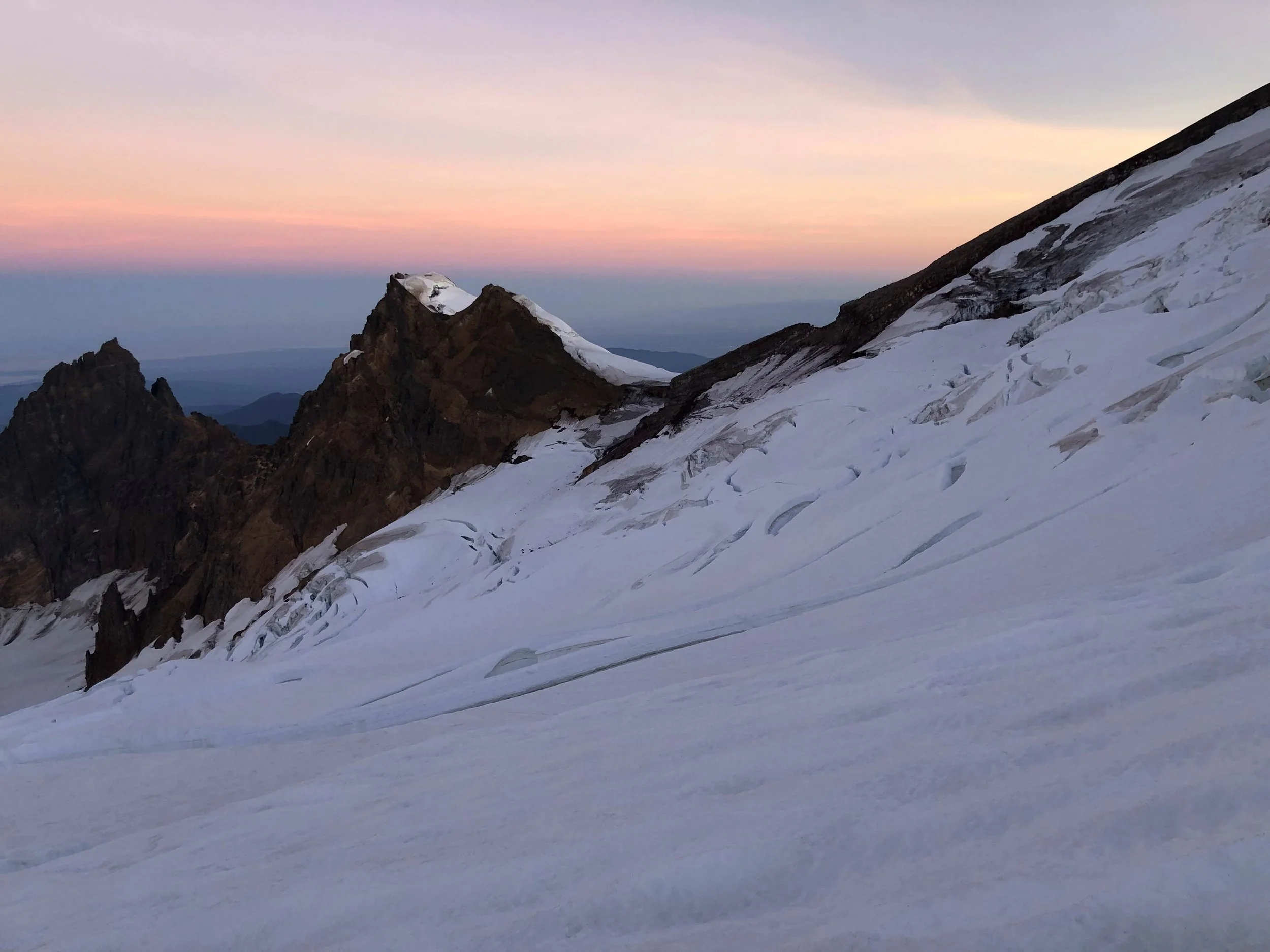
Mount Baker, also known as simply Kulshan, is a 10,781-foot active glacier-covered andesitic stratovolcano in the Cascade Volcanic Arc and the North Cascades of Washington State in the United StatesMount Baker
Iceland to the PNW: A Fast-and-Light Weekend Mission on Mount Baker’s Easton Glacier
Talk about a whirlwind weekend of logistics. In August 2023, I flew straight from Iceland to Seattle, spent a day exploring the city, and geared up for a classic Pacific Northwest mountaineering objective: Mount Baker via the Easton Glacier route.
The goal? A fast, lightweight, and efficient two-day push with my friend Michael. Here is exactly how we turned a tight timeline into a successful summit.
🧭 The Beta: Route Stats & Timeline
Route: Easton Glacier (South Side)
Distance (Approach): 5.5 miles
Elevation Gain (Approach): 3,500 feet
Approach Time: 5 hours (with plenty of rest breaks)
Summit Day Total: 11 hours round-trip (Camp ➡️ Summit ➡️ Camp ➡️ Trailhead)
🏃♀️ Day 1: The Approach & The Parking Lot Bivy
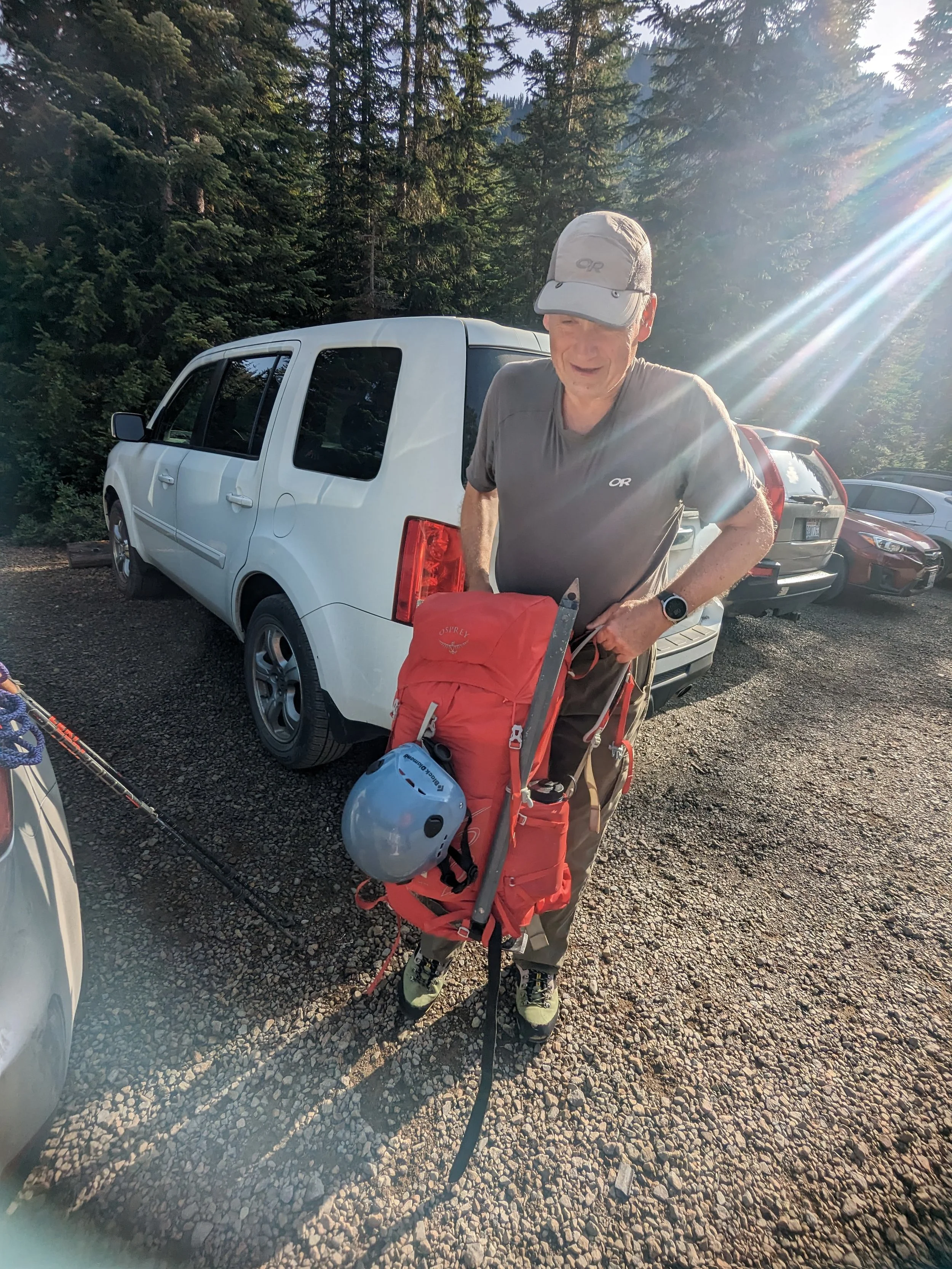
After Michael flew into Seattle the day after me, we grabbed a rental car and headed straight toward the mountain. To maximize our time, we bypassed fancy lodging and opted for a classic trailhead car-camp right at the Easton Glacier parking lot.
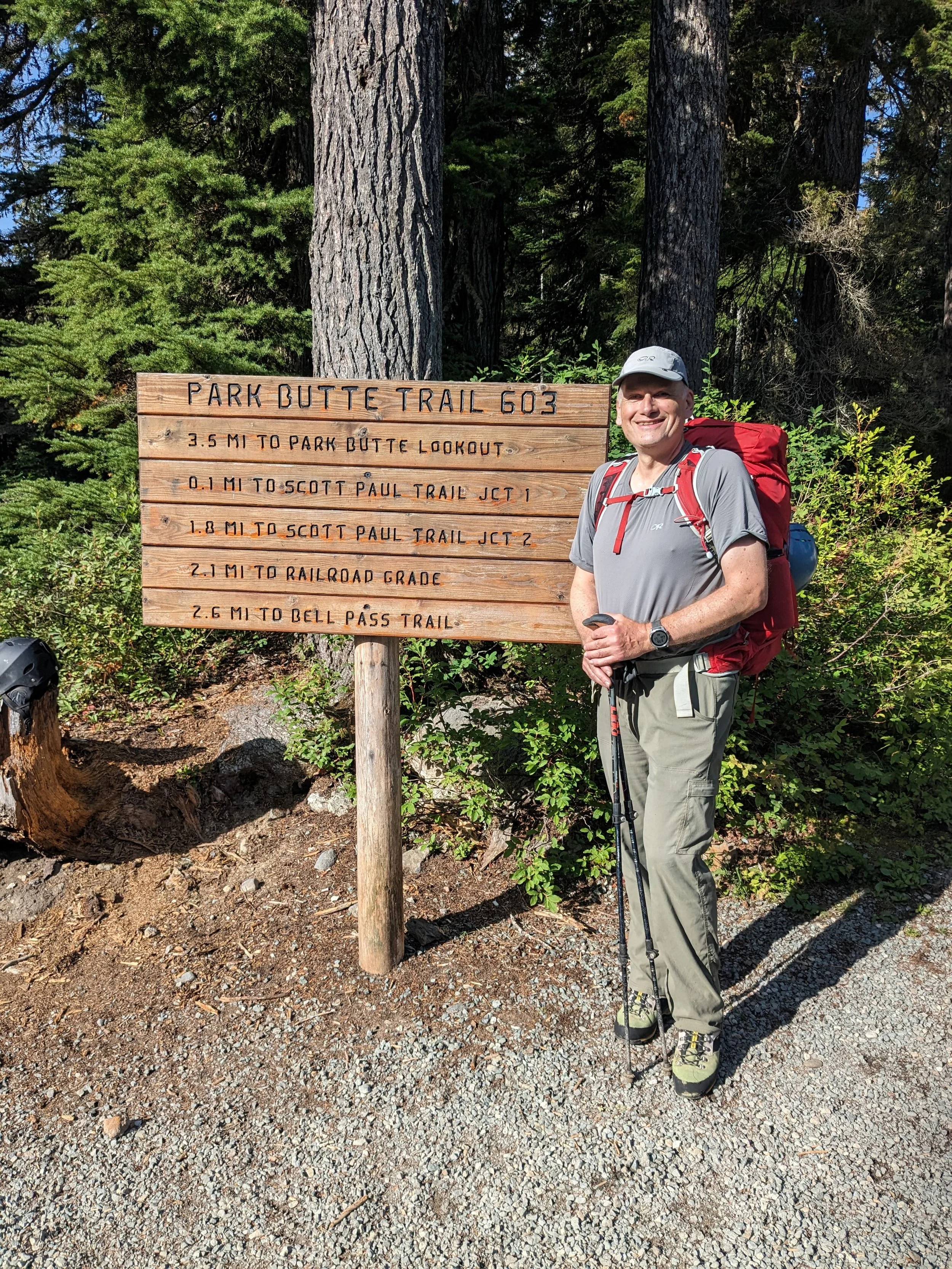
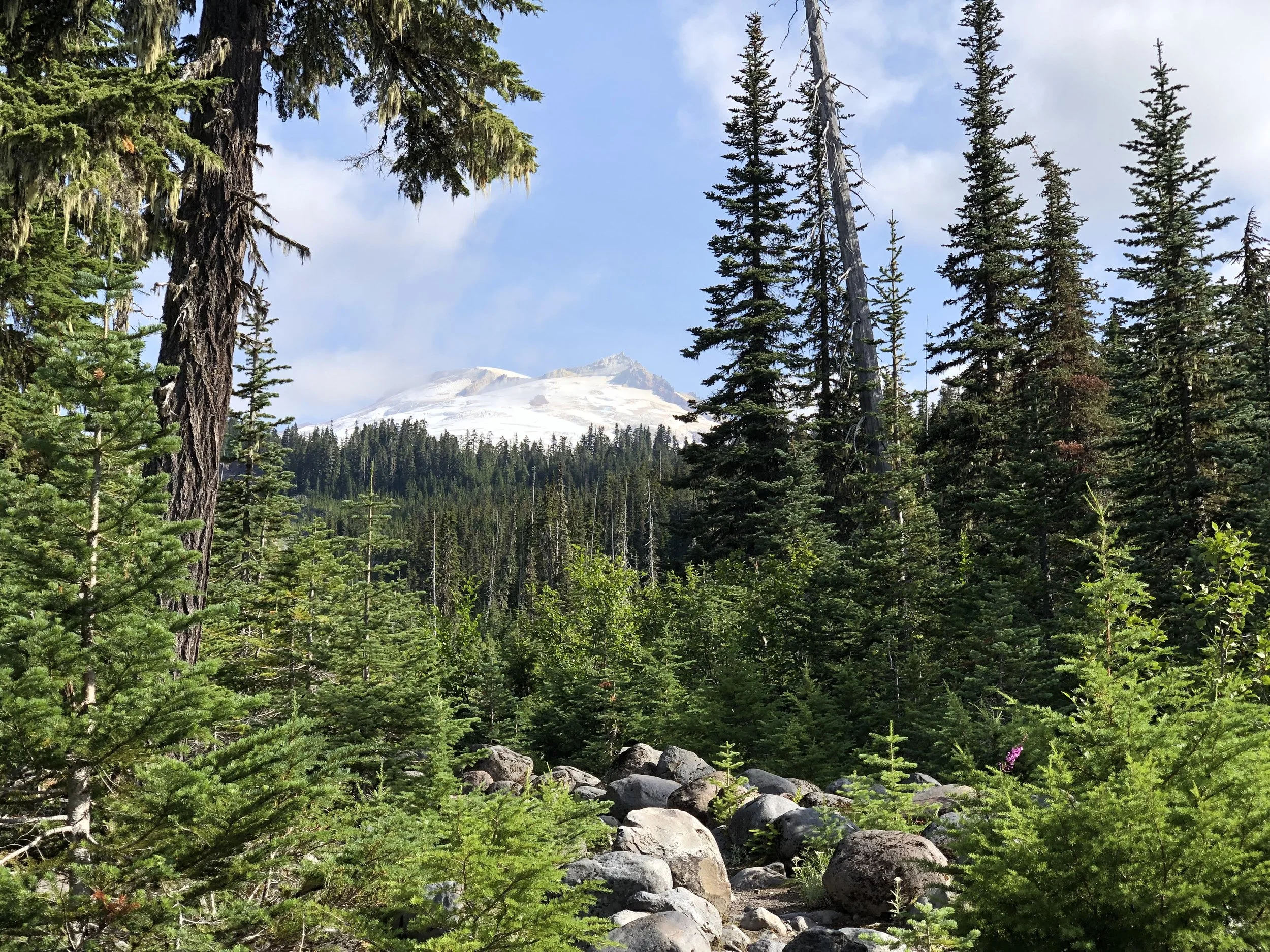
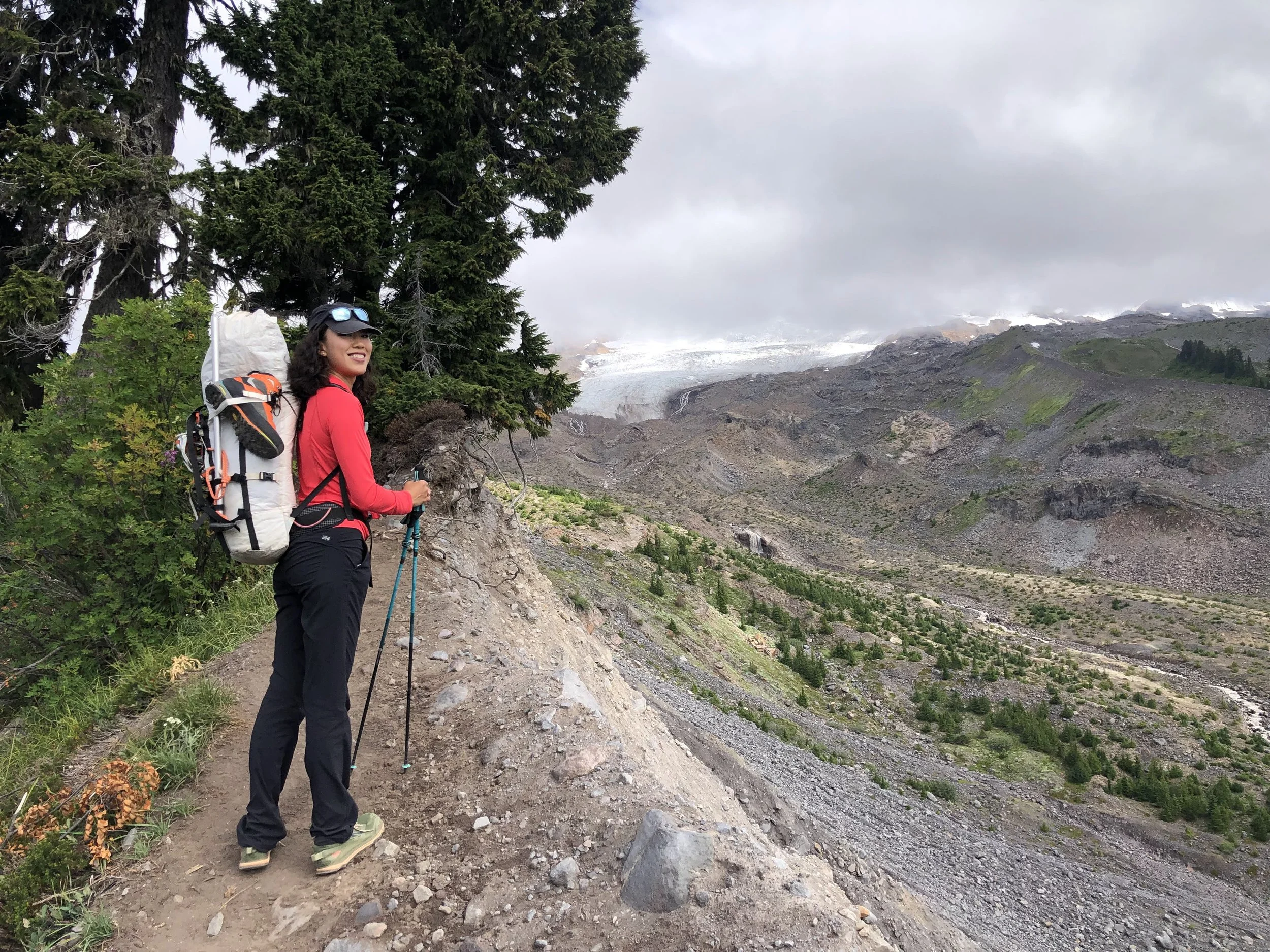
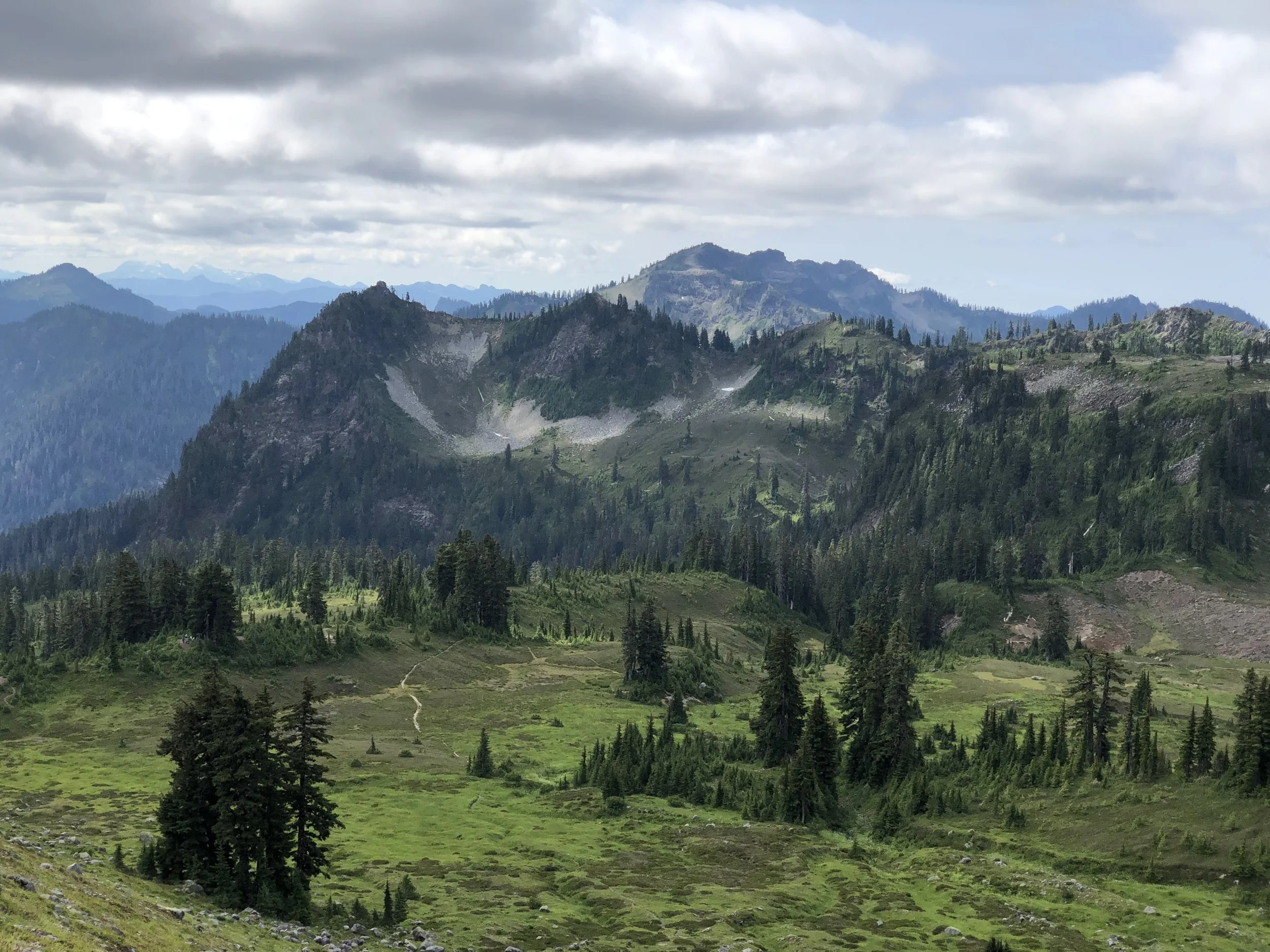
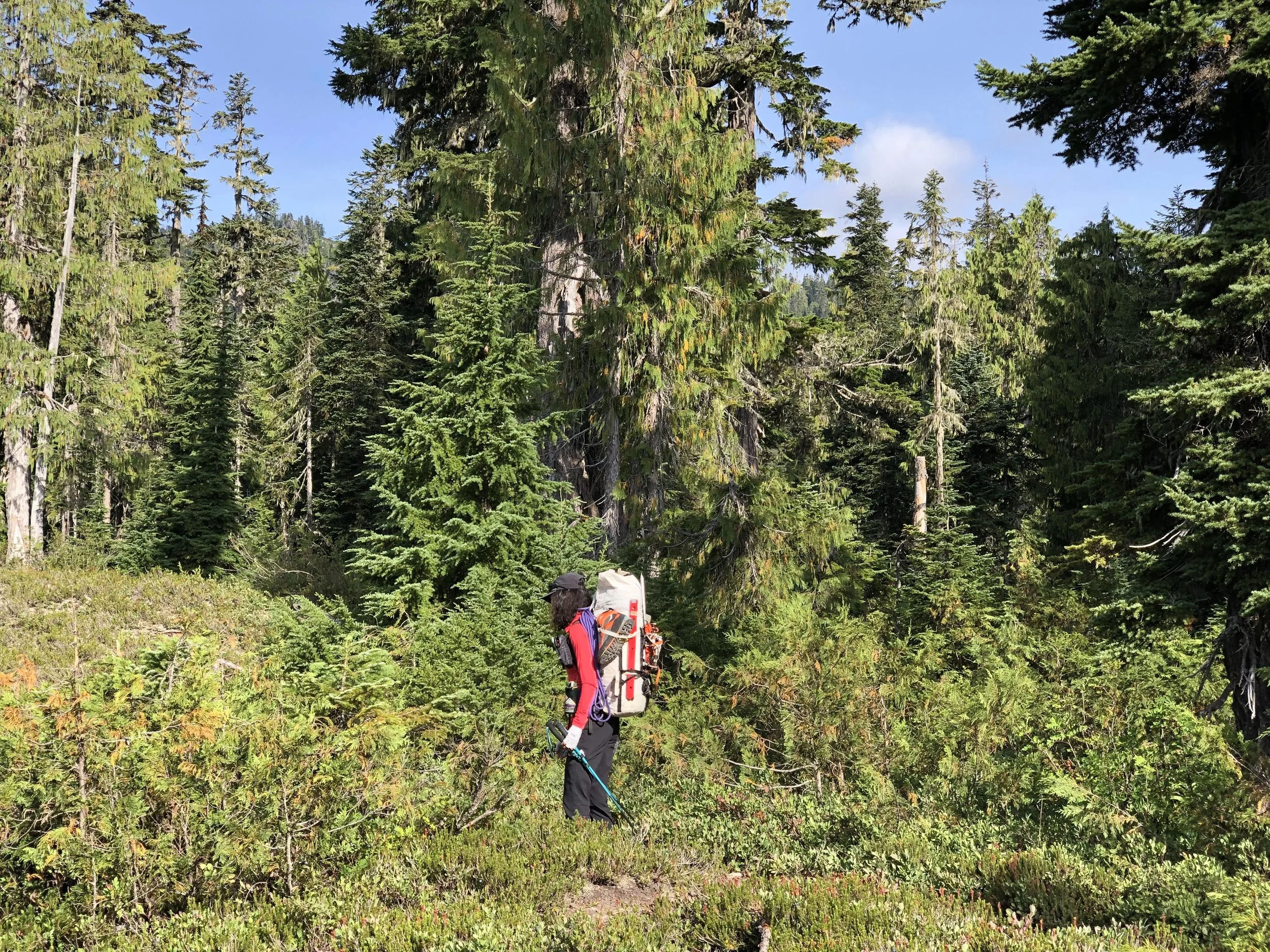
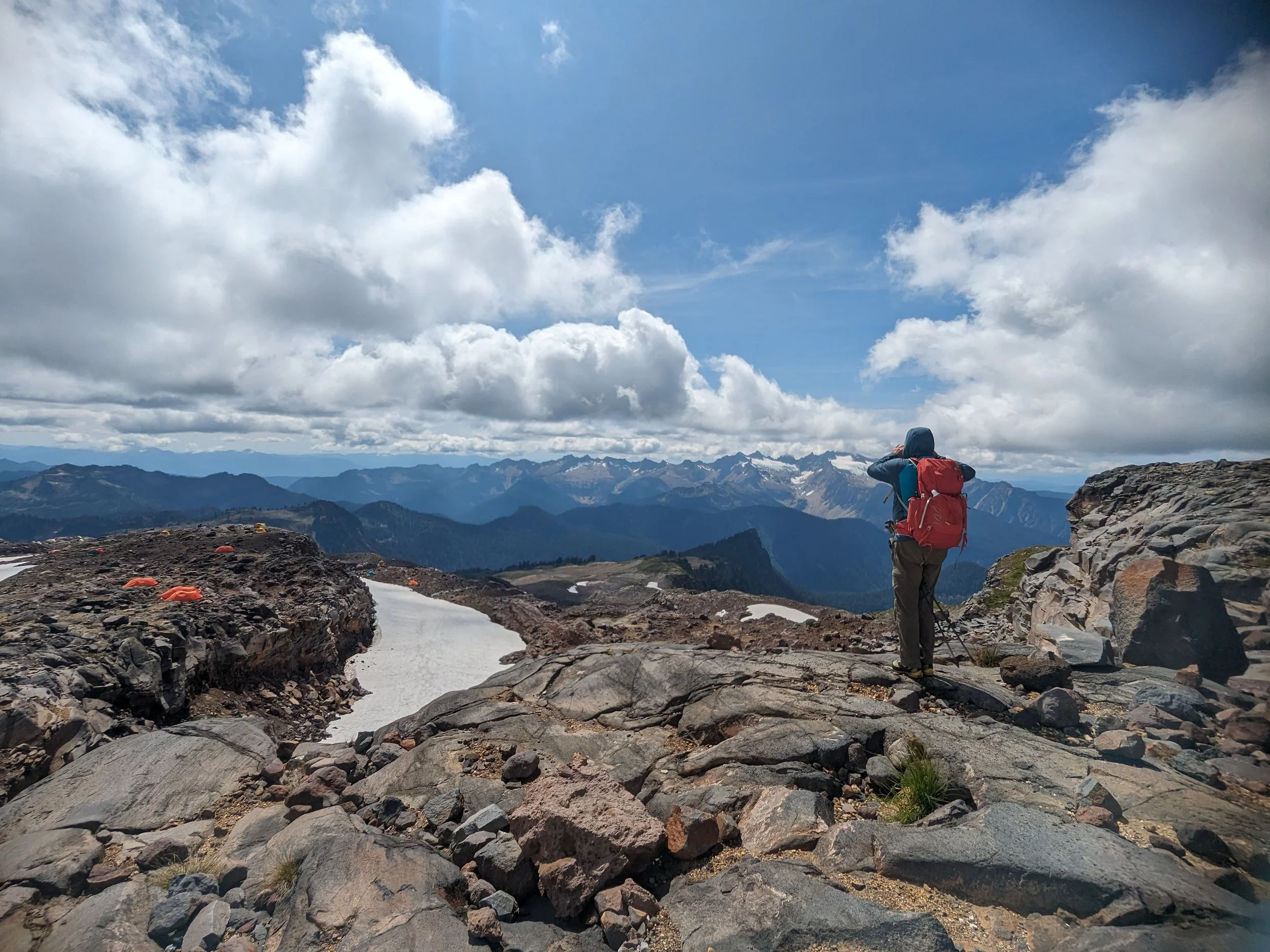
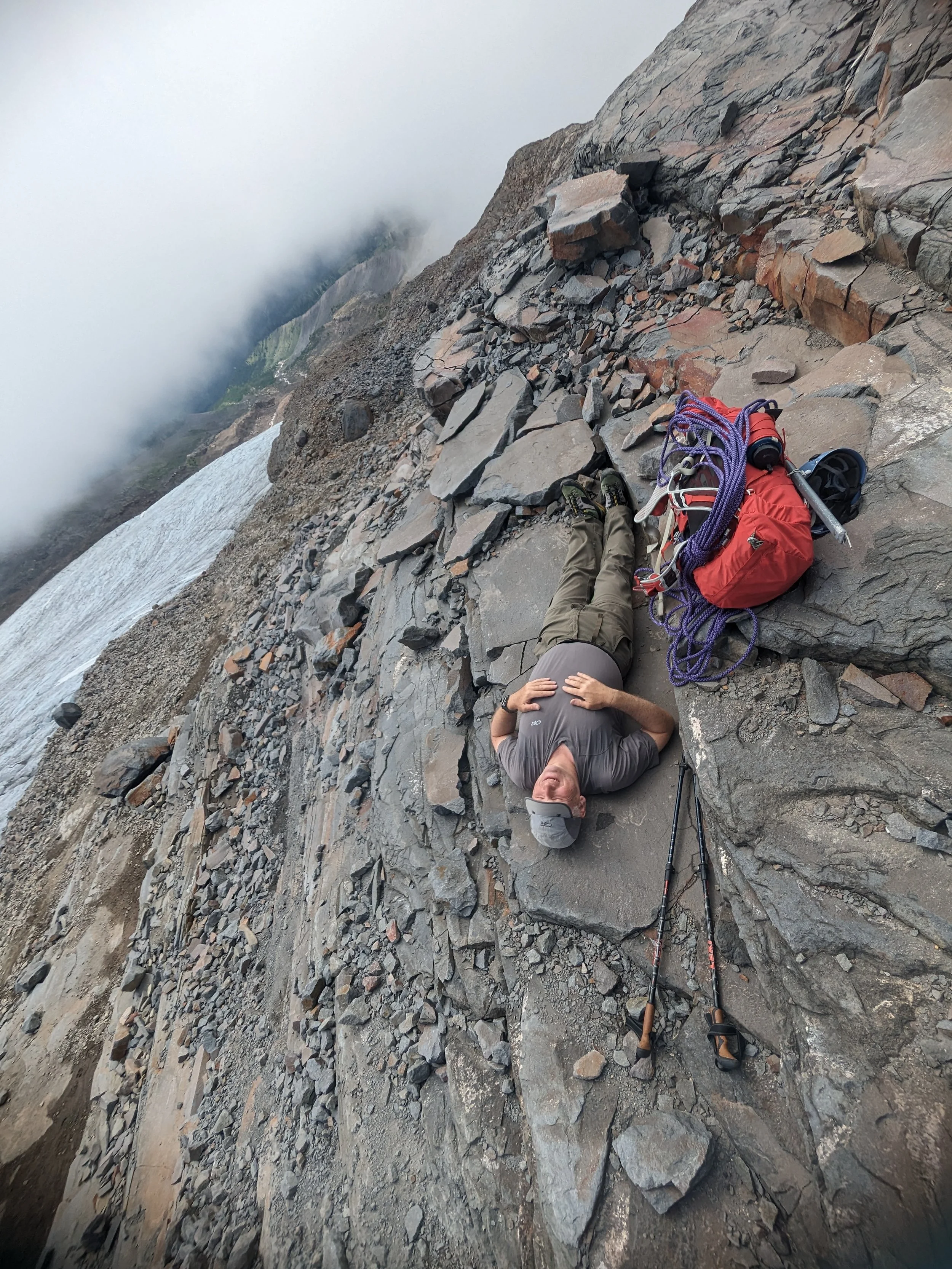
We hit the trail the next morning at 9:00 AM. The 5.5-mile approach carries you up 3,500 feet of steady gain. We took our time, enjoyed plenty of breaks, and reached high camp in about 5 hours. Our home for the night was a stunning bivy site looking directly out at the massive, sweeping glaciers.
🎒 Ultralight Strategy: Cold-Soaking
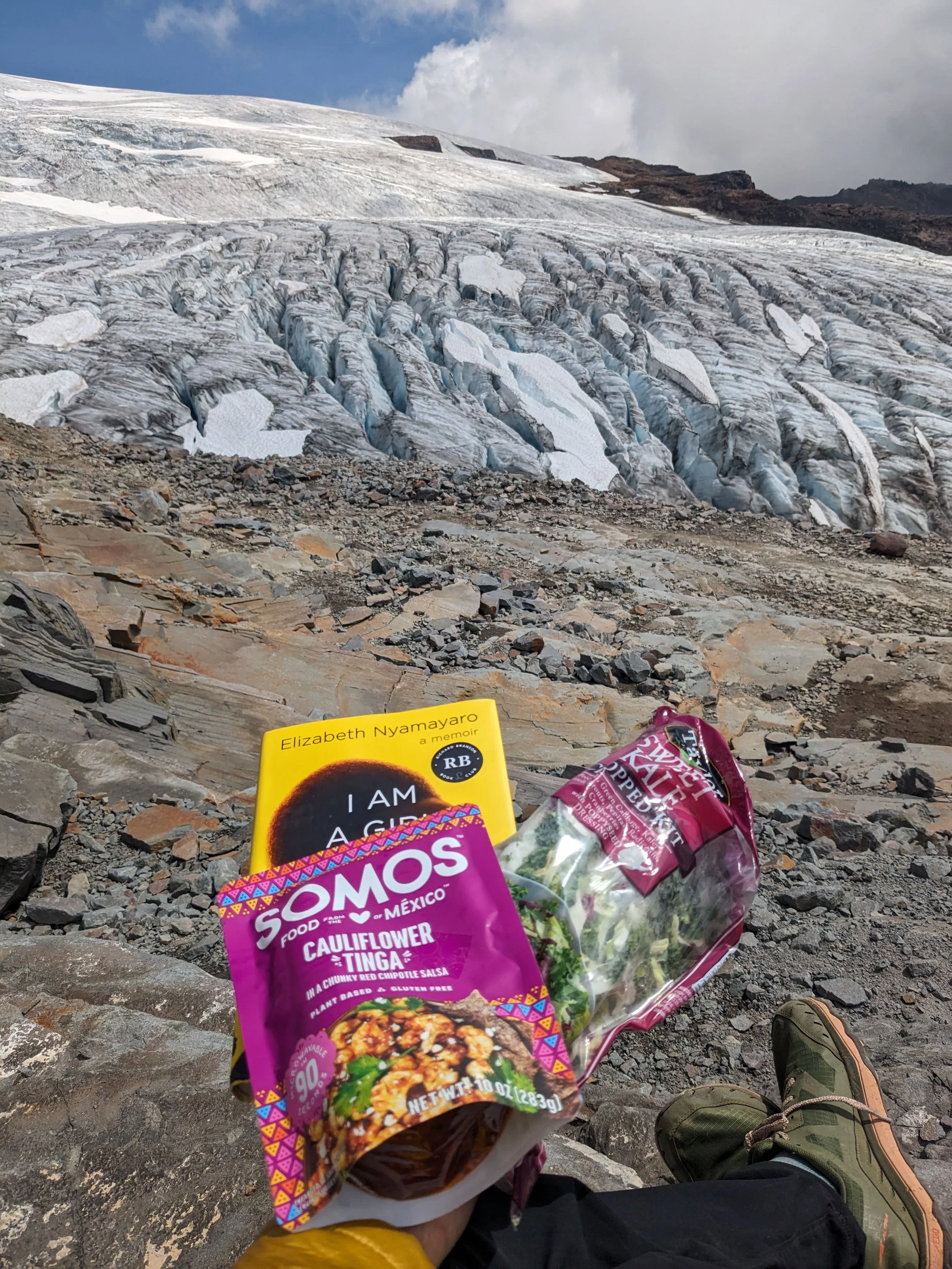
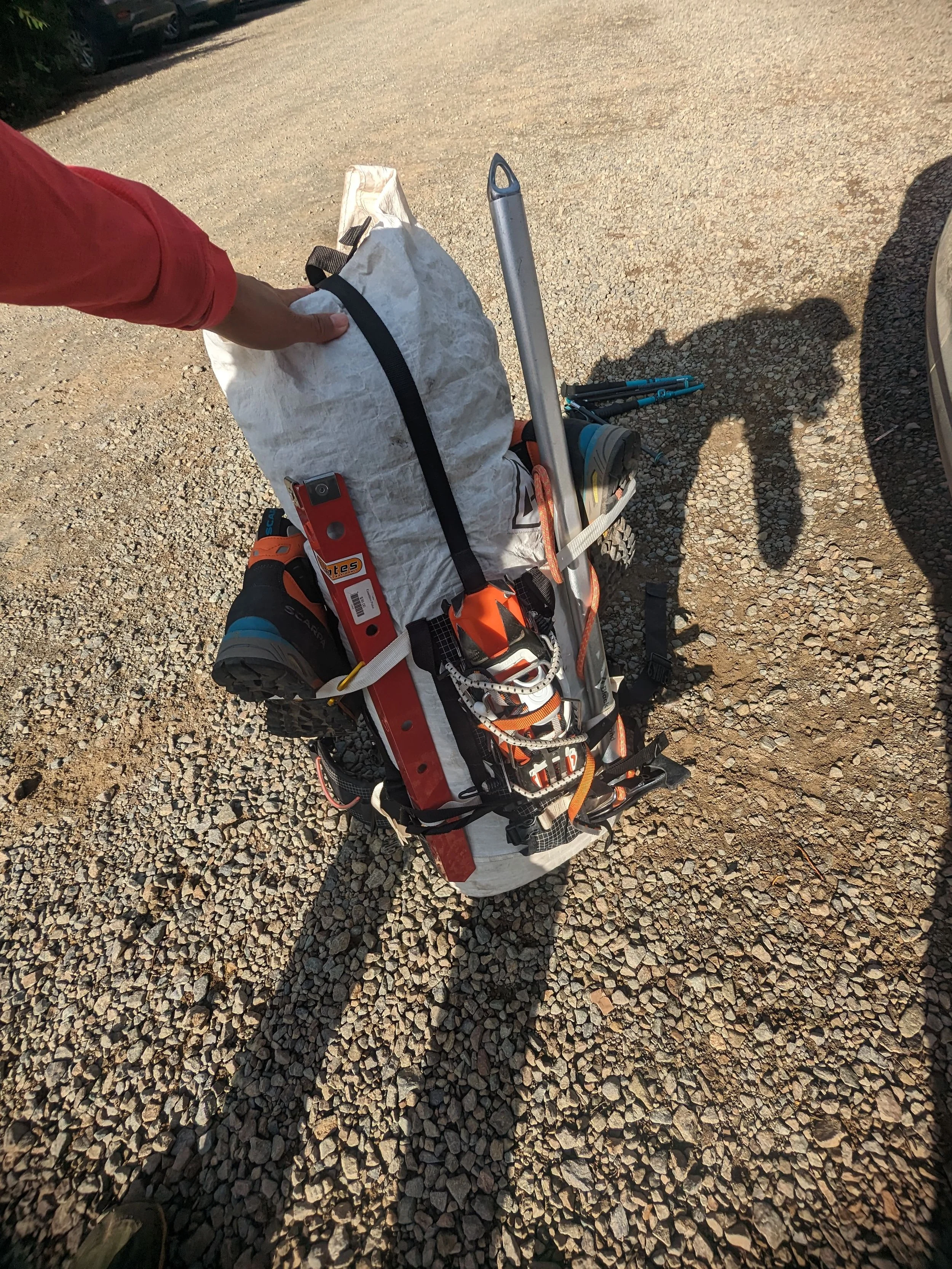
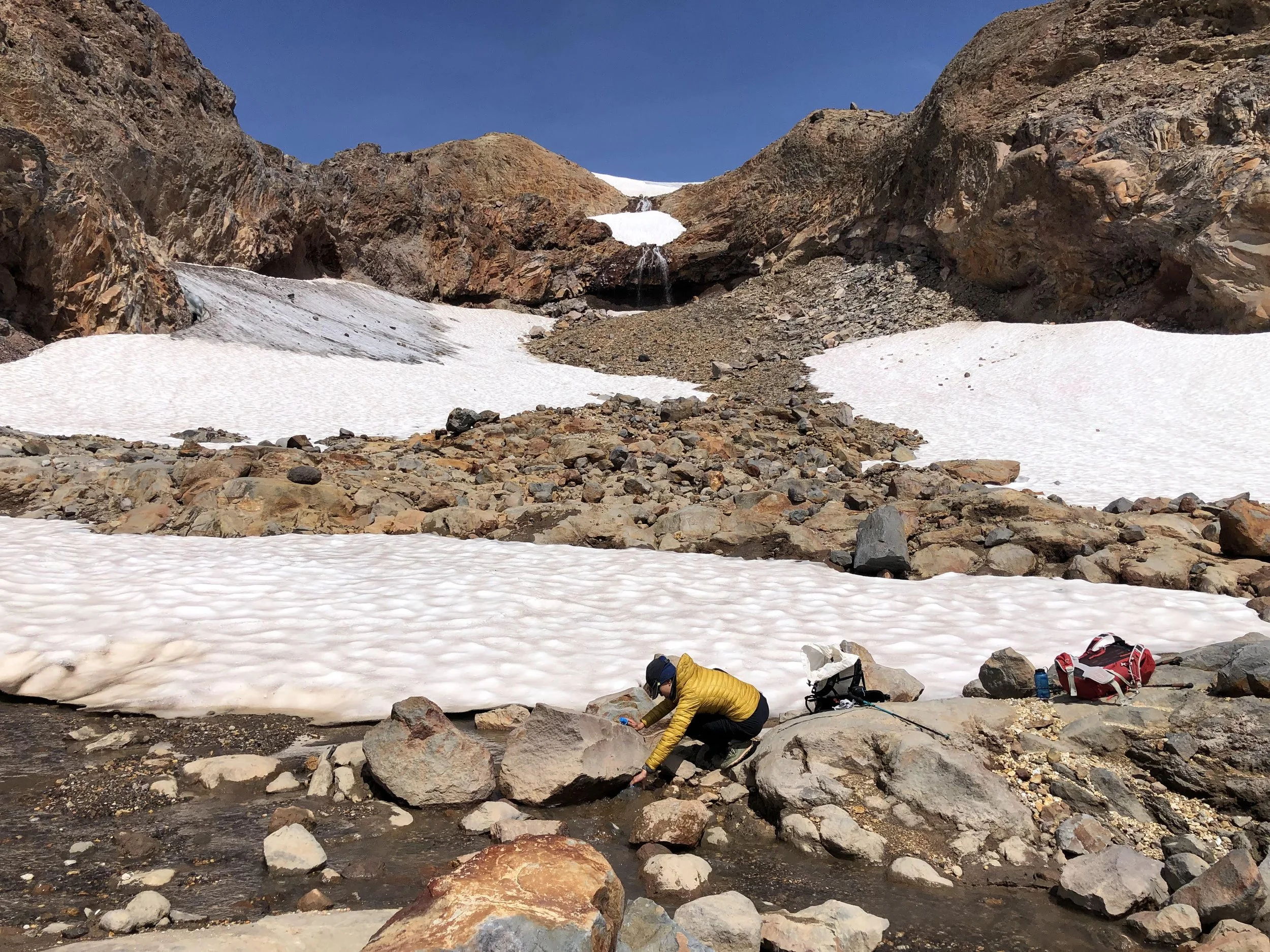
To keep our packs as light as possible for the quick turnaround, we left the stove behind. No fuel, no burner, no heavy pots. Instead, I ate ready made meals of salads in a bag. Honestly? When you’re sitting at a high alpine bivy looking at a volcano, these fresh foods taste like a five-star dinner.
🏔️ Day 2: 2:30 AM Alpine Start & First on the Summit
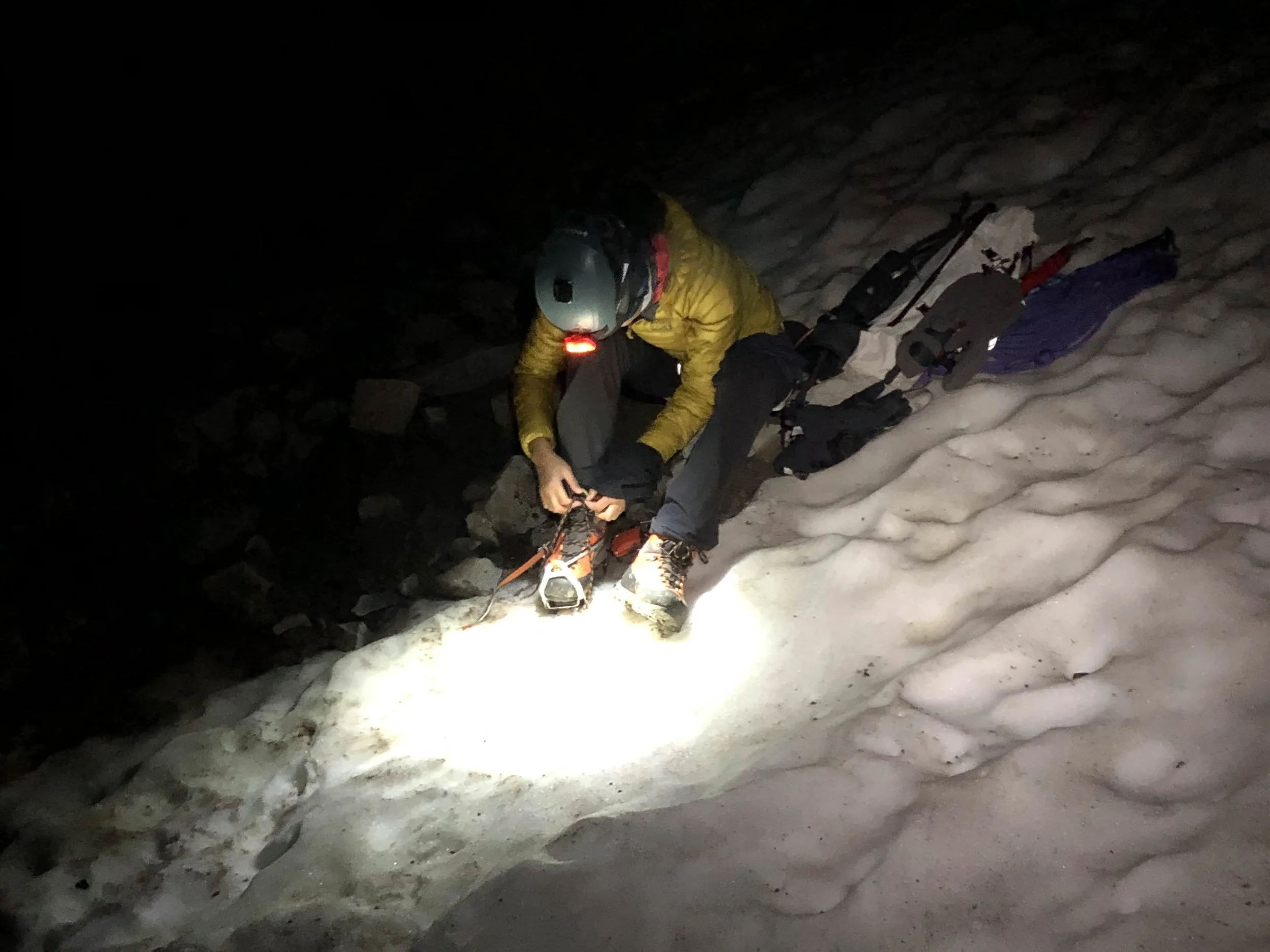
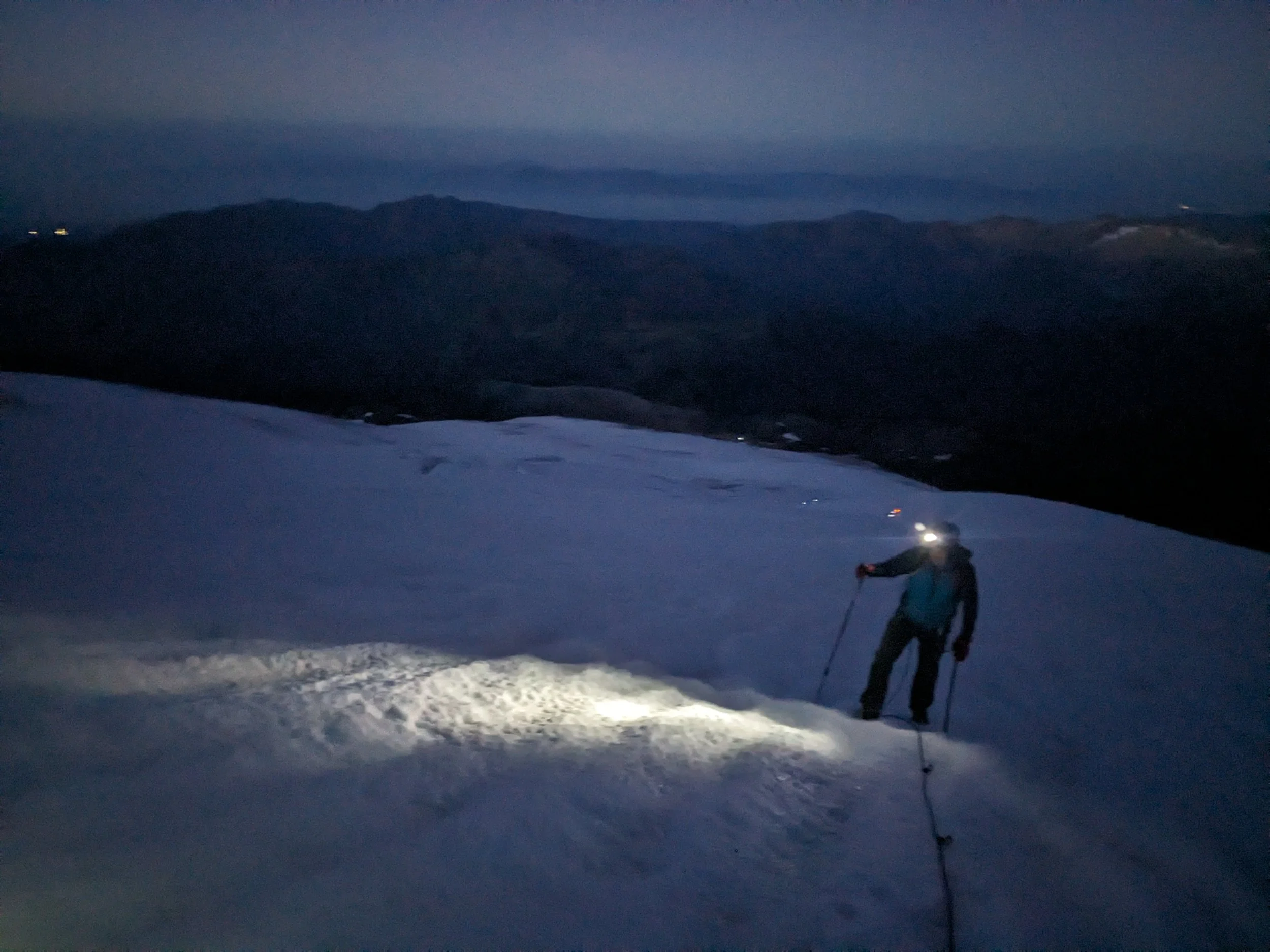
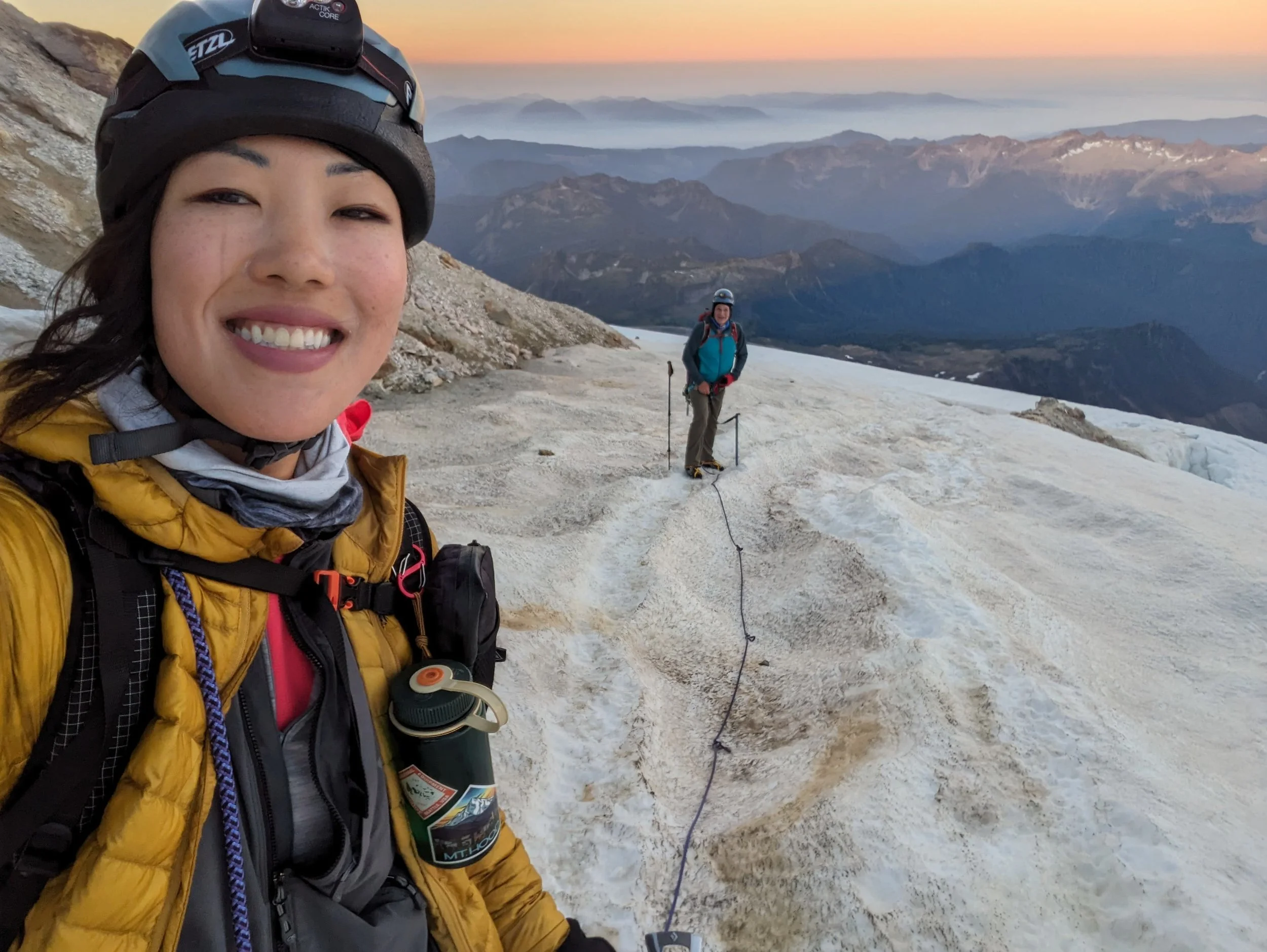
Our alarms shattered the silence early, and we were roped up and moving by 2:30 AM.
Lower & Middle Glacier (~3–4 miles | ~3,000 ft gain)
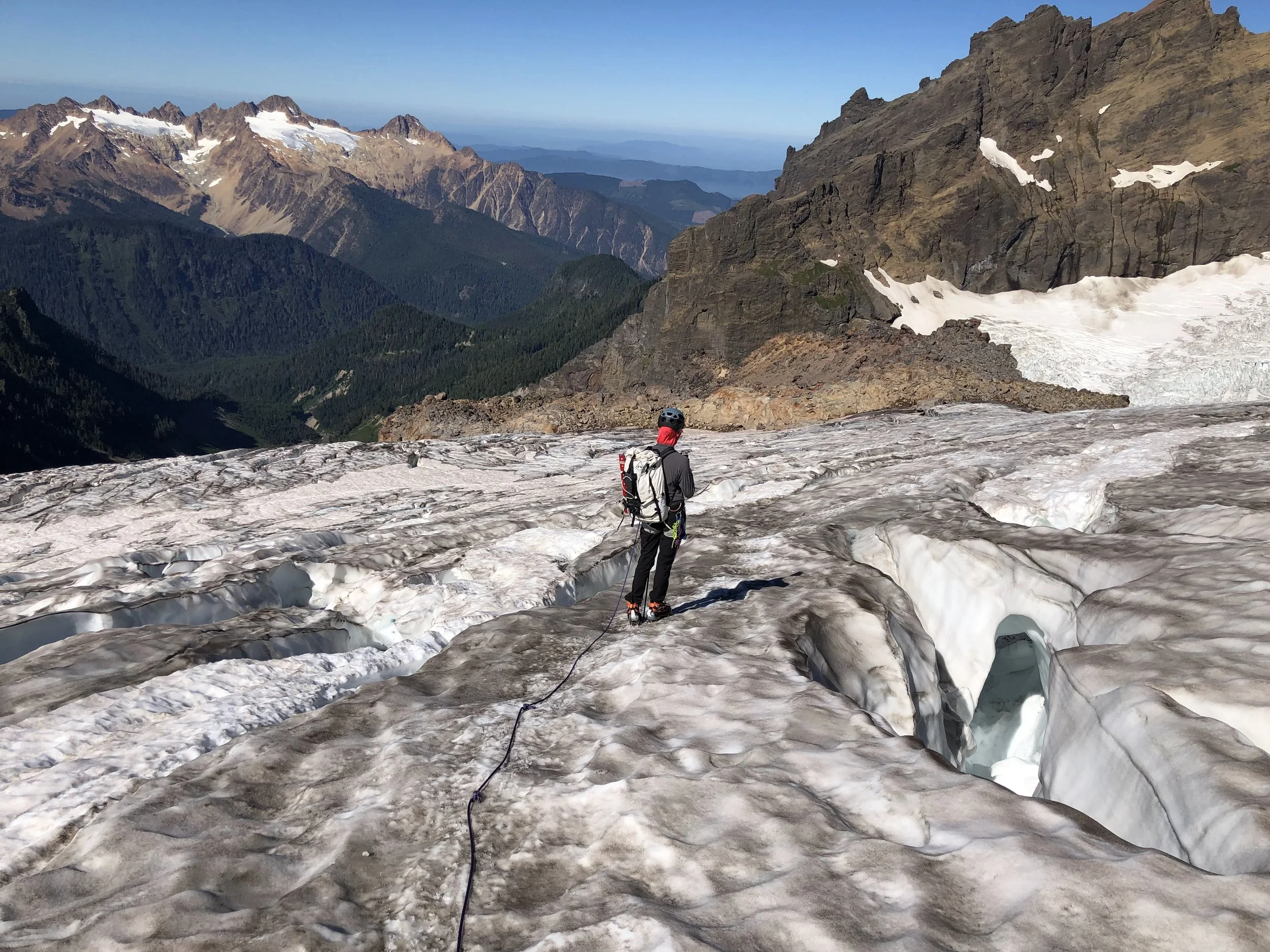
Roping up is required right from the glacier edge.
The slope is low-angle initially (15–20°), making for steady, rhythmic cramponing.
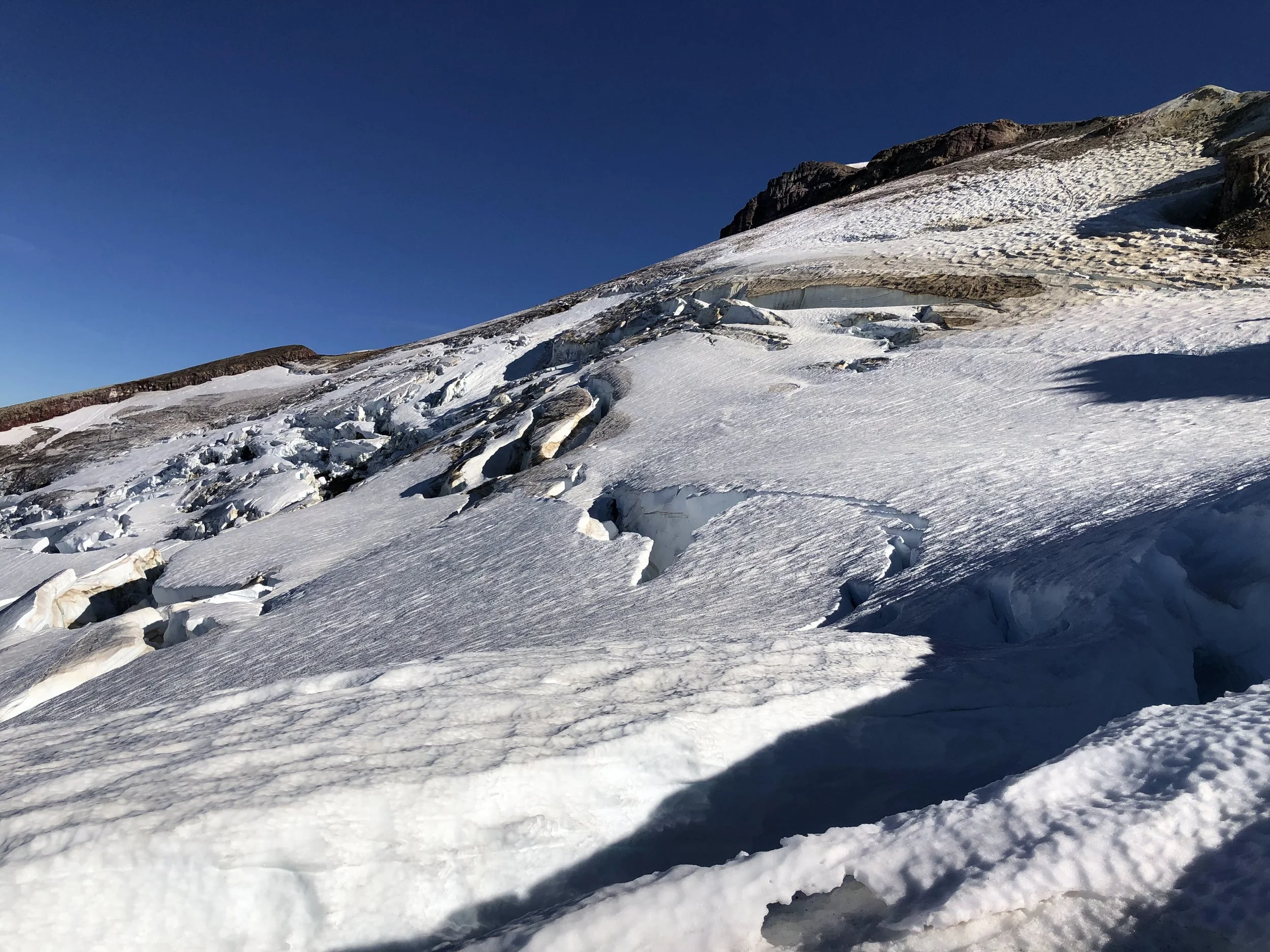
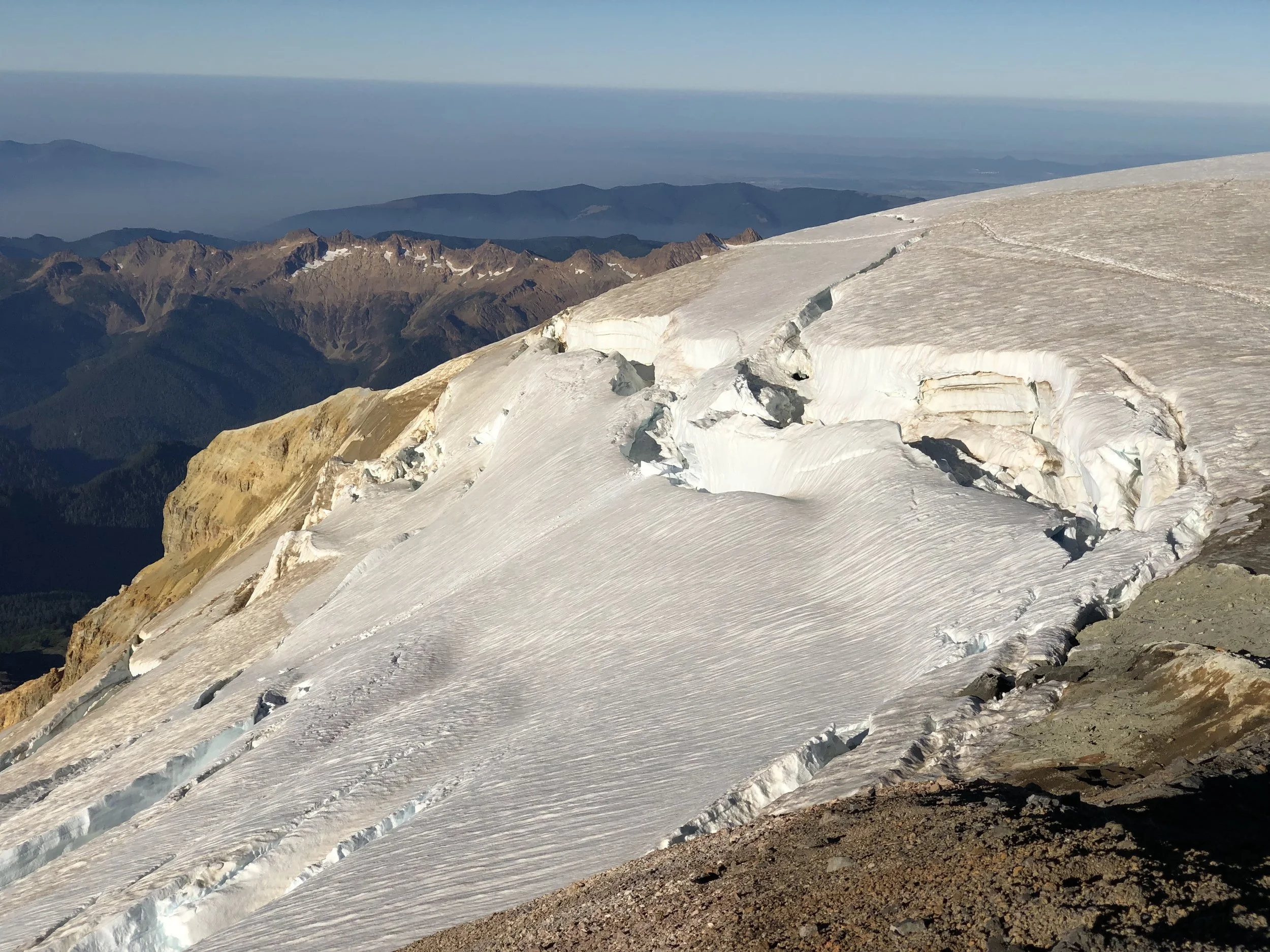
As you ascend past the Squak Glacier junction on your left, the glacier becomes more broken. Crevasse navigation increases significantly by mid-to-late summer (July–August), requiring careful route-finding around snow bridges.
Sherman Crater & The Roman Wall (~1 mile | ~2,000 ft gain)
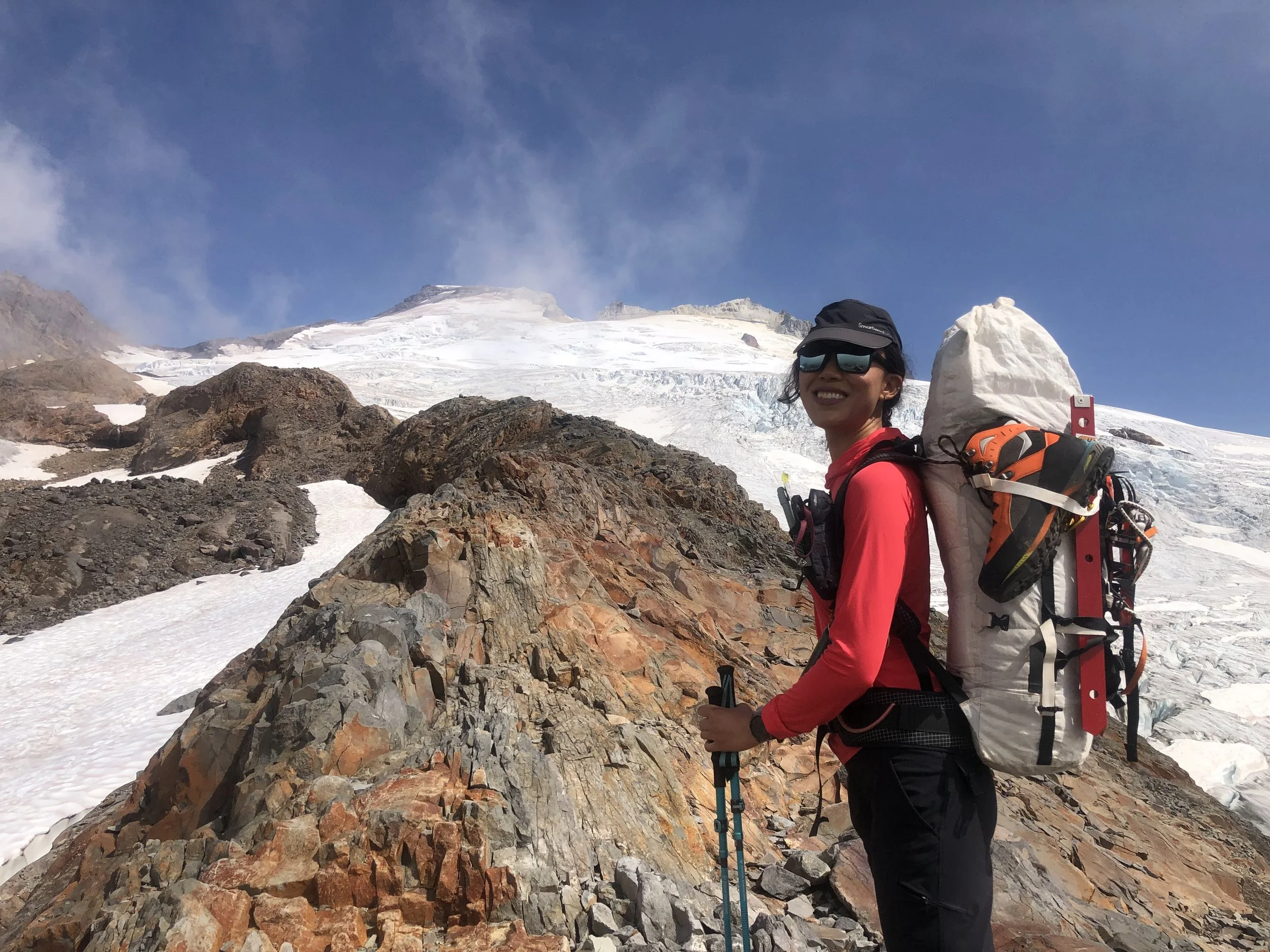
Sherman Crater (~9,700 ft): As you crest the upper glacier, you pass east of Sherman Crater. Expect a strong smell of sulfur/rotten eggs from active fumaroles—a vivid reminder that Baker is an active volcano.
Roman Wall: This is the crux of the route. It's a steep, ~1,000 ft snow slope averaging 35–40°. Early in the morning, this section is usually hardpack or ice, requiring solid crampon technique and front-pointing confidence. Late in the day, it can turn to slush.
The Summit Plateau: Above the Roman Wall, the terrain flattens out into a massive ice cap. A final short rise leads to Grant Peak, the true summit.
Hazards & Technical Demands
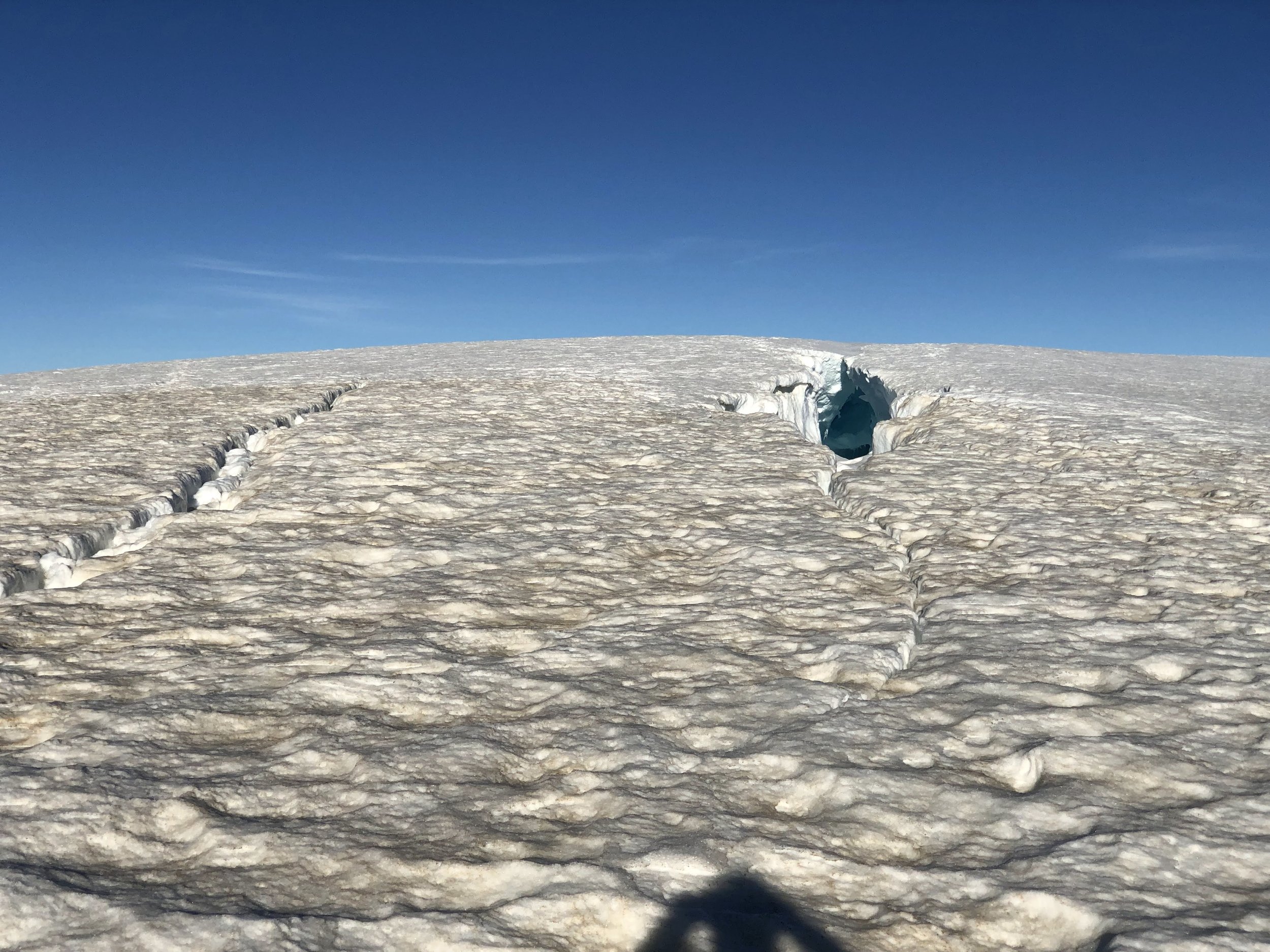
Crevasses: While gentle in angle, the Easton is a moving glacier. Early season (May–June) features deep snowpack covering crevasses; late season (August–September) exposes large crevasses and requires winding navigations.
Volcanic Fumes: Fumarole gases near Sherman Crater can be intense if the wind carries them over the trail—it's best not to linger in the crater saddle.
Weather & Navigation: Mount Baker sits near the coast and creates its own weather. Whiteout conditions can descend rapidly, making GPS tracks and picket/wand placement crucial for finding your way back through the crevasse fields.
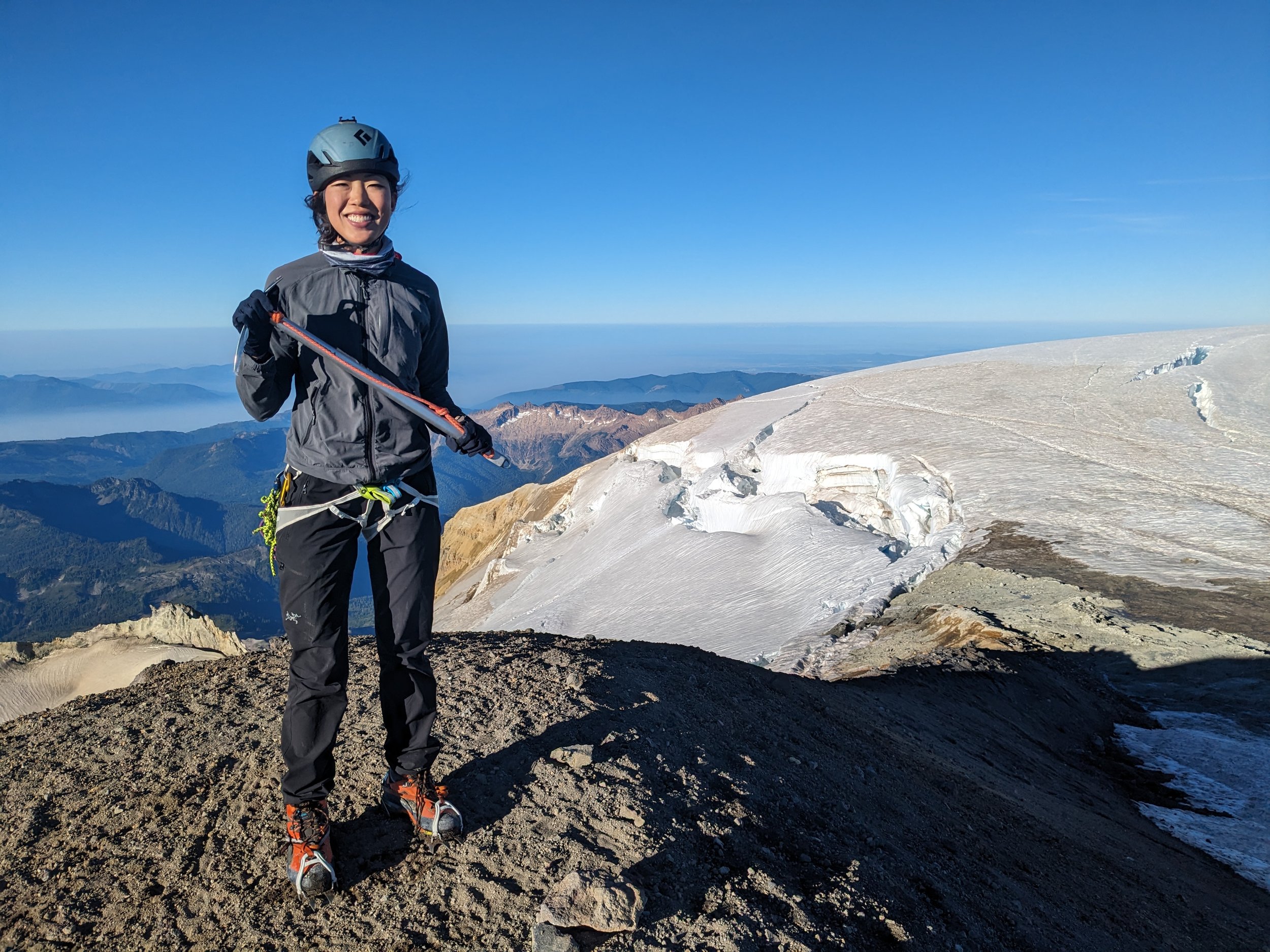
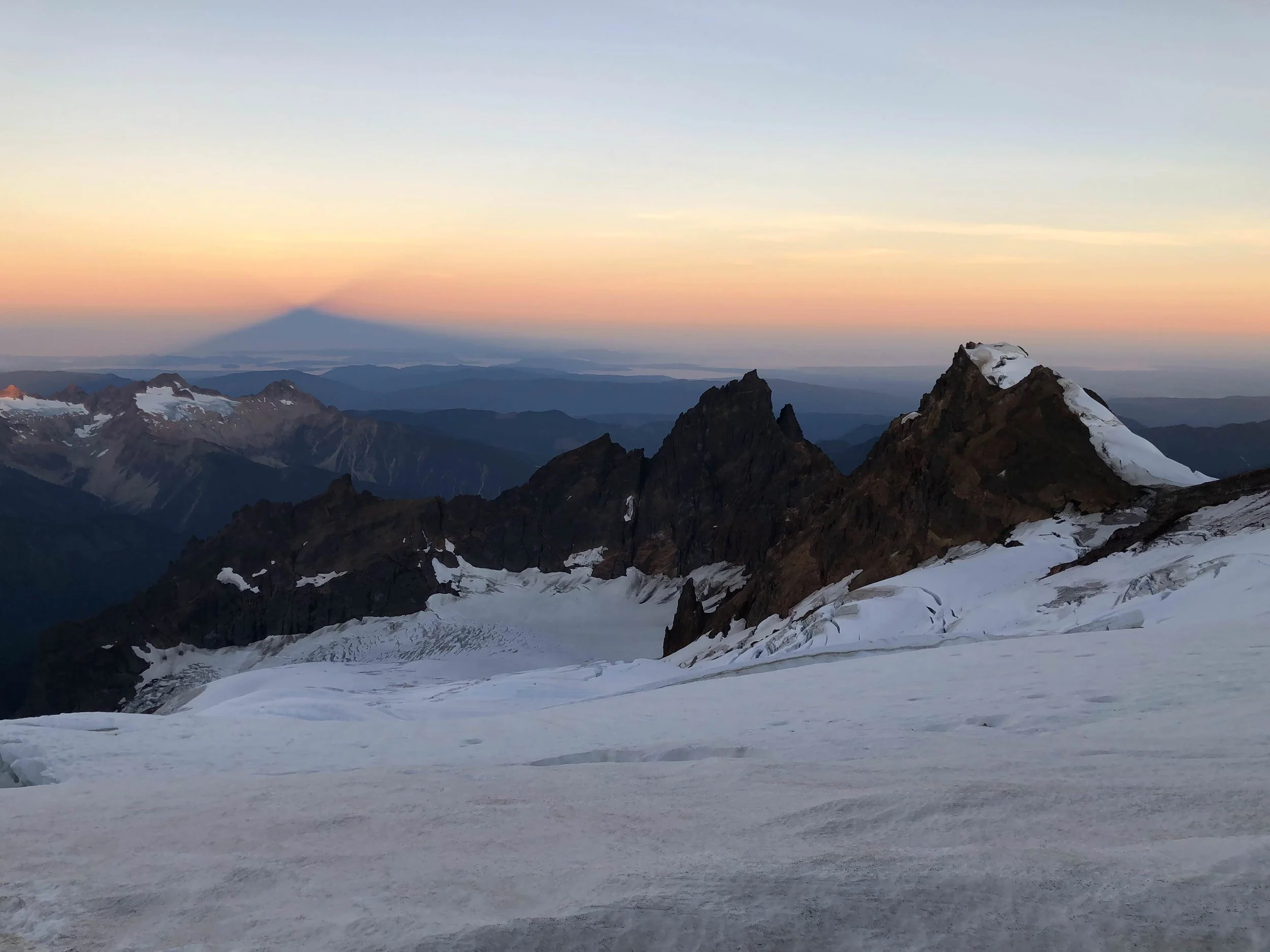
The early wake-up call completely paid off. Since they were only two of us - I only have a 60m glacier rope and we both had extra rope on each end. We tied alpine butterfly knots between us. Since I am probably slower than Michael - I set the pace to walk first. There was definitely a boot packed trail that was easy to follow. Although some places it was hard to see in the dark. I did the best I could - and we were very much on pace. It was in August, and this year was a high snow year for the west coast. I hadn’t been anywhere where there were soooo many crevasses! We continued. The snow conditions were perfect, the weather held, and we had the incredible privilege of being the very first group to stand on the summit that morning. The alpine sunrise was so beautiful. It was my first time being on the glacier for so long - pretty much all of baker feels like we were roped up the whole time! which made it easy without the many steps of transitioning (rope, unrope etc).
The Descent Sprint: After soaking in the summit views, we didn't linger long. We reversed the route back to camp, threw our bivy gear into our packs, and cruised all the way down to the trailhead.
From leaving camp in the dark to pulling back into the parking lot, the entire summit push and exit took us exactly 11 hours.
We threw our gear into the rental car, grabbed dinner, returned the car to Sea-Tac airport, and caught our evening flights out. It was a whirlwind, no-nonsense alpine mission that proved you don't need a massive time window to tag a classic PNW peak—just good logistics, a solid partner, and a willingness to eat cold food!
Here is a short youtube video of my mount baker climb
So many crevasses...