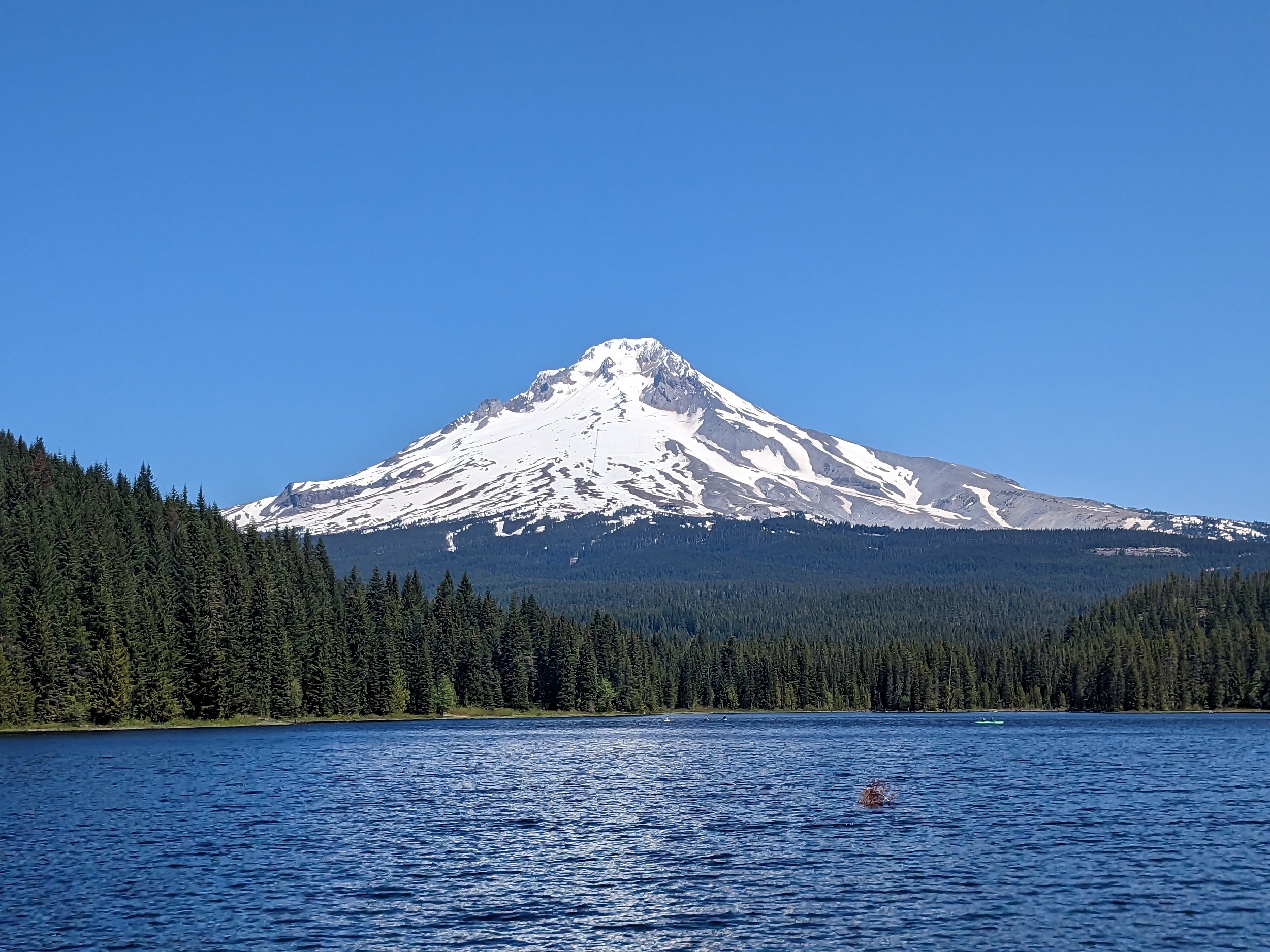
Returning for Mt. Hood: From Bystander to the Old Chute Unguided
Trip Stats
Date: June 3, 2023
Stats: 7.75 miles | 5,500 ft elevation gain/loss
Timeline: 1:15 AM start | 6:30 AM summit | 10:15 AM return
Start: Timberline Lodge near Portland, Oregon
The prime window to climb Mount Hood: late April through June (extending into early July), with May and June representing the peak season.
The Backstory: Earning My Spot
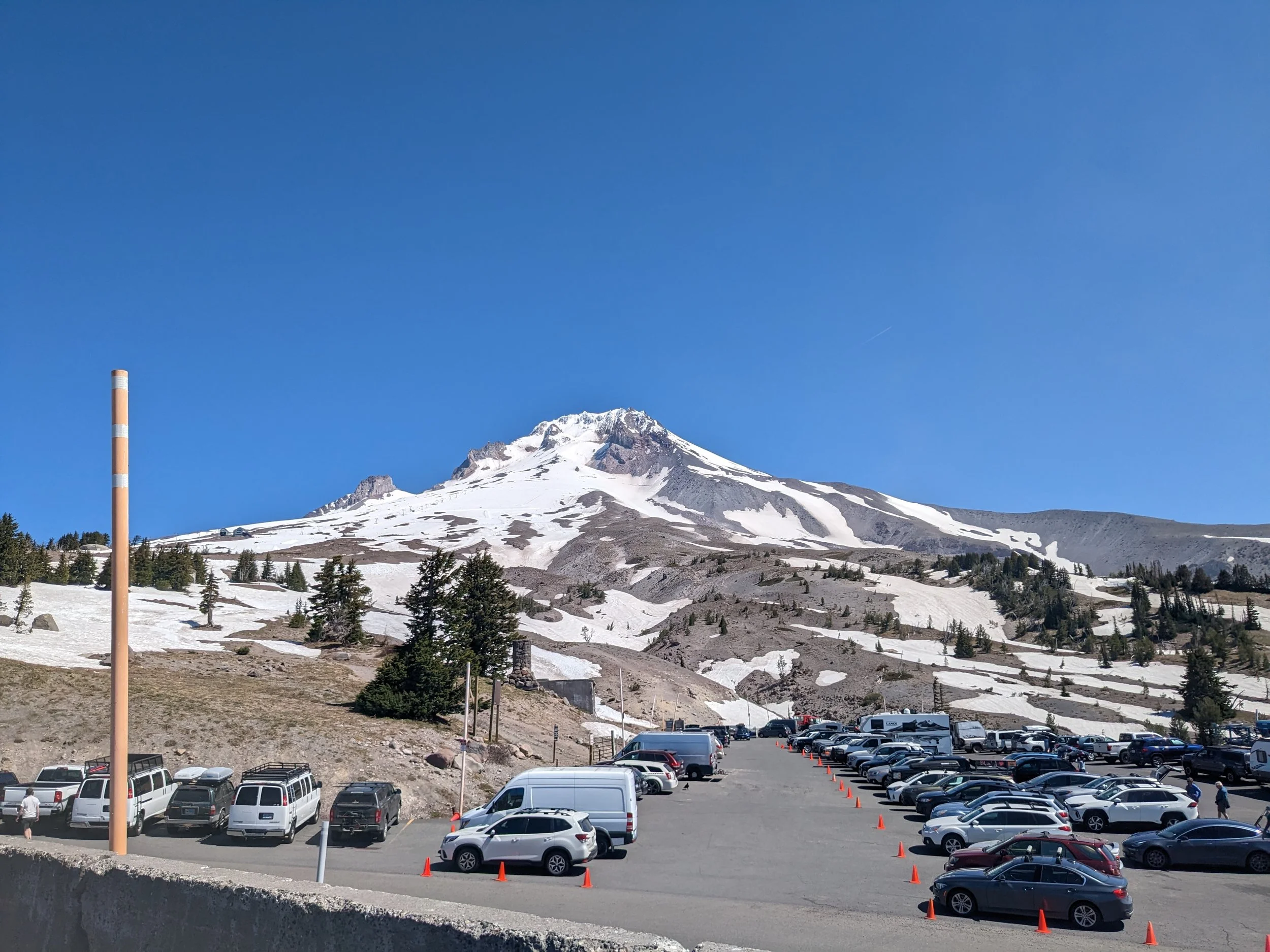
In 2021, I sat at at the hotel at Mount Hood watching my mountaineering friends gear up in the early morning dark to climb Mt. Hood. They invited me along, but I knew my limits. Despite having a good fitness foundation, I had zero alpine experience. I had never worn crampons yet. Going up that mountain meant risking my safety—and becoming a liability to theirs. I stayed behind.
Two years later, I returned to the exact same mountain. But this time, I had an ice axe and crampons in hand, backed by formal classes, practice, and experience on the rock. (If you're looking to build real competence, I highly recommend the 2-week Alpine Mountaineering and Technical Leadership course—AMTL 1—with the American Alpine Institute).
I wasn't just tagging along anymore; I had earned my spot.
The Alpine Start
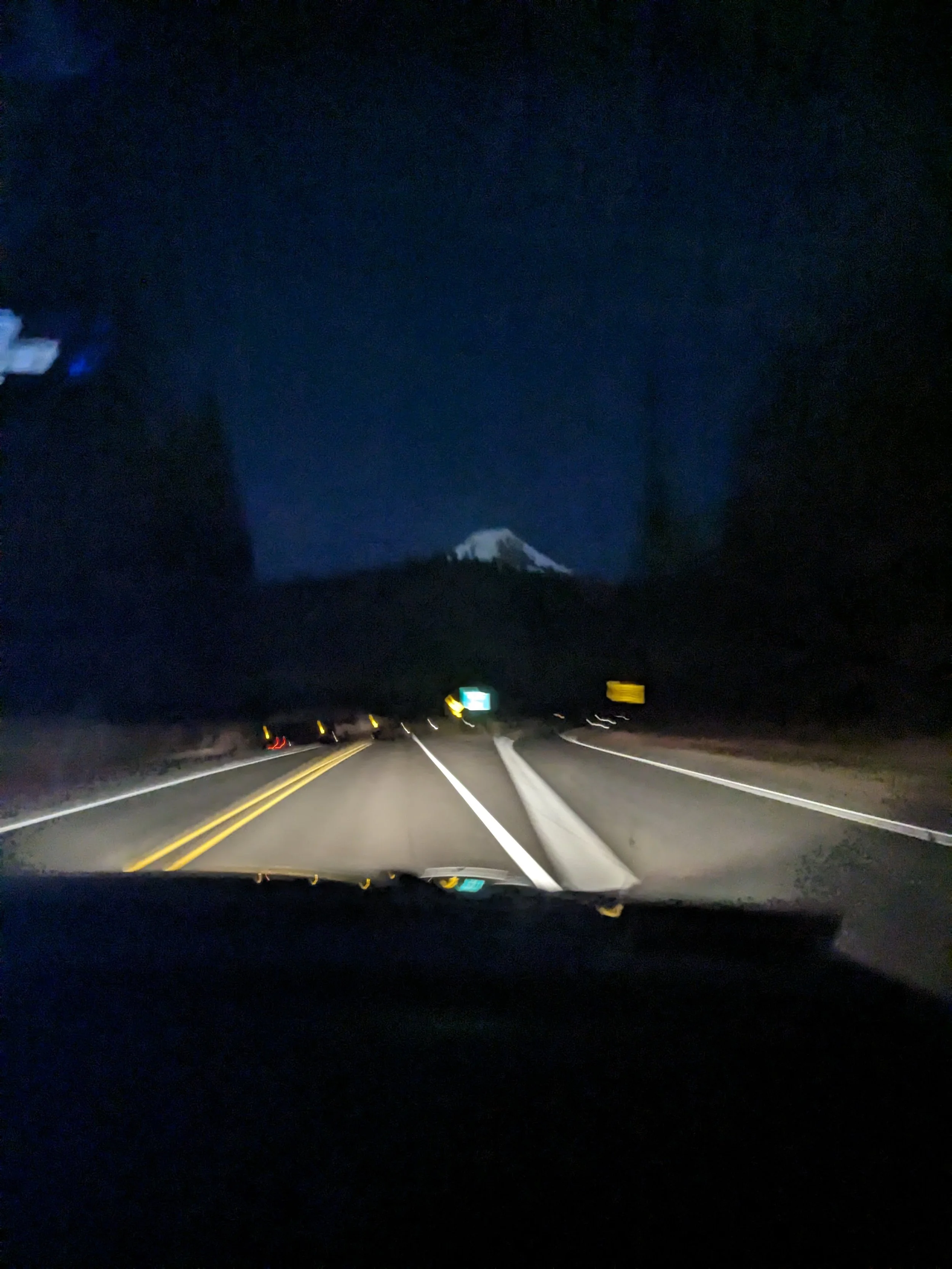
My friend Michael G picked me up from my Airbnb near Smith Rock at 11:00 PM. By 1:15 AM, after filling out the climbers' registry, we were moving out from the parking lot into the dark.
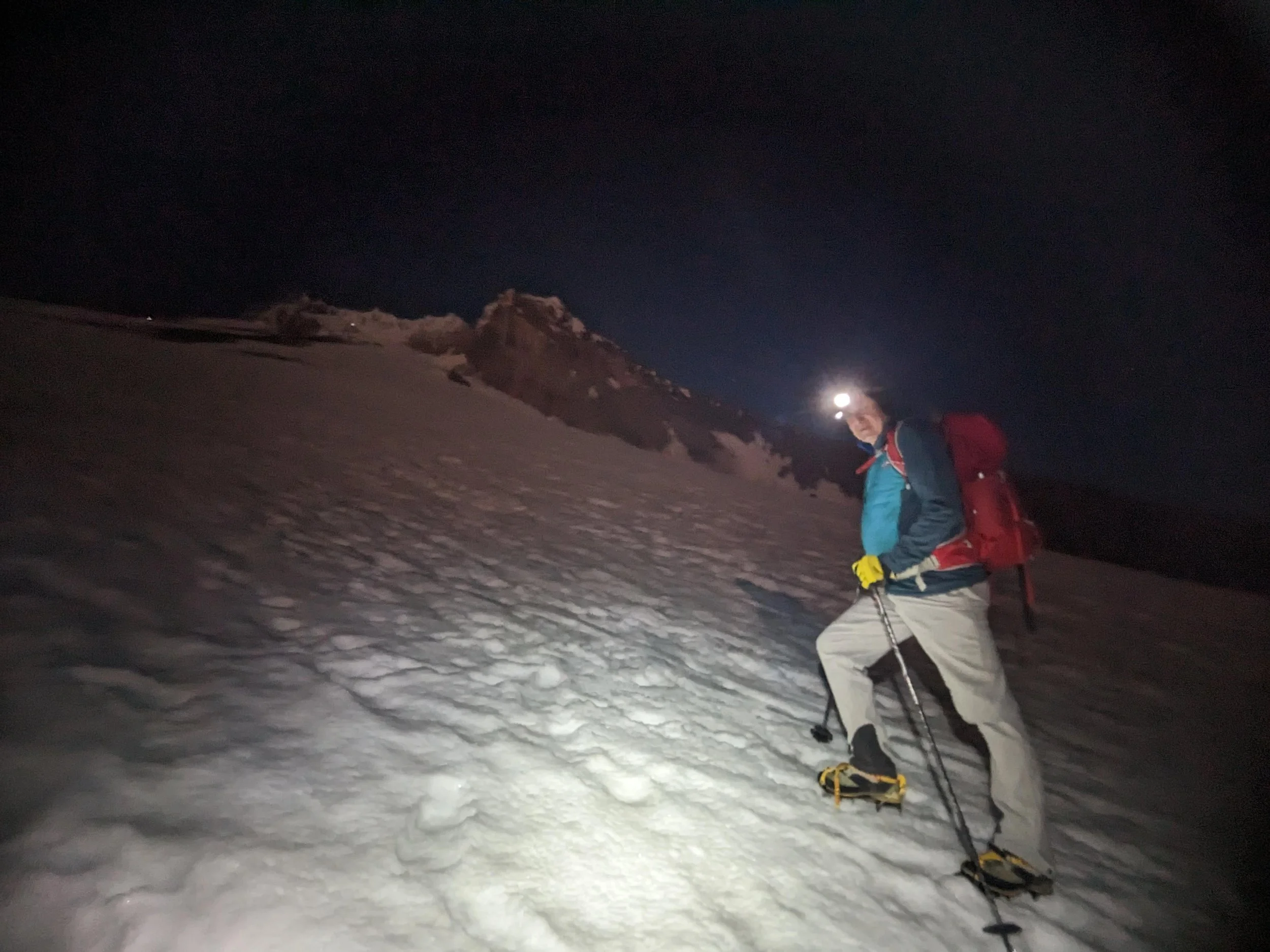
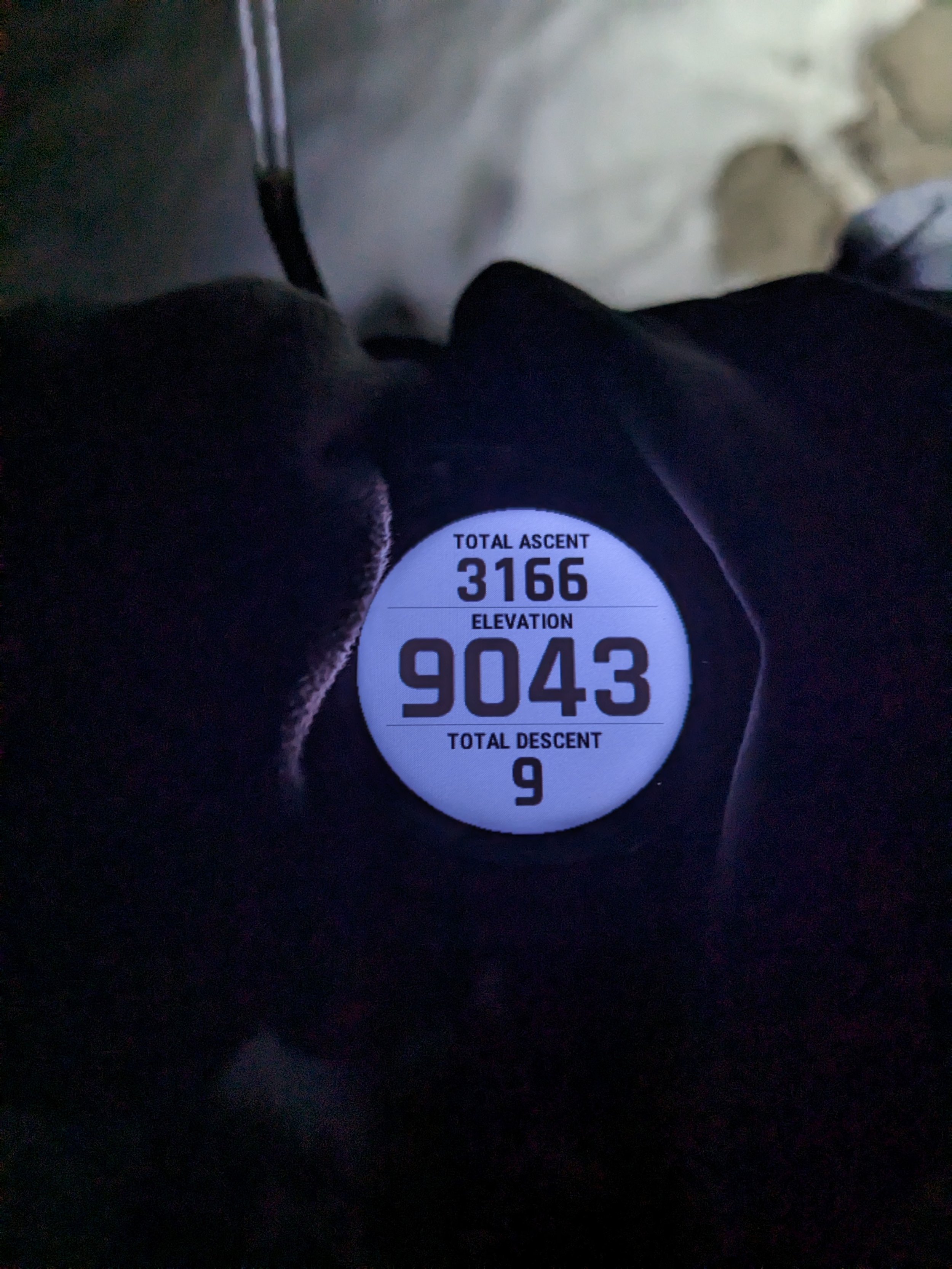
We hit packed snow right away. After passing a few parties and cranking out 3,100 feet of elevation gain in 2.5 hours, we stopped to strap on our crampons.
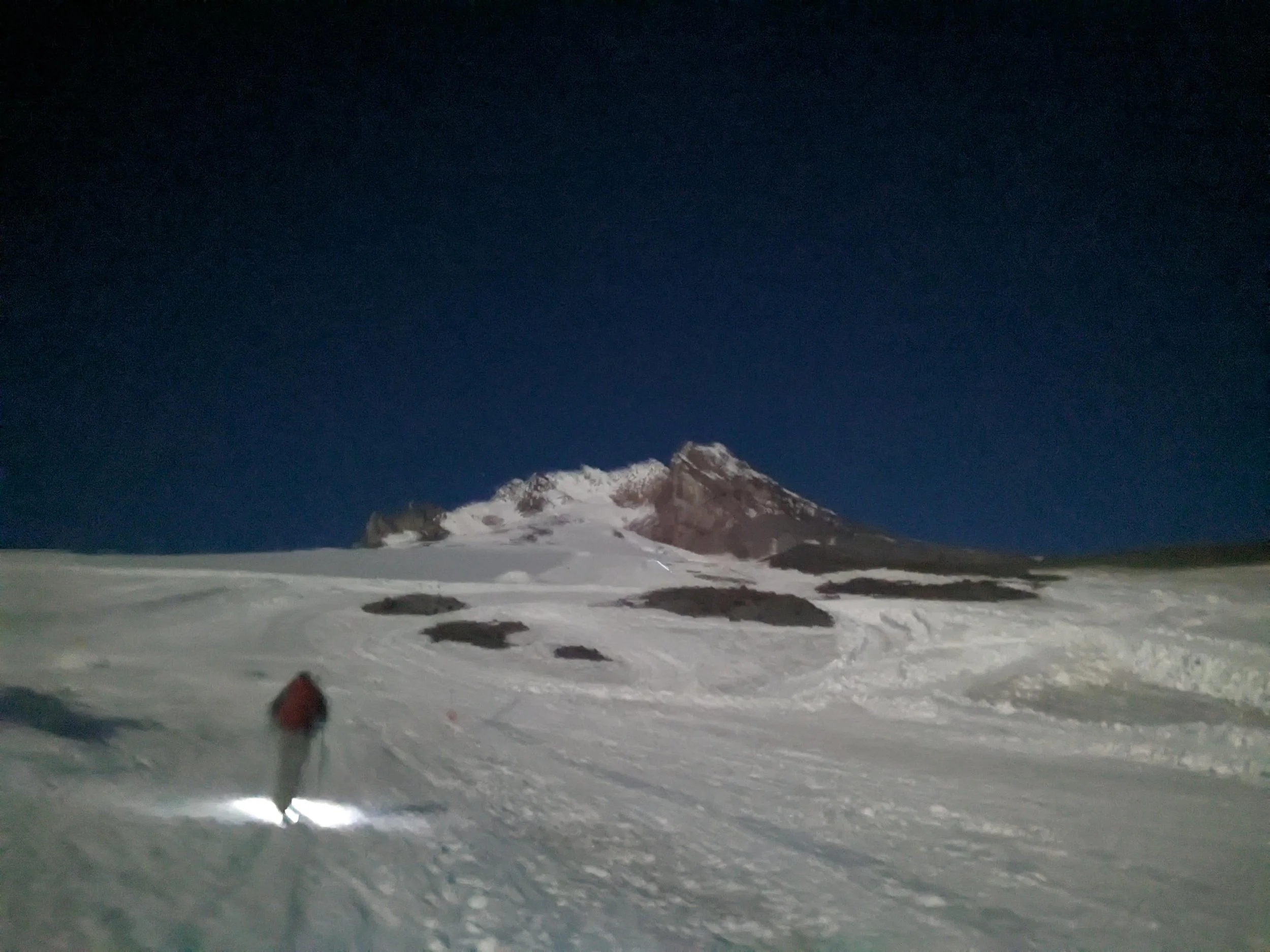
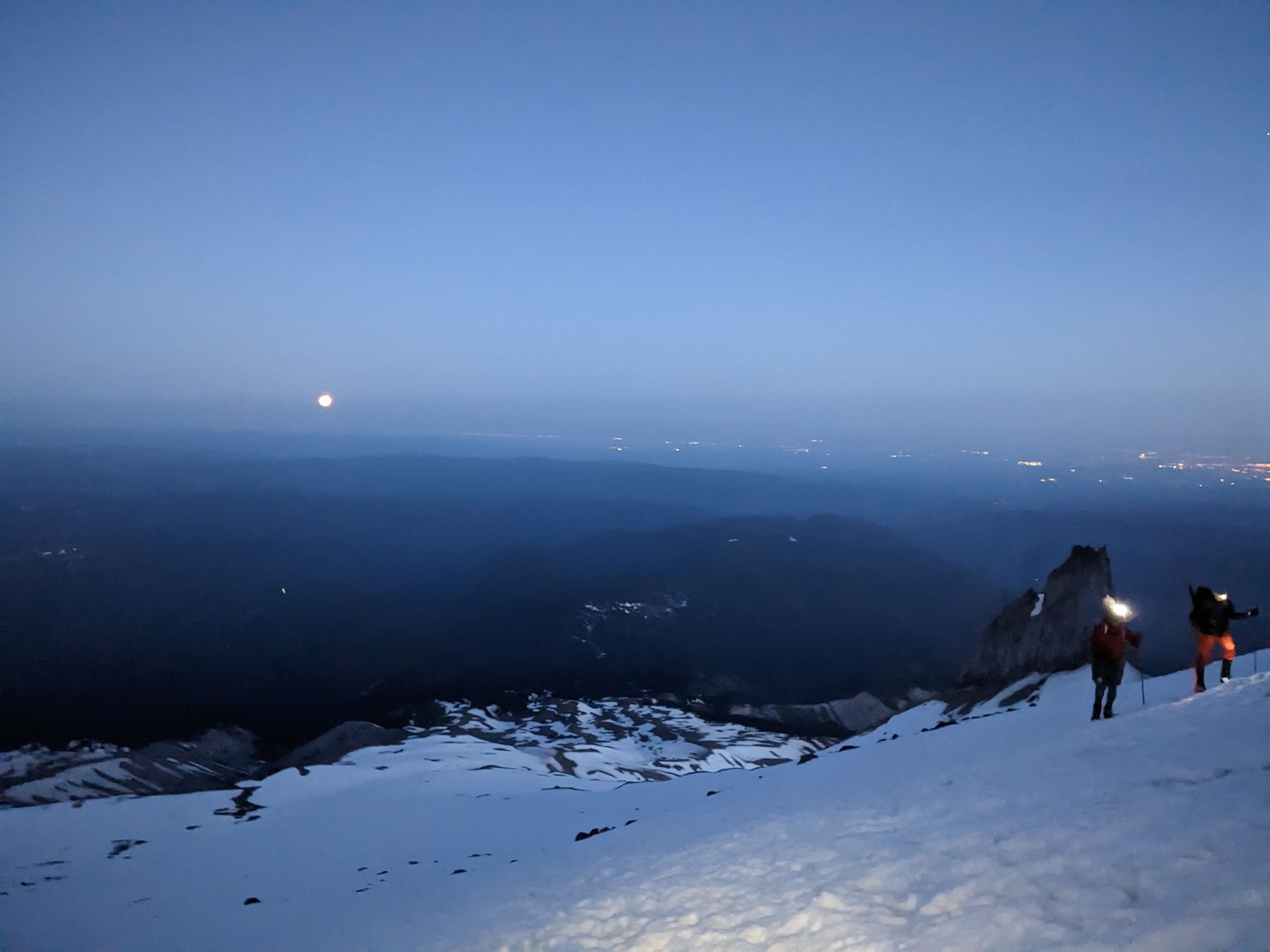
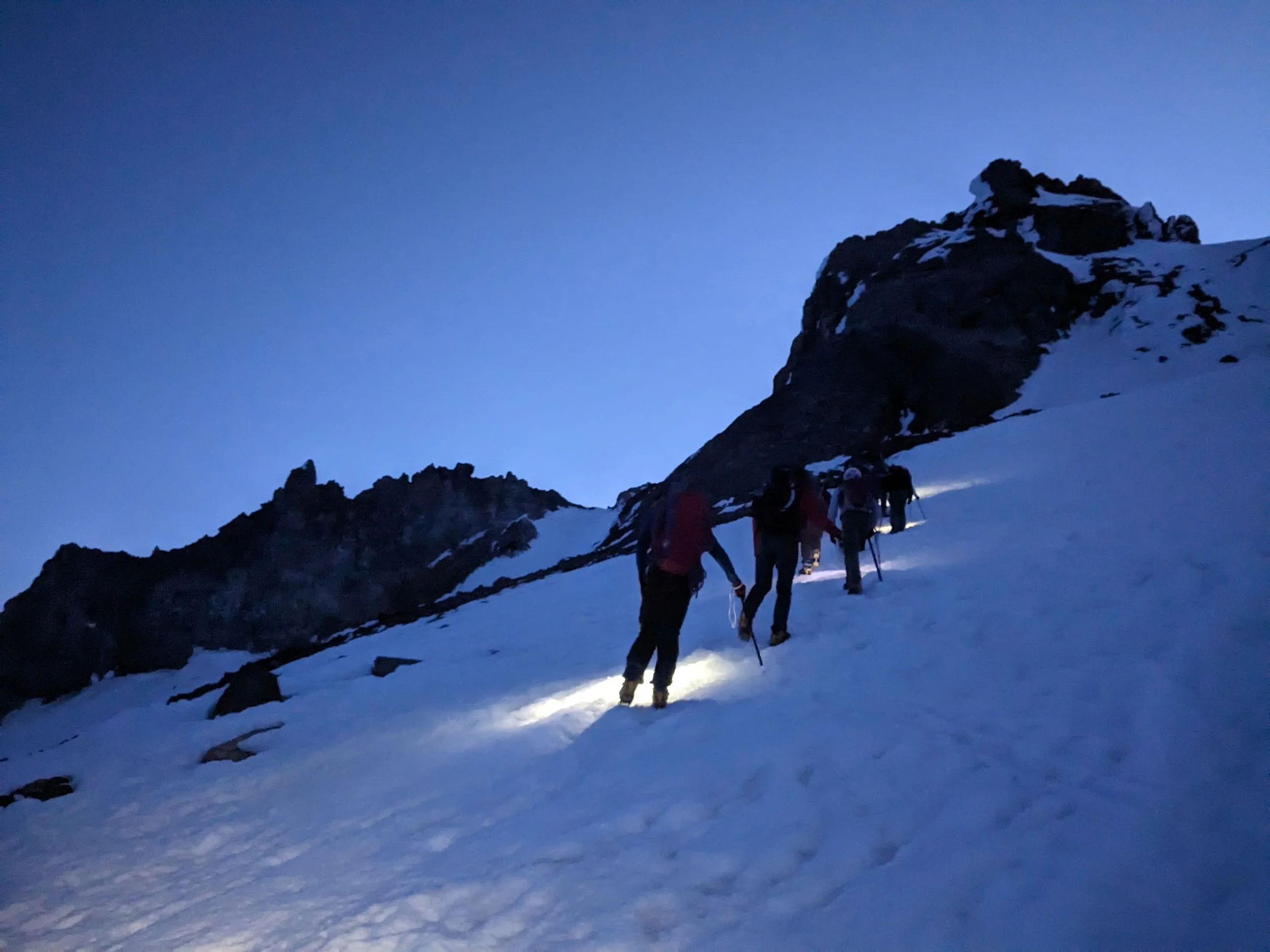
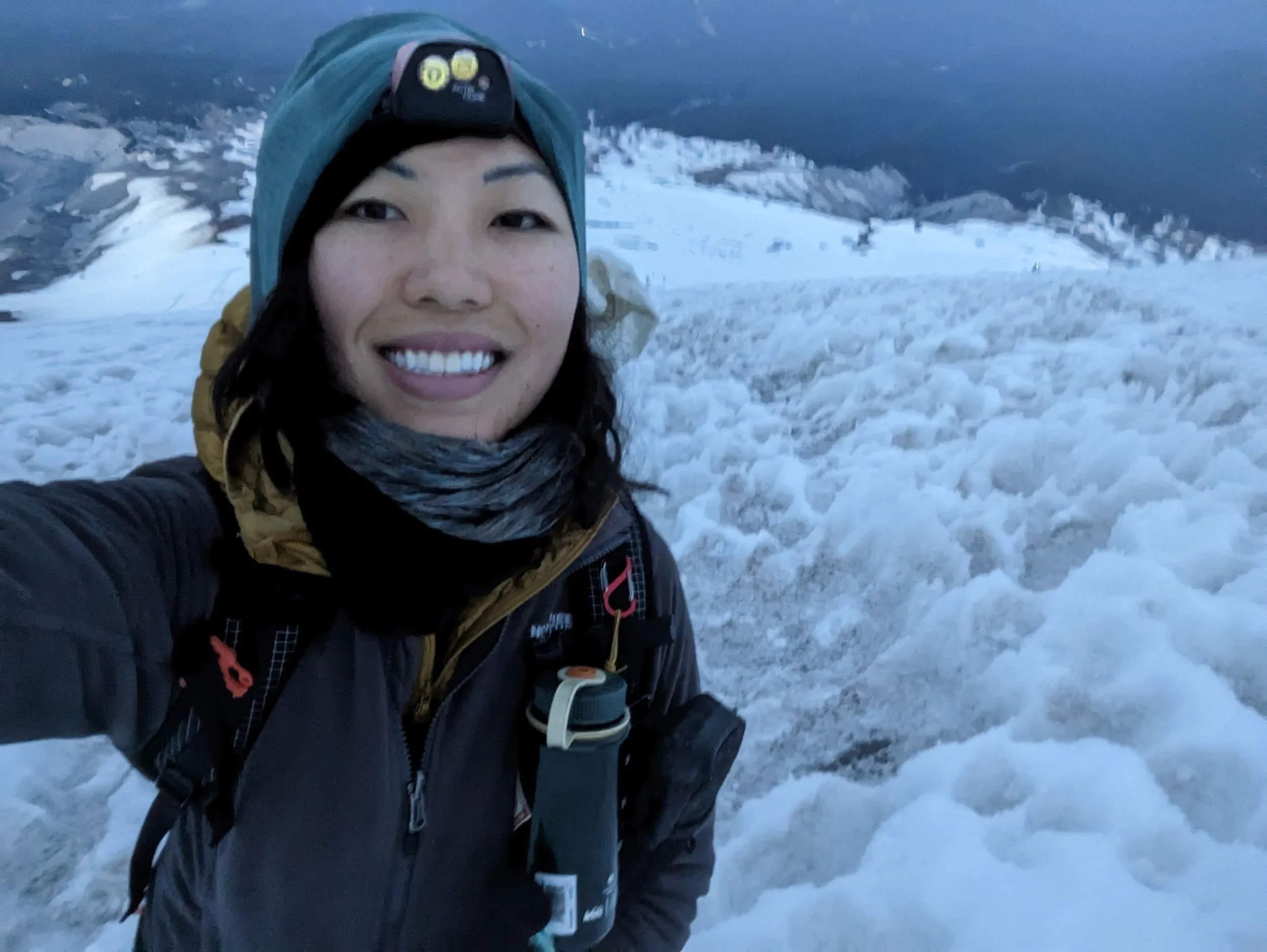
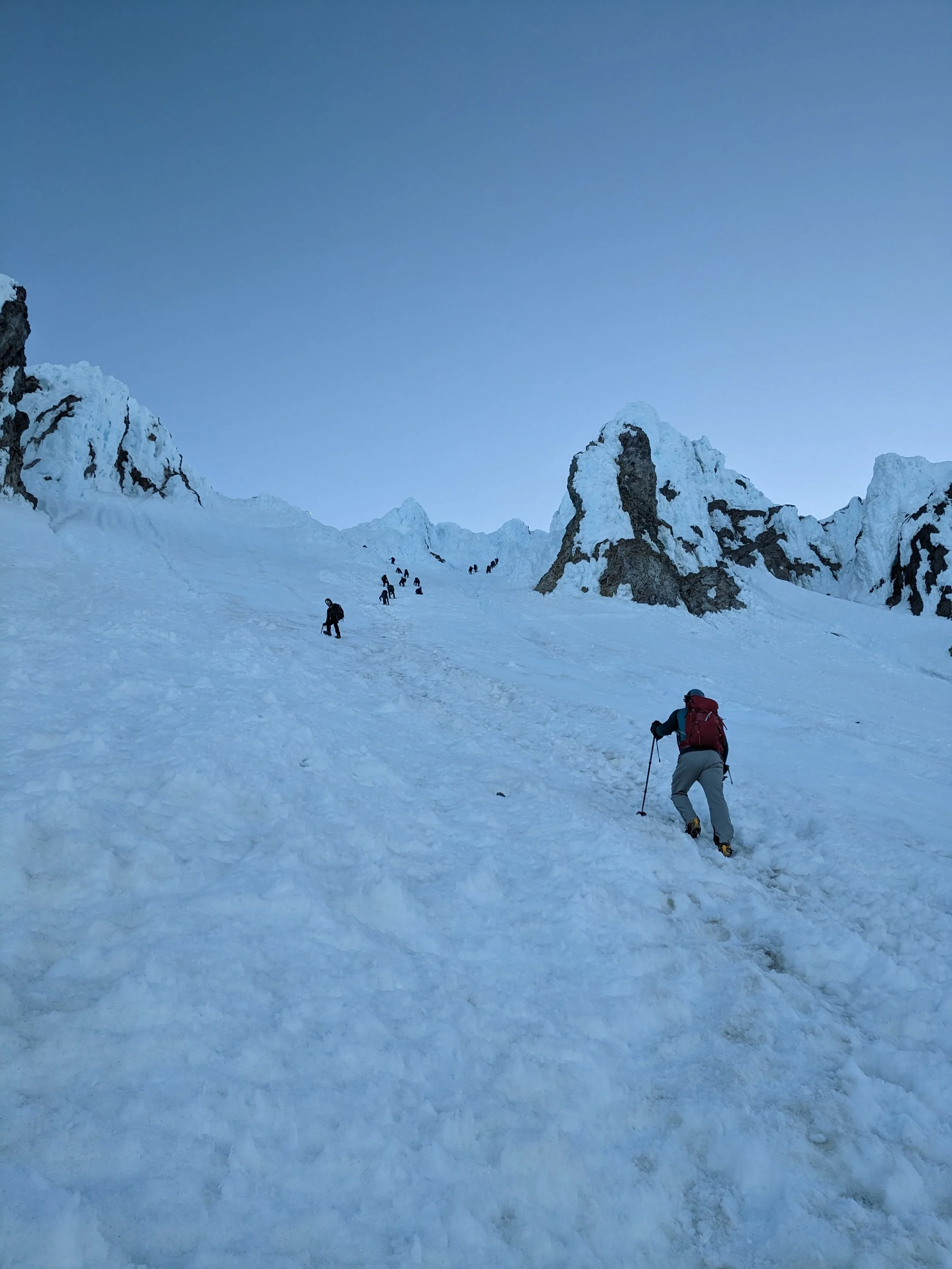
Our intended route up the Pearly Gates was impassable due to a fresh crevasse, forcing us onto the Old Chute alongside every other climber on the mountain. Looking up and down the route, a continuous line of headlamps stretched into the night.
Steep Ice and Hood's Shadow
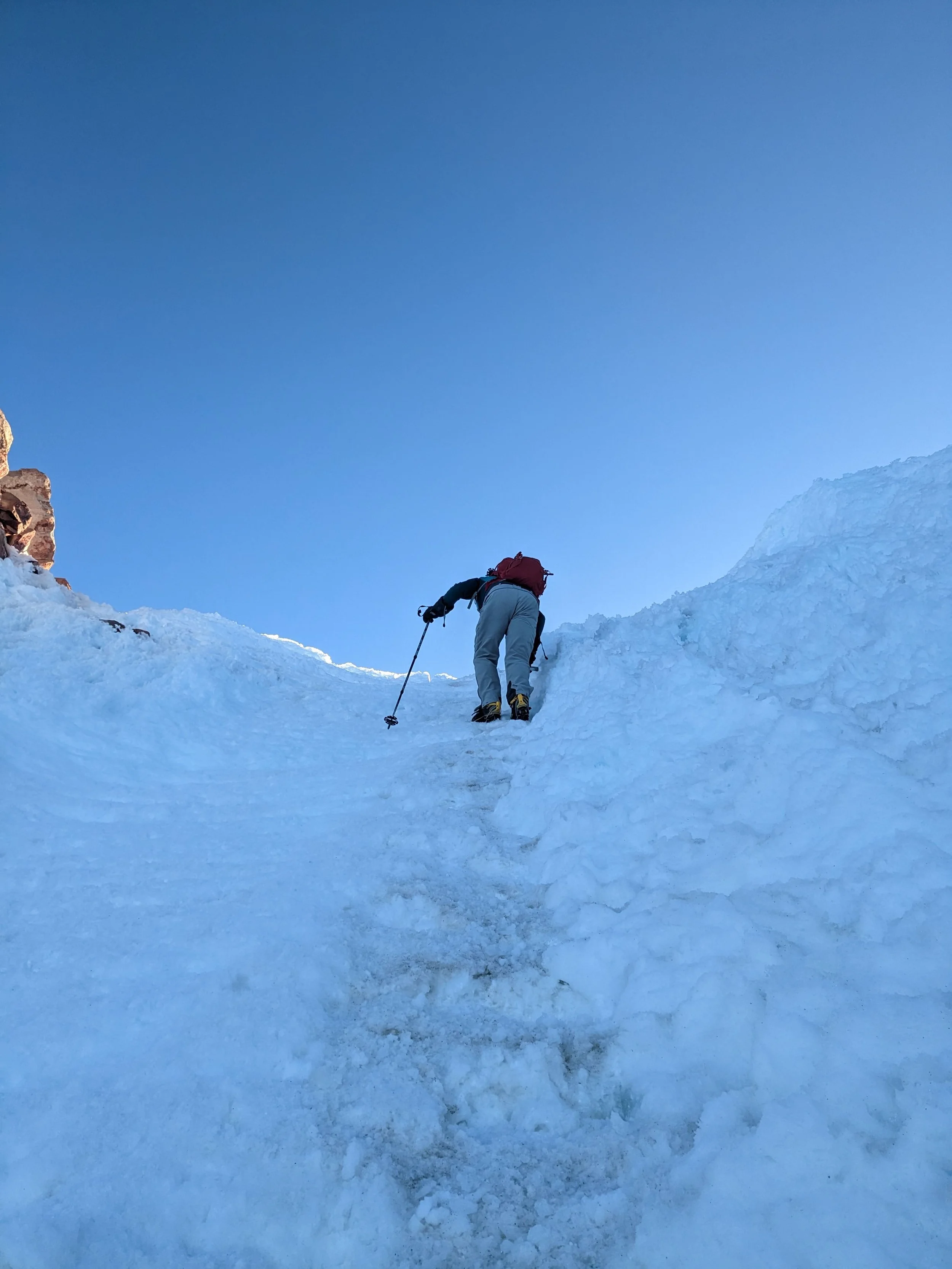
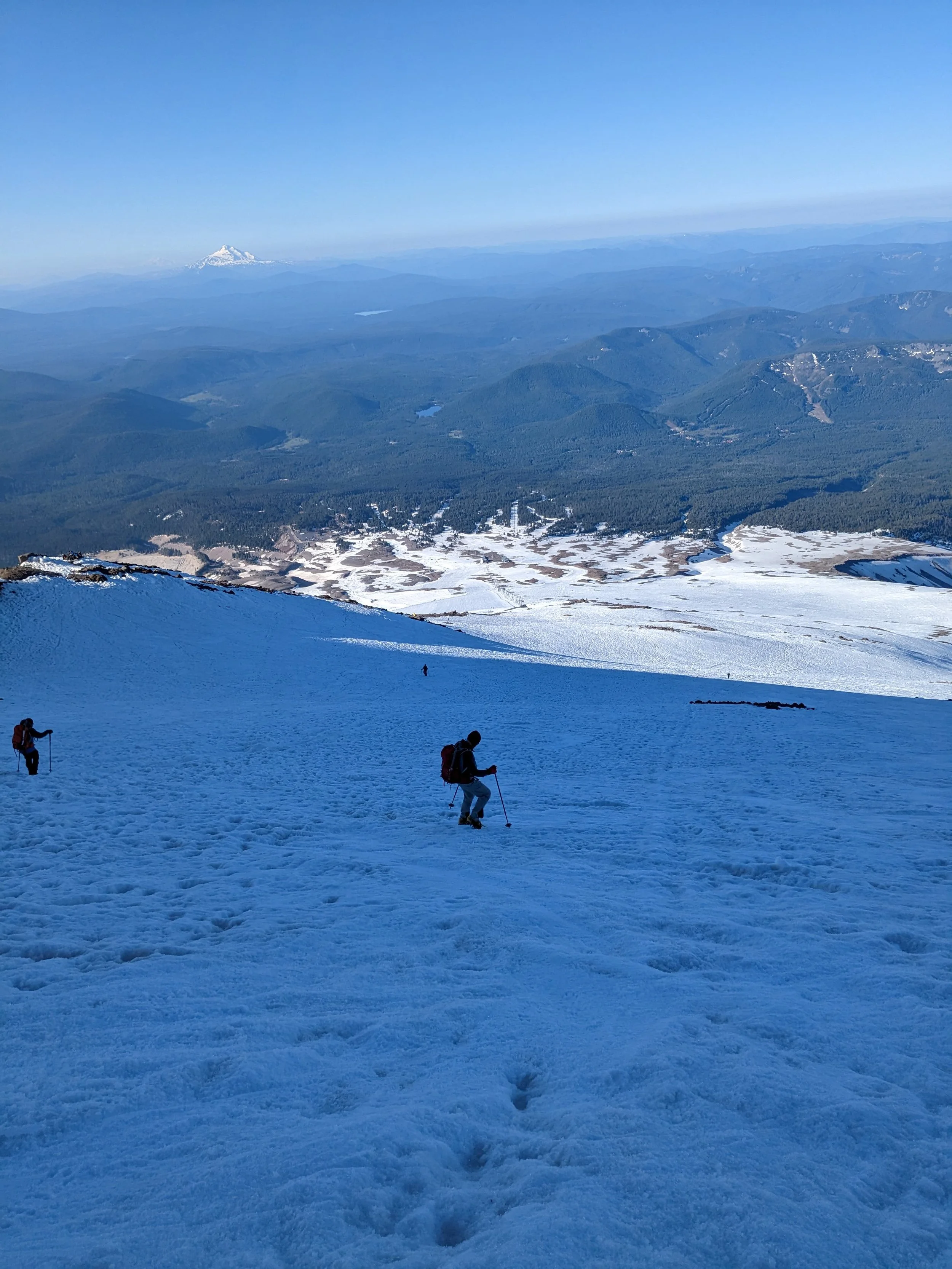
Past the sulfur fields, the final 1,000 feet pitched up noticeably to around 45–50 degrees. Up ahead, we could see climbers front-stepping into the wall of hard, gritty ice.
As we pushed up the chute, a solid ball of ice came bounding down the slope and smacked me at high speed. It shocked me for a second, but I shook it off and kept moving.
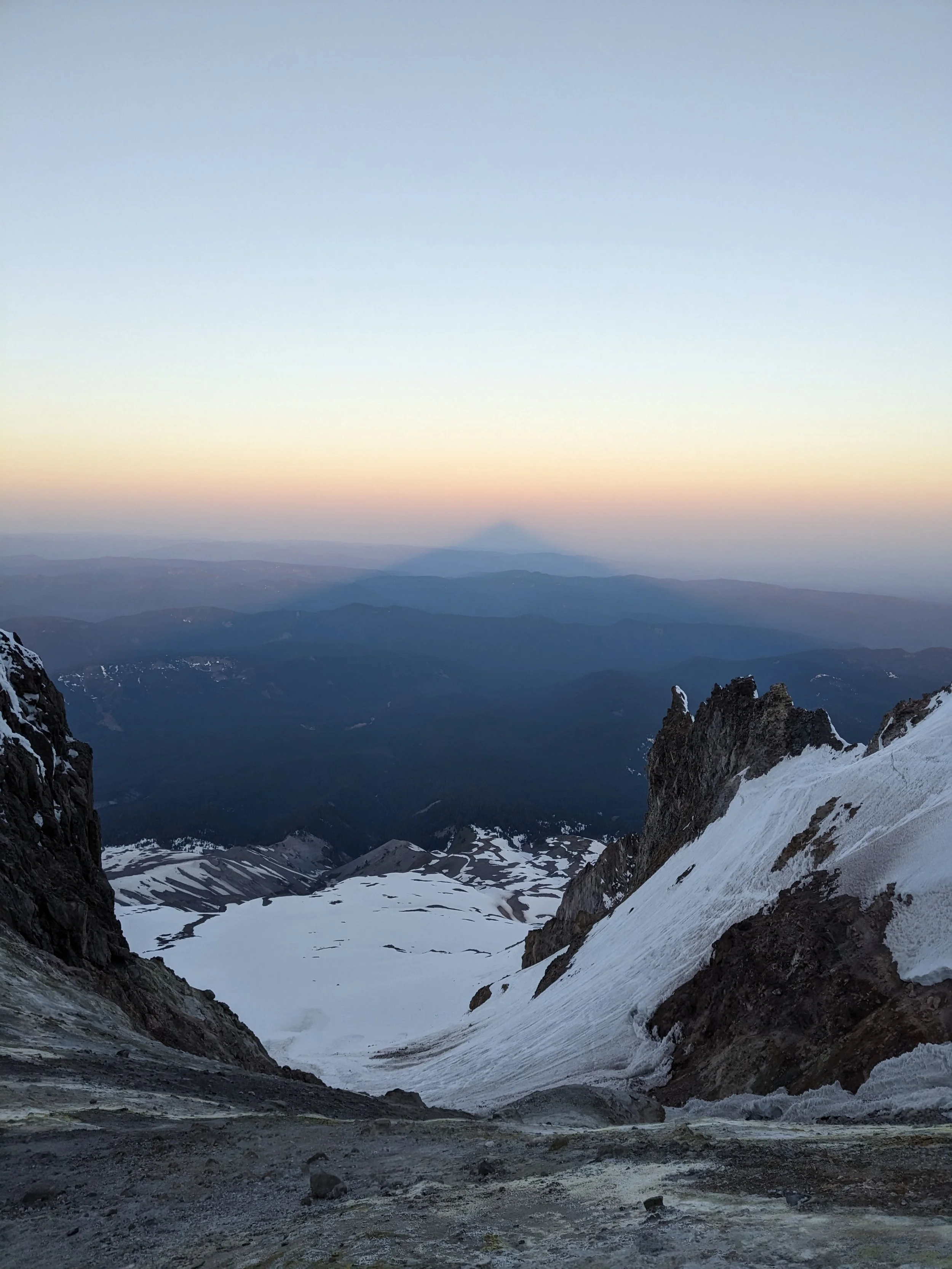
Looking back, nature put on an unbelievable show: the rising sun cast the long, perfect shadow of Mt. Hood across the landscape behind us—easily one of the most spectacular sunrises I’ve ever seen.
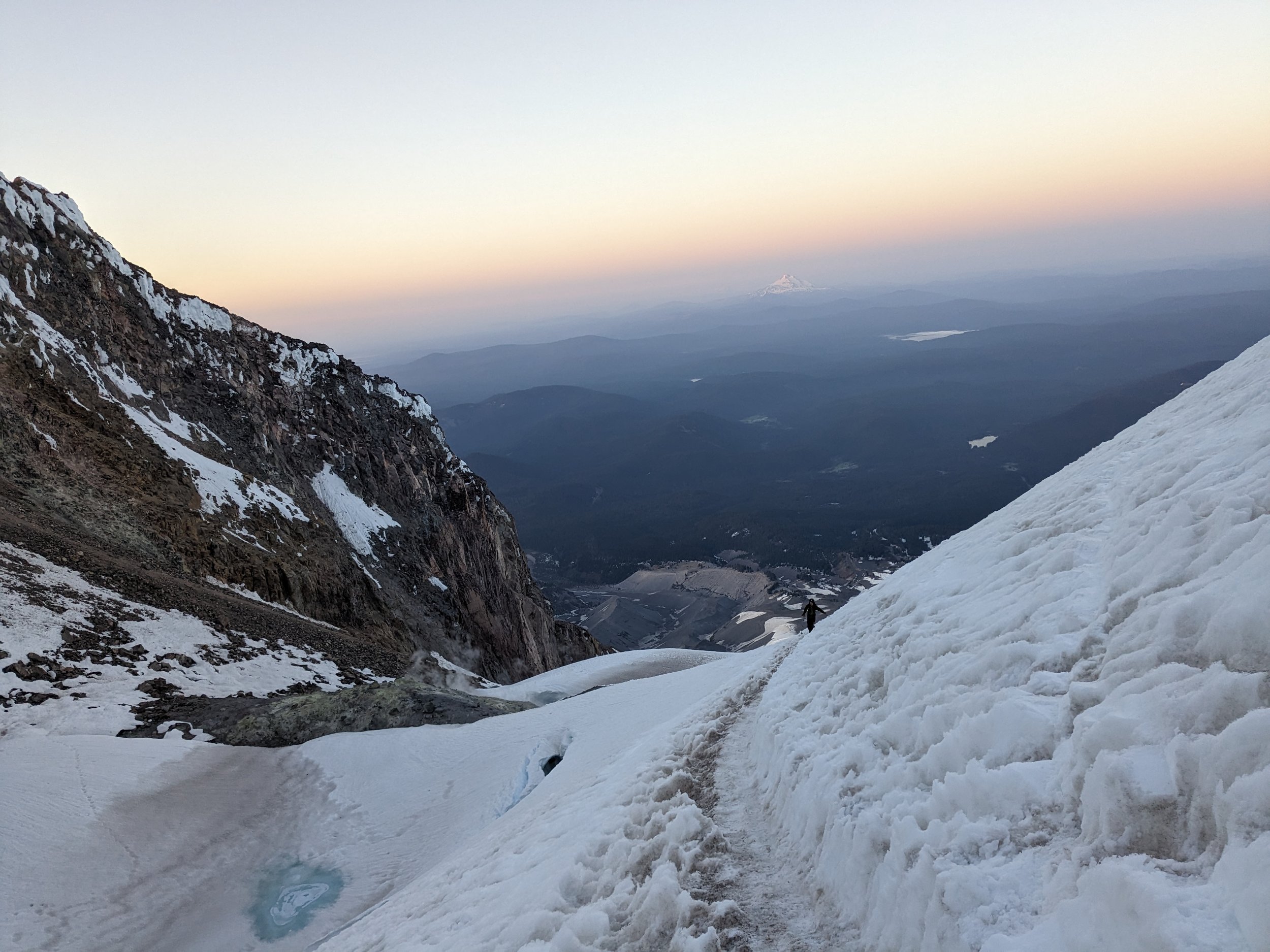
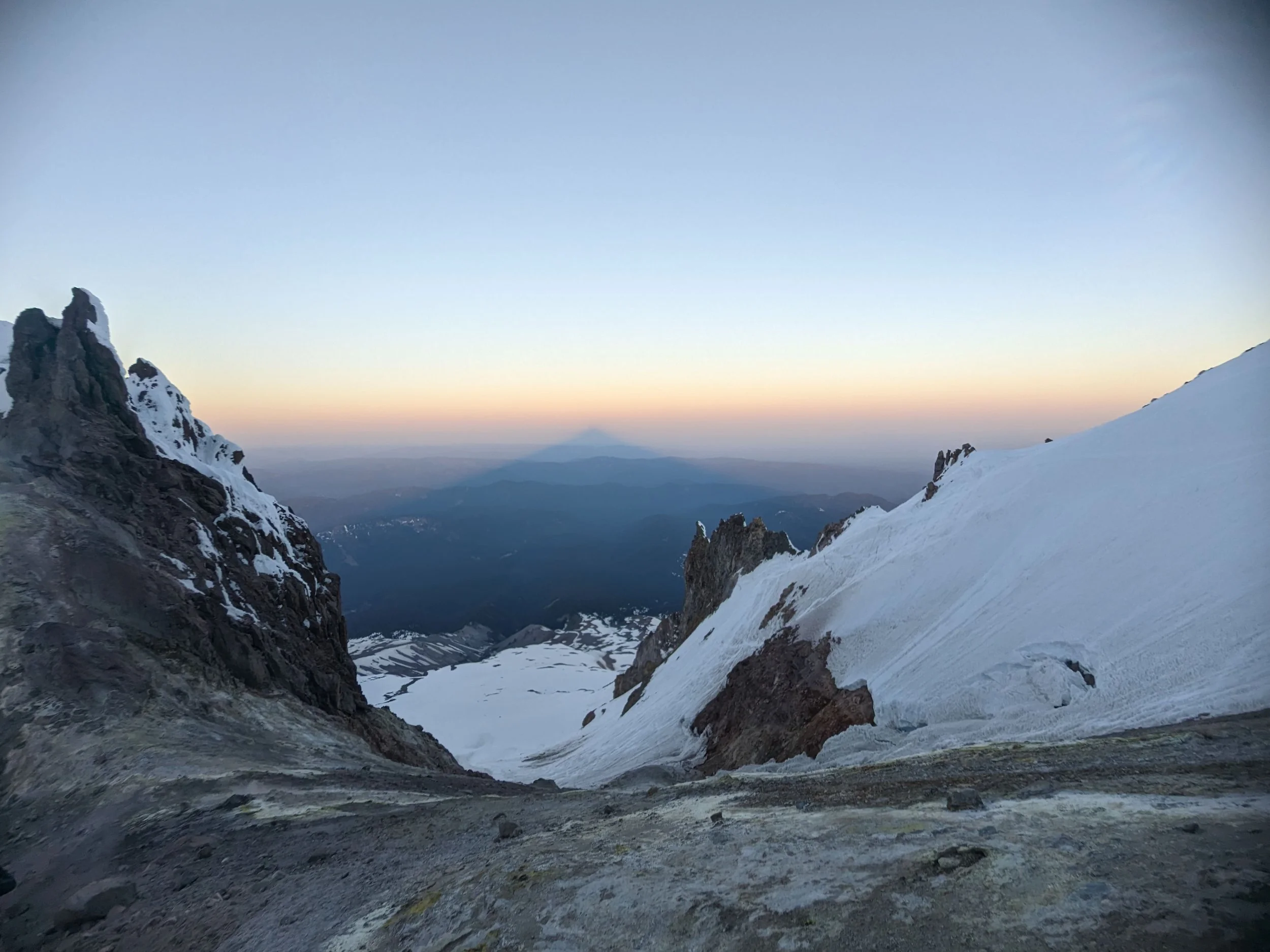
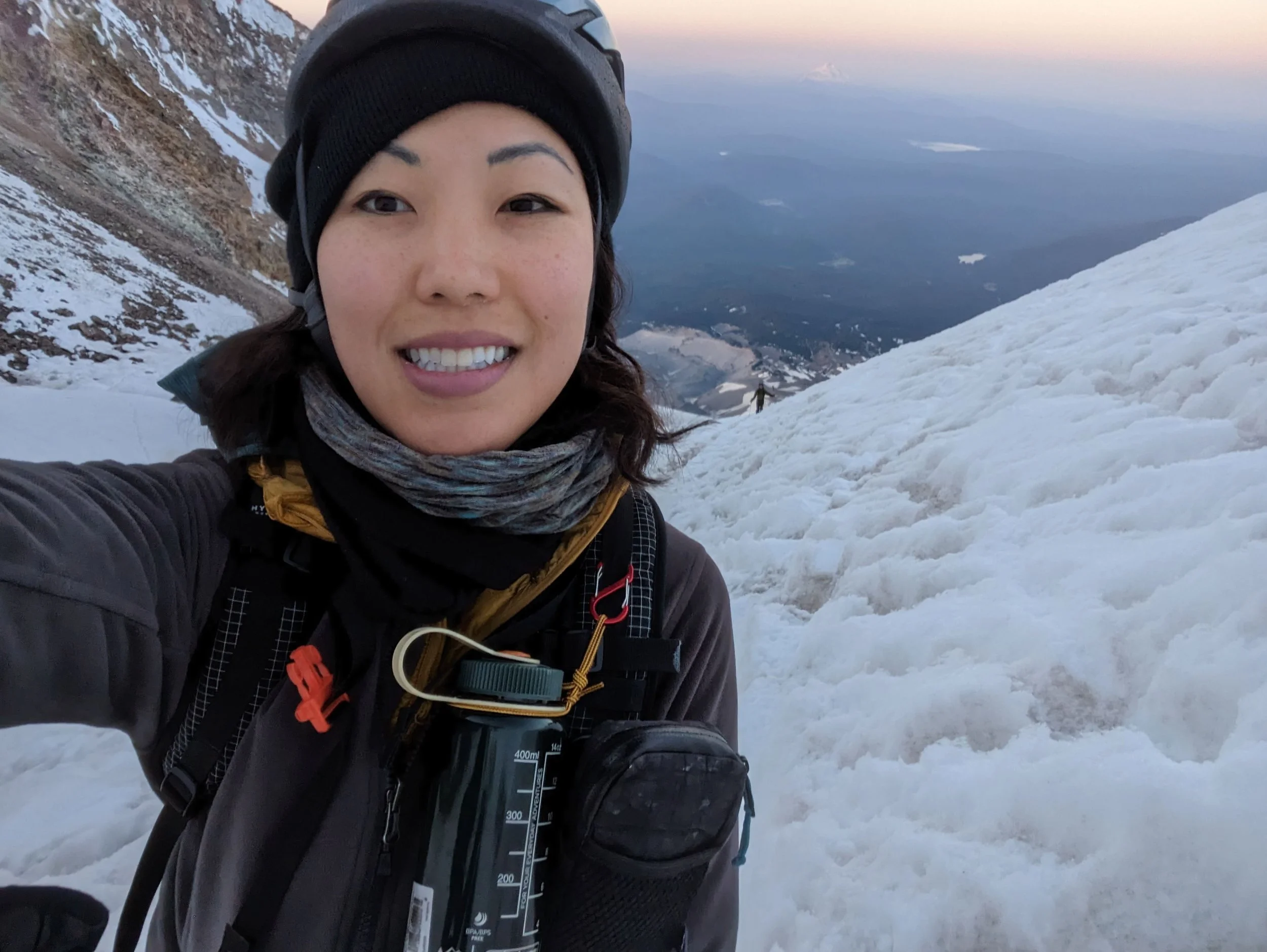
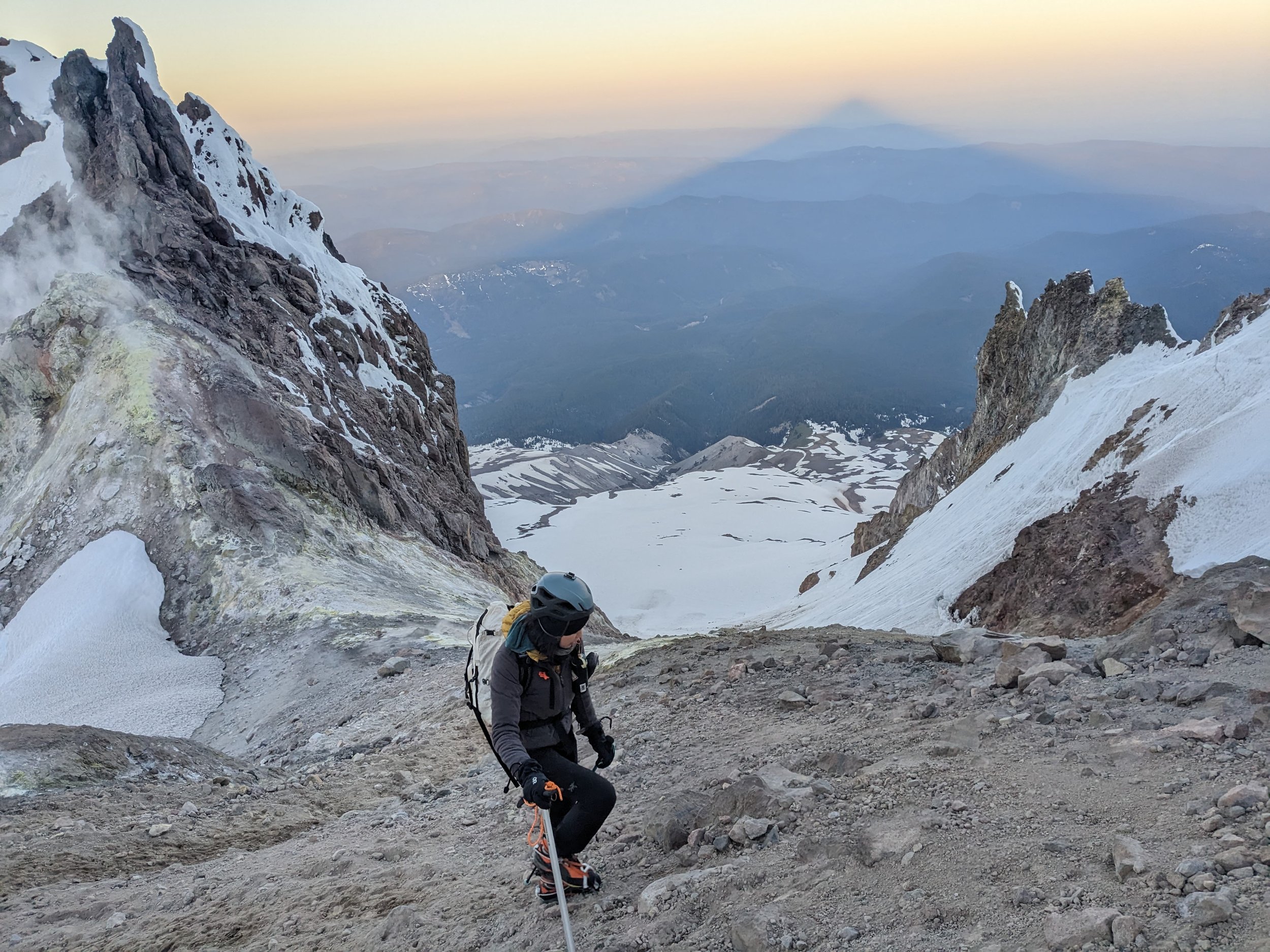
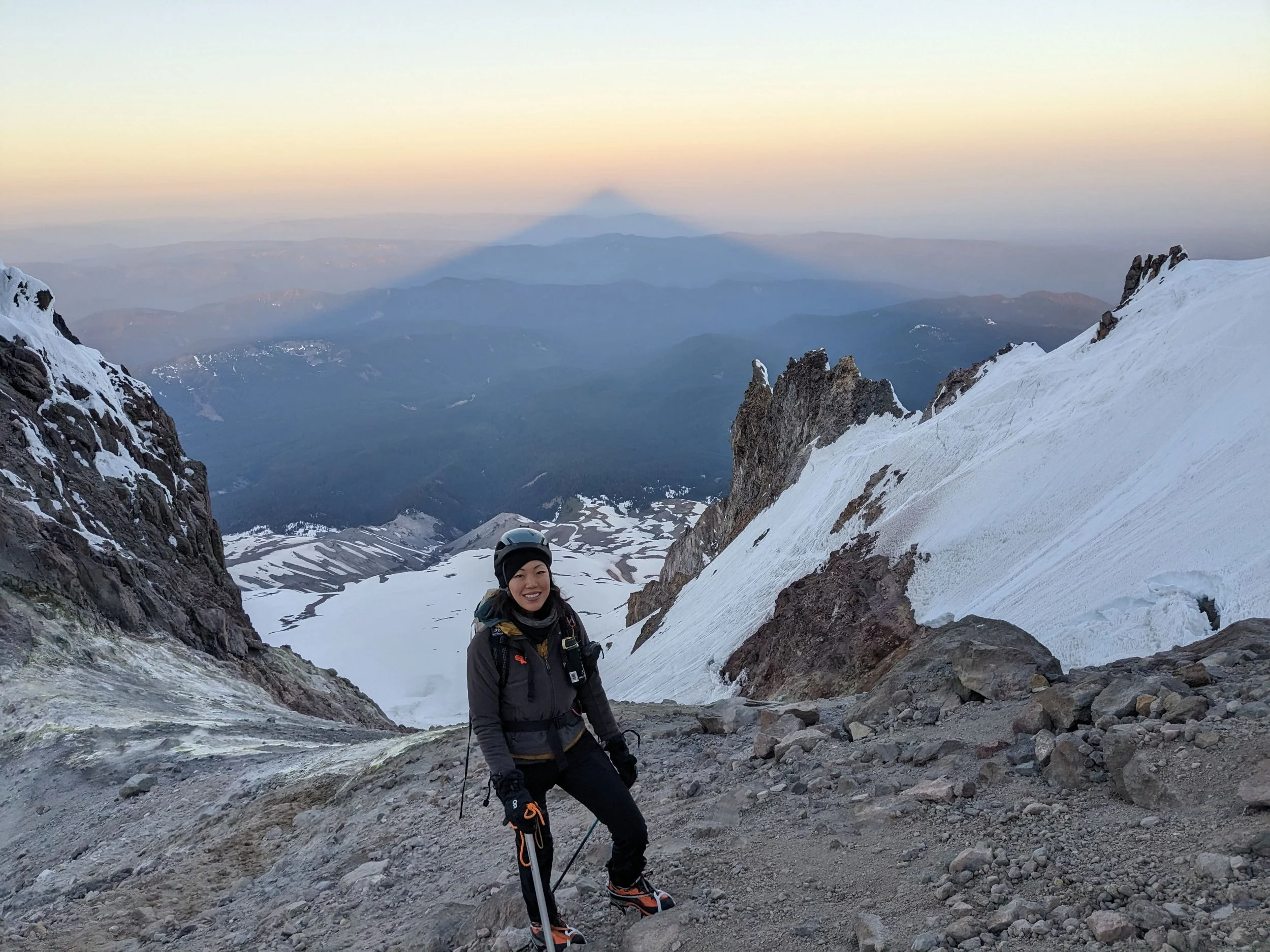
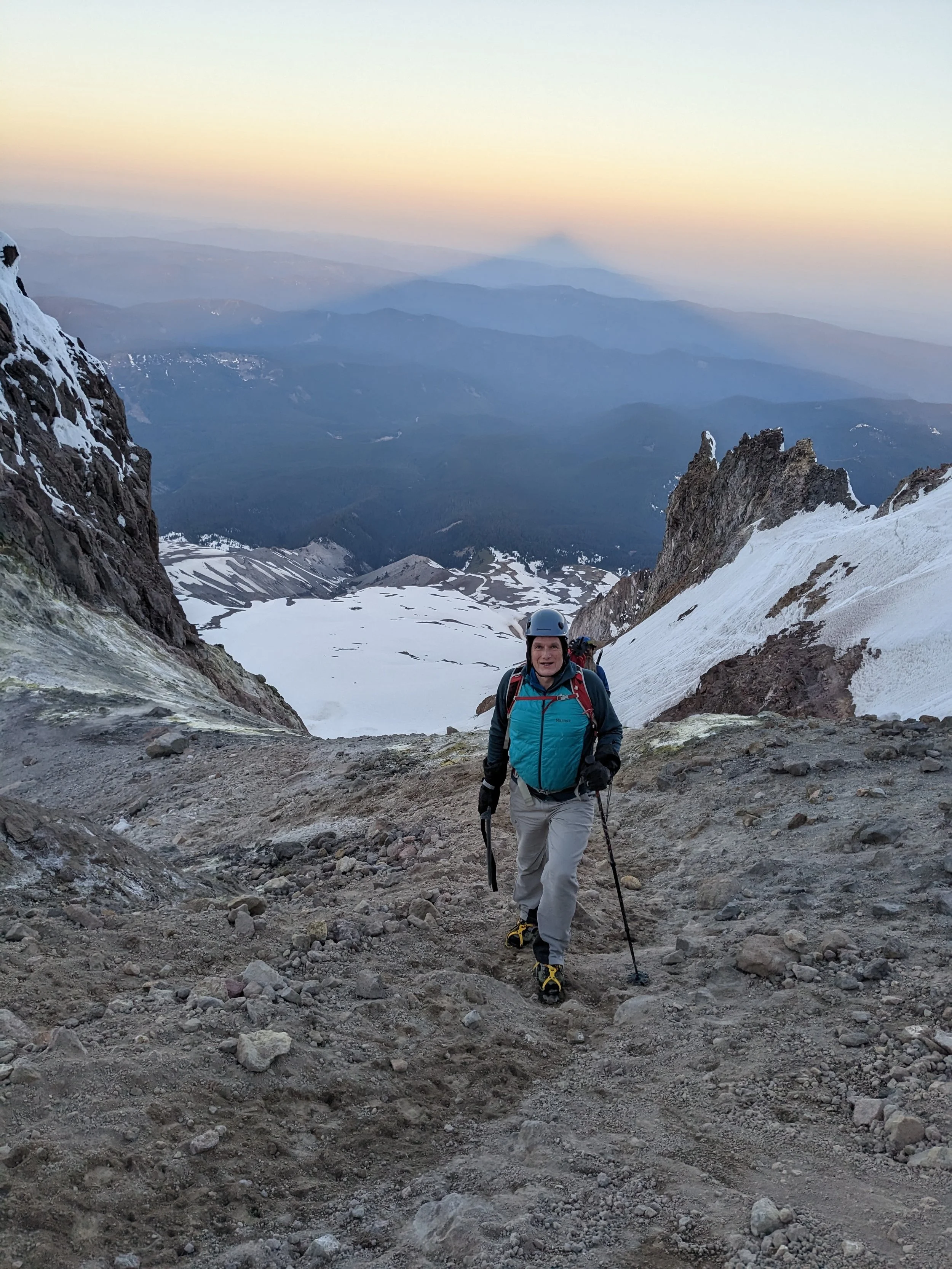
I transitioned from the French technique to front-pointing to finish the steepest section. Guided groups around us were roped up and inching along, but I felt surprisingly relaxed. Spending the previous week throwing myself onto rocks and practicing ice climbing made the steep exposure feel natural.
The Ridge Walk & Descent
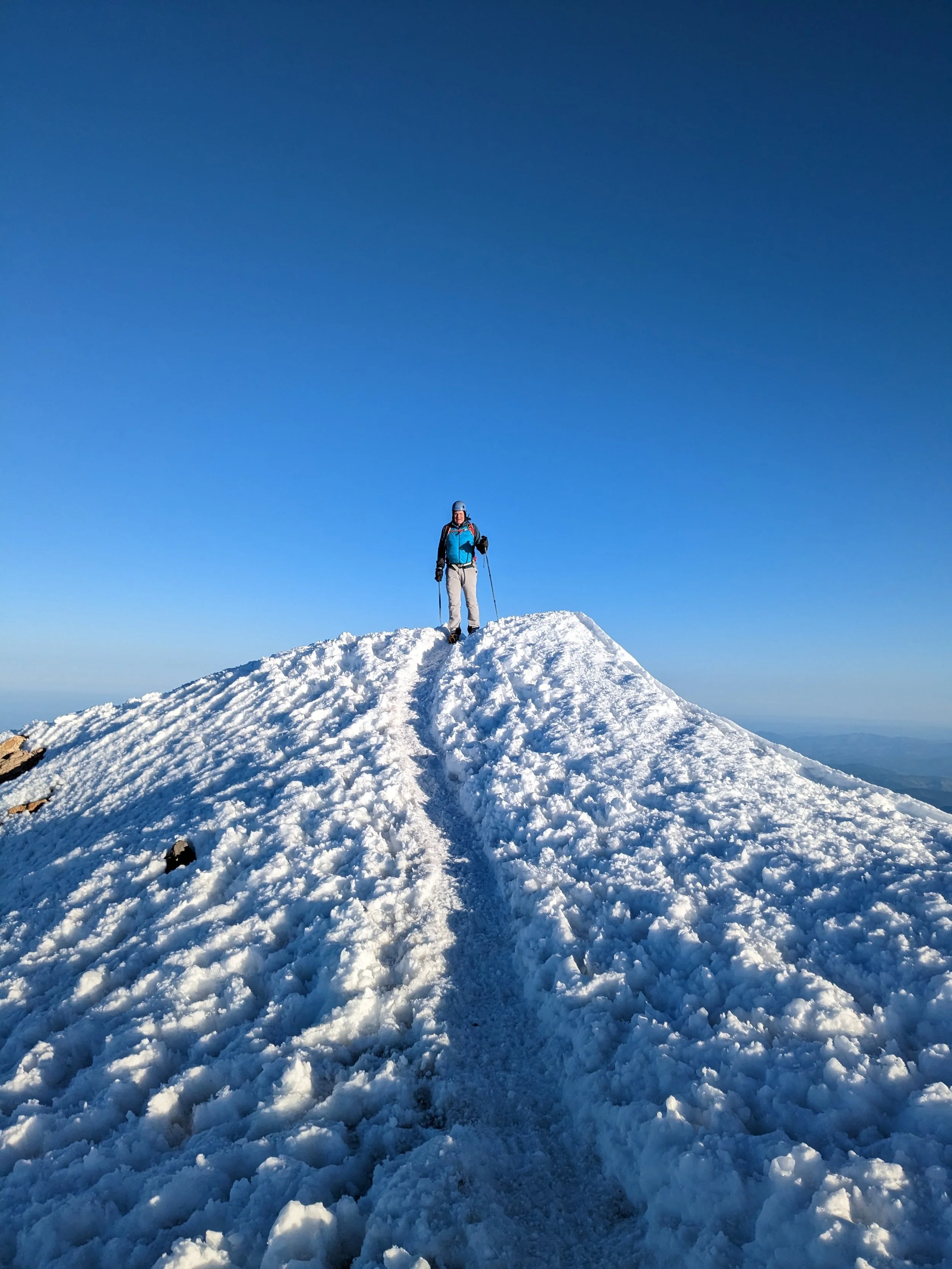
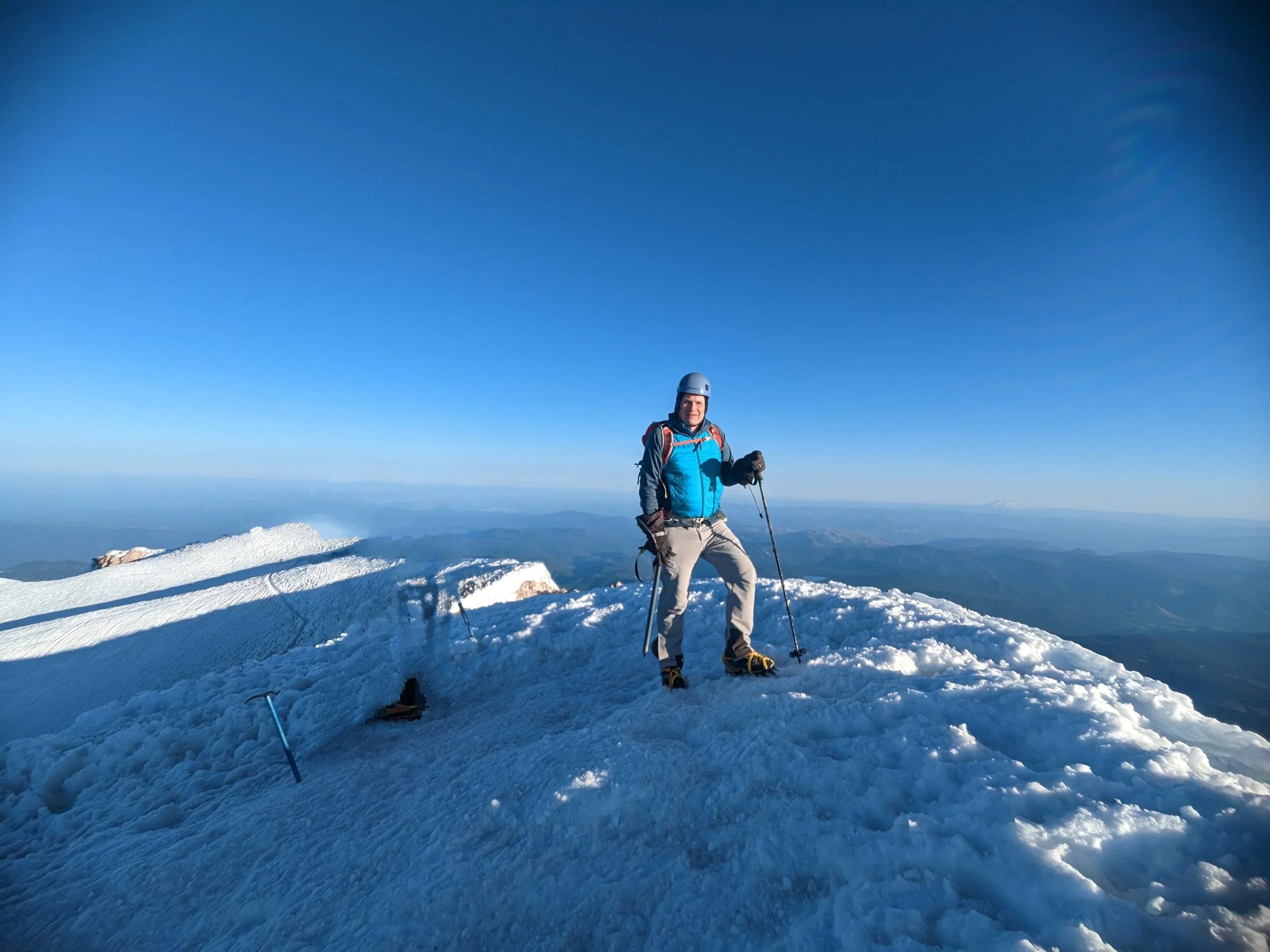
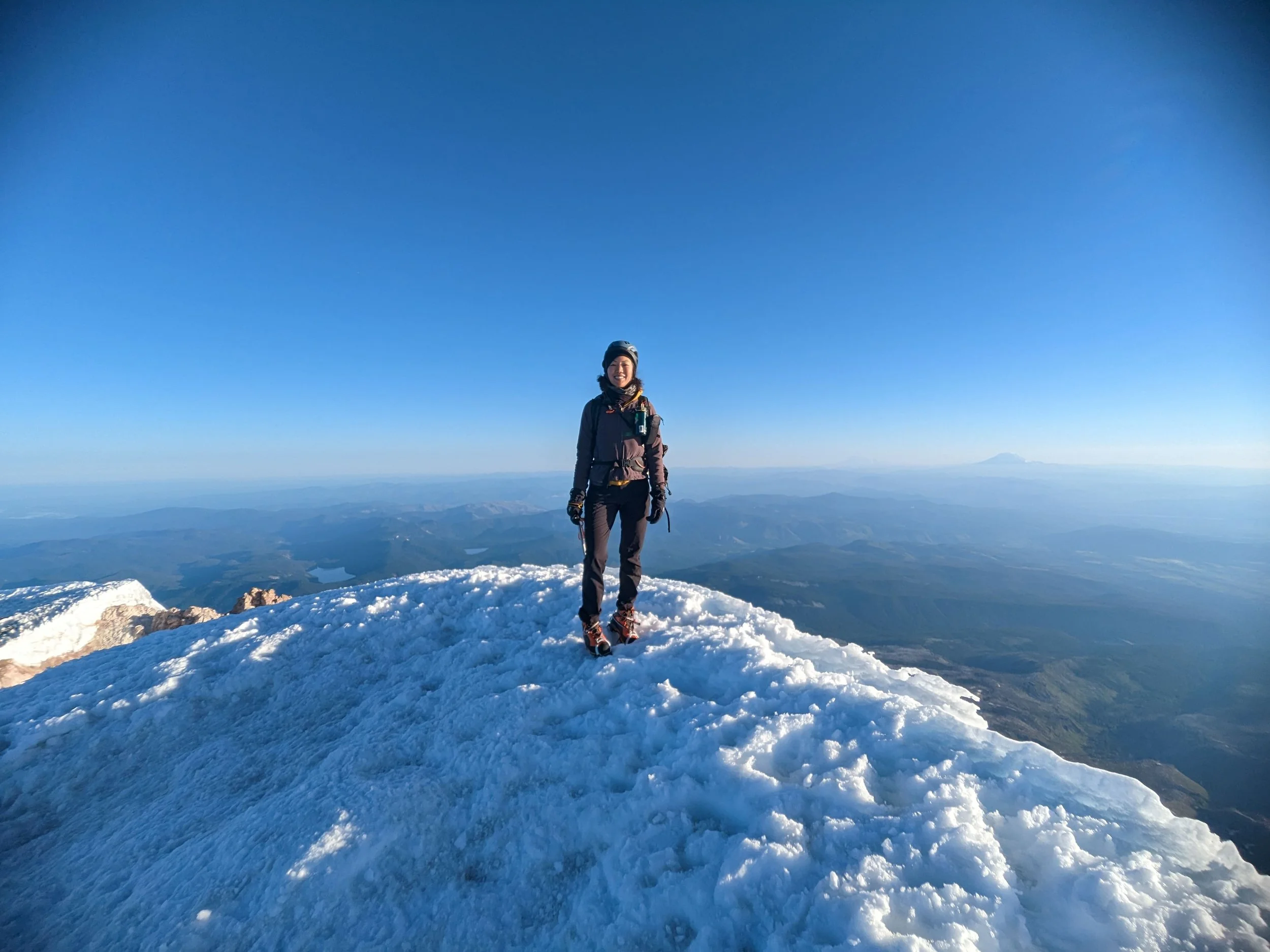
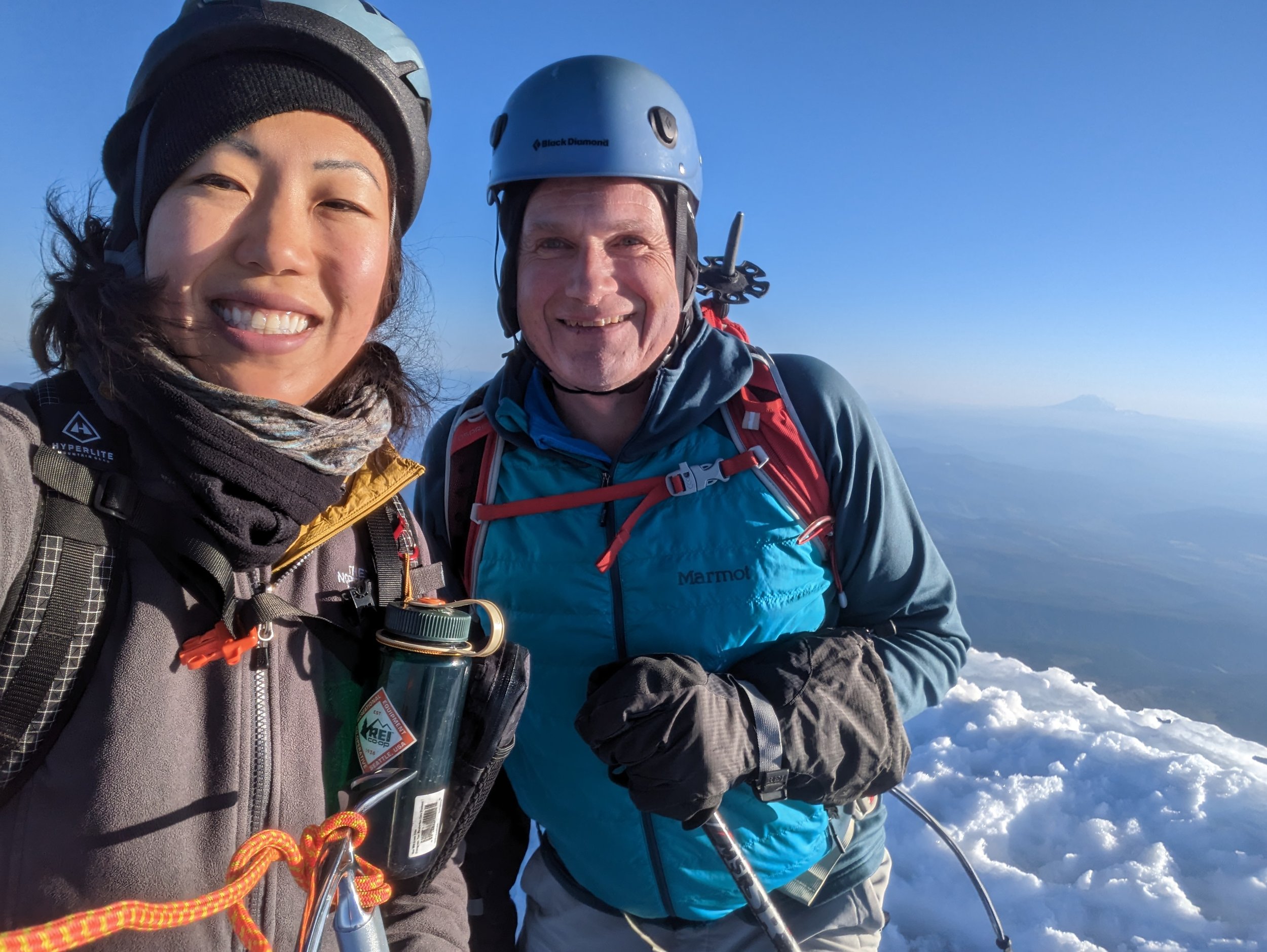
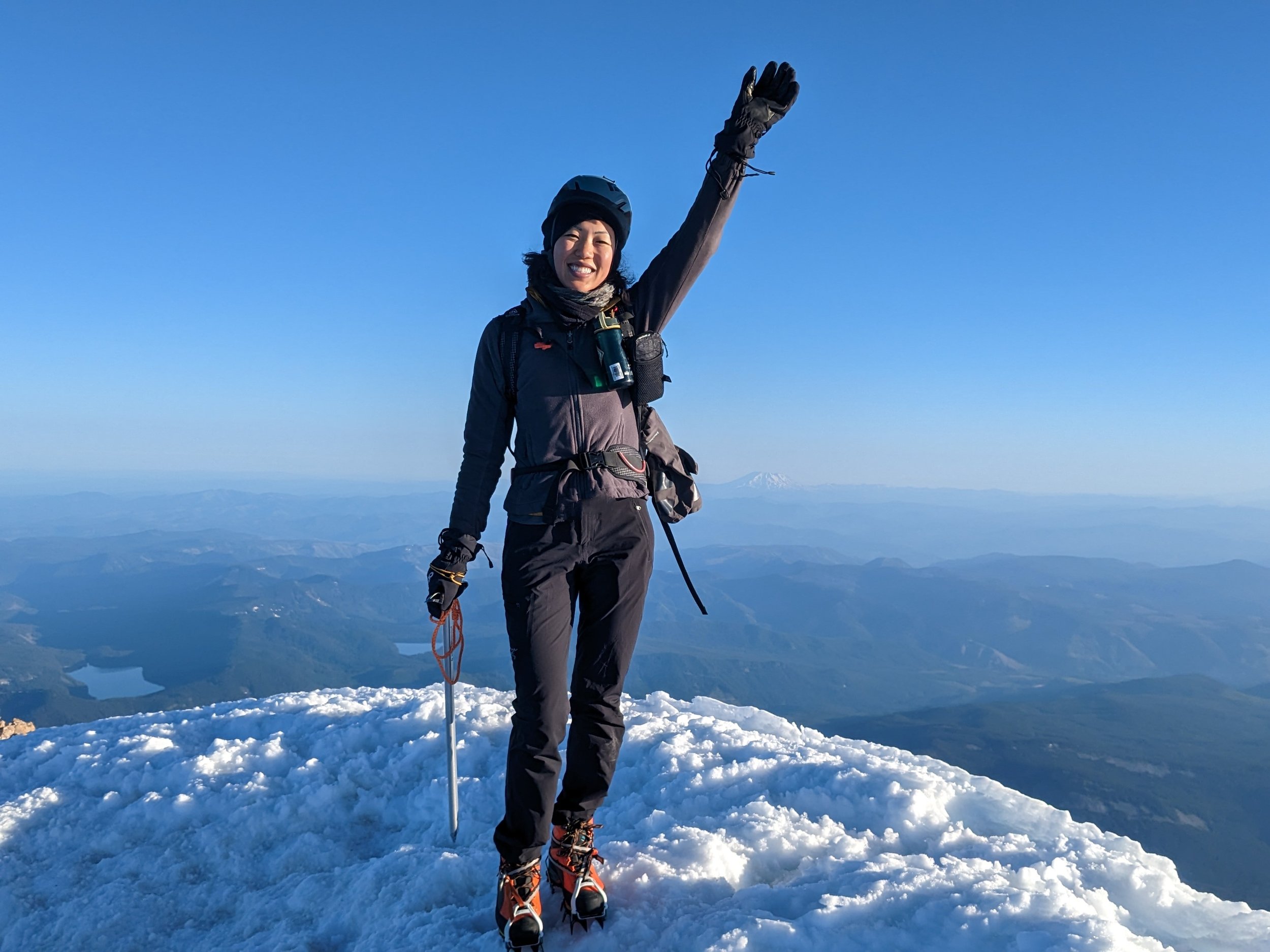
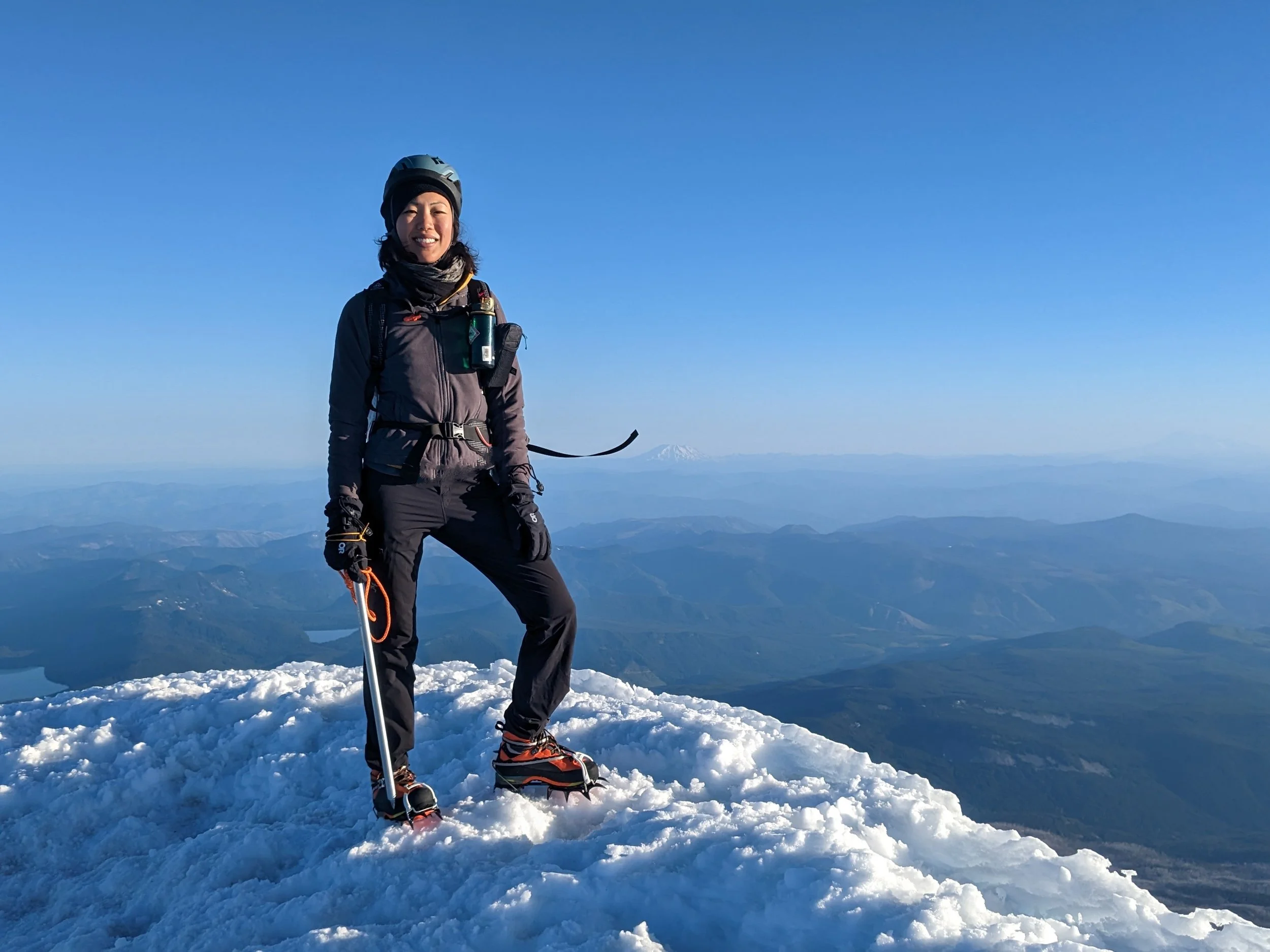
The summit ridgewalk traverse was breathtaking. Standing on top at 6:30 AM was deeply satisfying—though a competitive part of me honestly wished the climb had been just a bit harder.
We began the trek down and made it back to the car by 10:15 AM. The only real struggle of the day was a nasty blister on my right pinky toe that made every downhill step a test of patience.
Reflections & Beta for Climbers
Respect the mountain: Mt. Hood is not a true beginner peak. Even guided, it requires solid footwork, comfort with exposure, and awareness of objective hazards like falling ice.
Gear selection: You’ll see some AllTrails reviews recommending two axes. For these conditions, a single standard axe was completely sufficient.
Preparation pays off: If you want to enjoy steep alpine terrain rather than just survive it, invest in technical training beforehand.