Mount Whitney + Muir
You will never forget the time you hiked Whitney
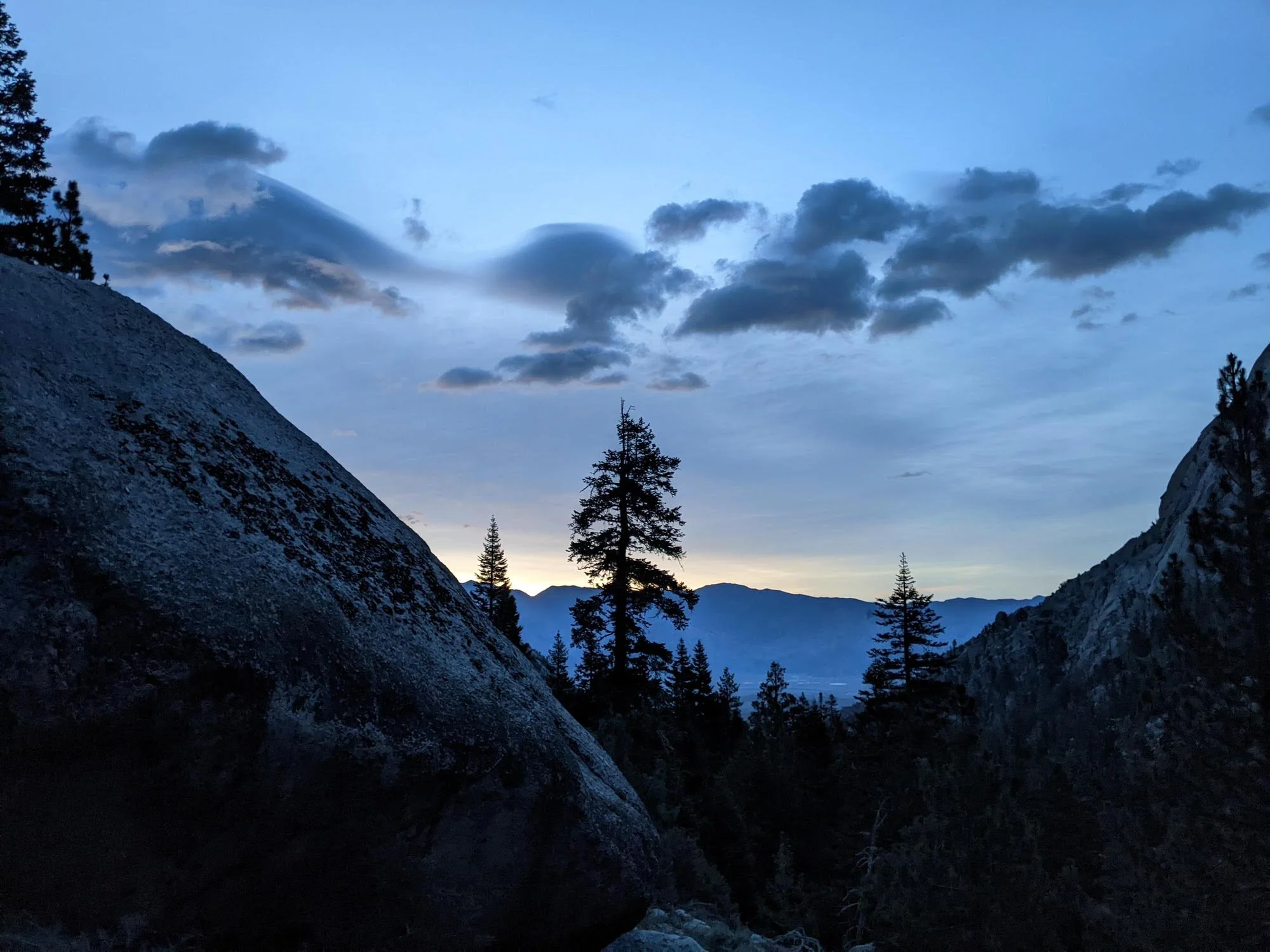
As the morning sun rose in the east, I paused to appreciate the gradual shift of light, watching each minute bring a subtle change across the landscape. With an 18-pound daypack loaded with equipment, water, and food, we pressed on toward the E Ledges via the North Fork of Lone Pine Creek, following the approach to the Mountaineer’s Route. We had started an hour later than planned, and our pace reflected it—slower than we would have liked. It is 5am, and we are starting the hike. It will be my first time on Mount Whitney, I chose to go up the Mountaineer’s route, as I’ve heard the route is challenging and I’m ready for it.
Two nights earlier, I had slept in Mammoth Lakes at 7,000 feet, and the previous night at a walk-in campsite near Whitney Portal. My breathing felt steady, though I couldn’t help but think that spending the prior weekend acclimatizing at 10,000 feet might have made the climb easier.
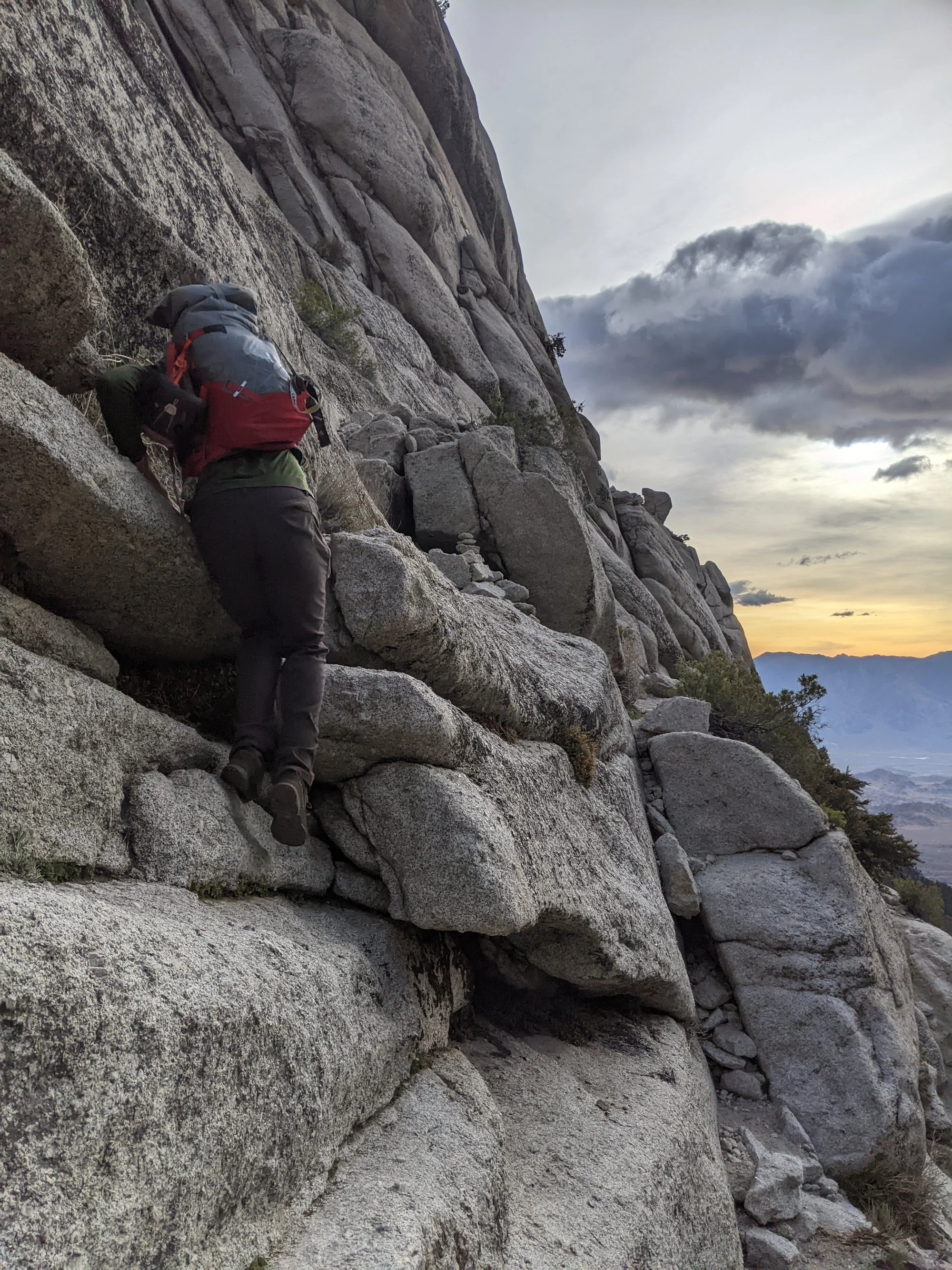
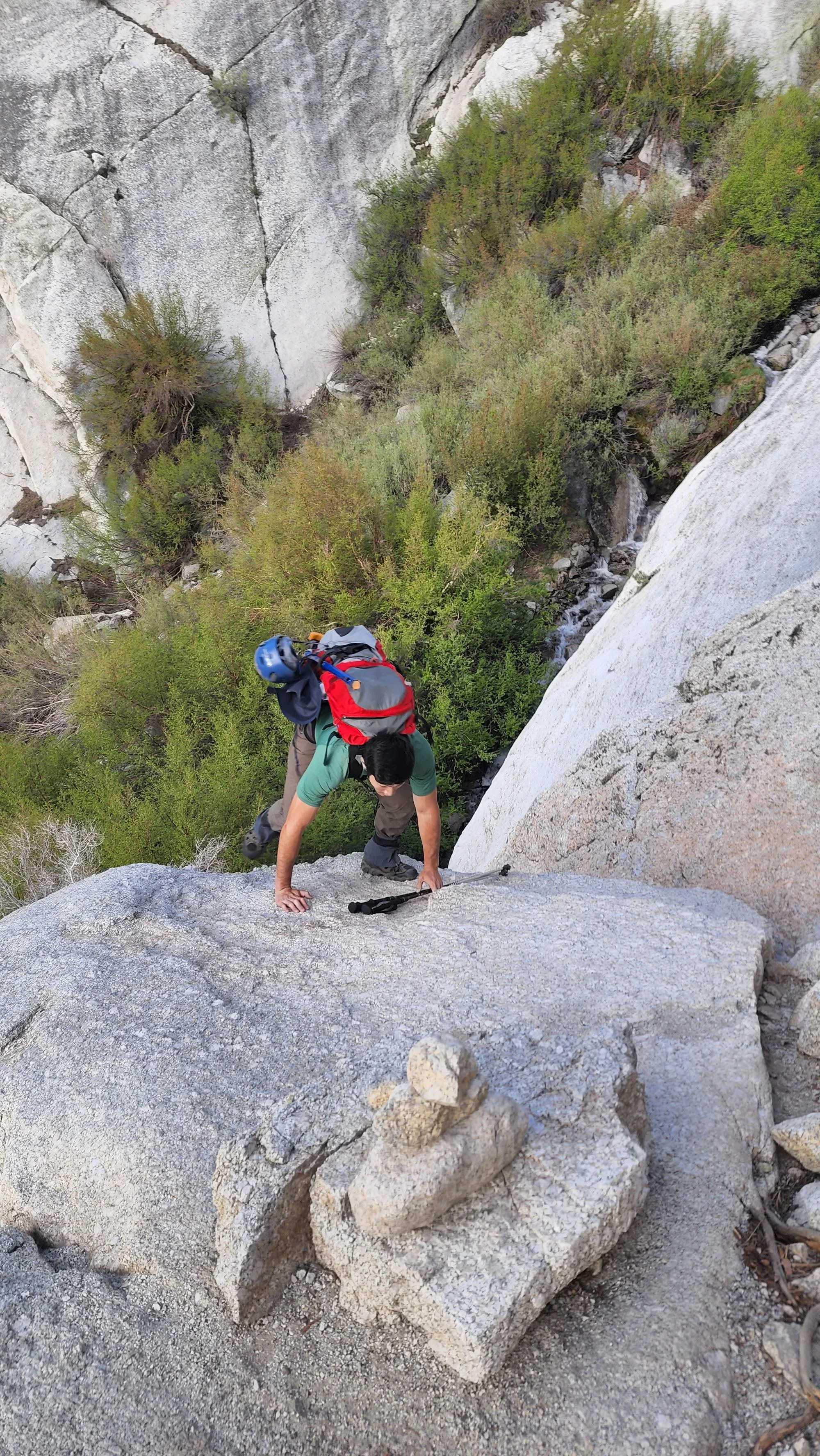
The forecast called for 30 mph winds from the southwest and temperatures near 20°F at the summit. However the day unfolded, I knew it would be long and demanding. I chose hiking boots over trail runners so they would pair better with crampons. I hadn’t put many miles on them since a backpacking trip the year before, but I trusted they would handle the scrambling ahead.
I pulled my thoughts back to the present, trying not to dwell on what lay ahead. Everything still felt new, charged with a quiet excitement. I mentally traced the route—where the water sources were, what the next thousand feet of climbing might look like. It was a beautiful morning. Sunlight warmed the granite, and the stillness of the wild felt almost complete.
By 10 a.m., after gaining just 2,000 feet over five slow hours, one of our team members decided to turn back at 10,500 feet. He was struggling to breathe and unsure about continuing to the summit. Sean and I made sure he had a map and could safely retrace his steps before we watched him begin his descent alone.
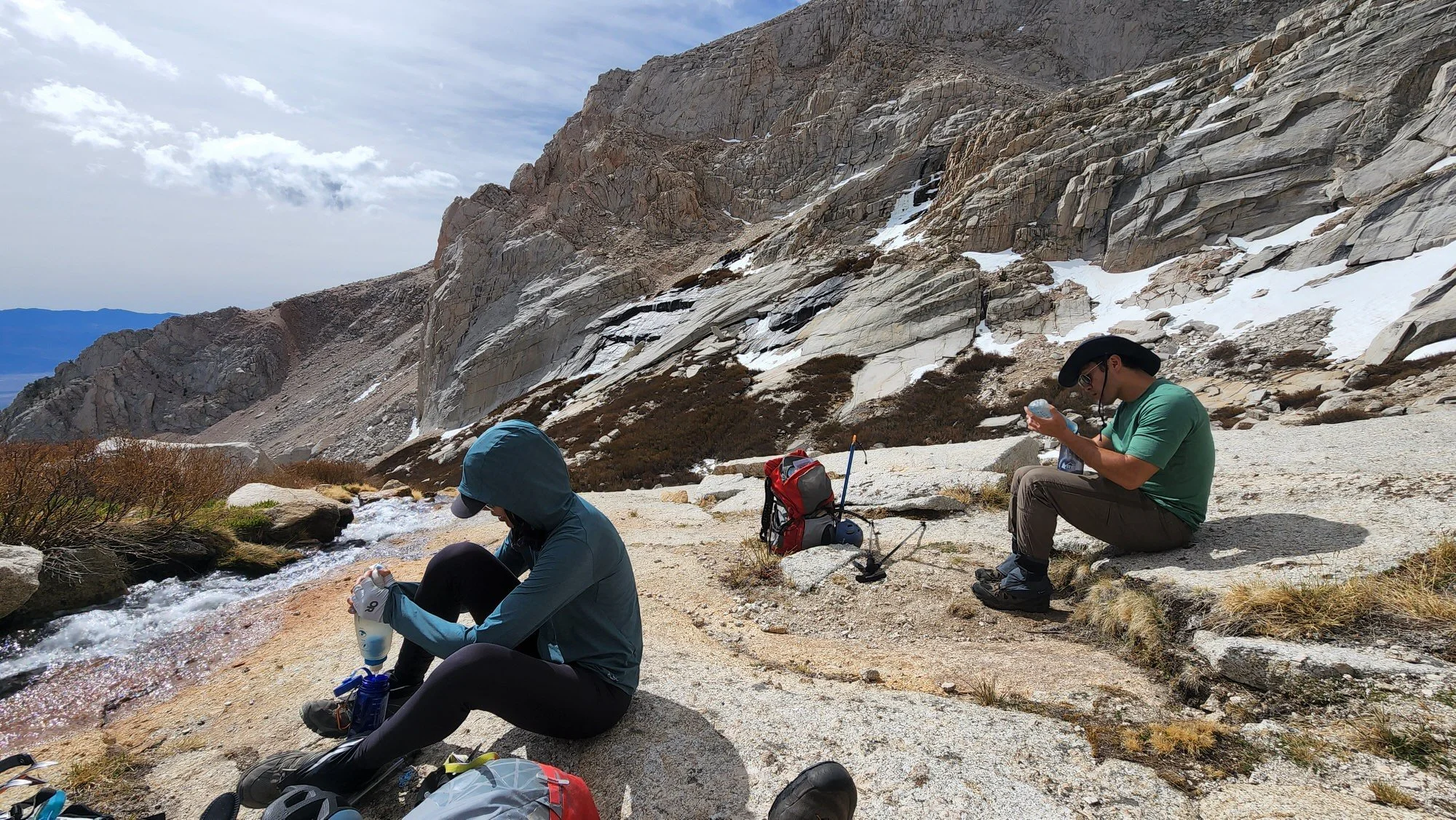
Filtering water form the river for drinking
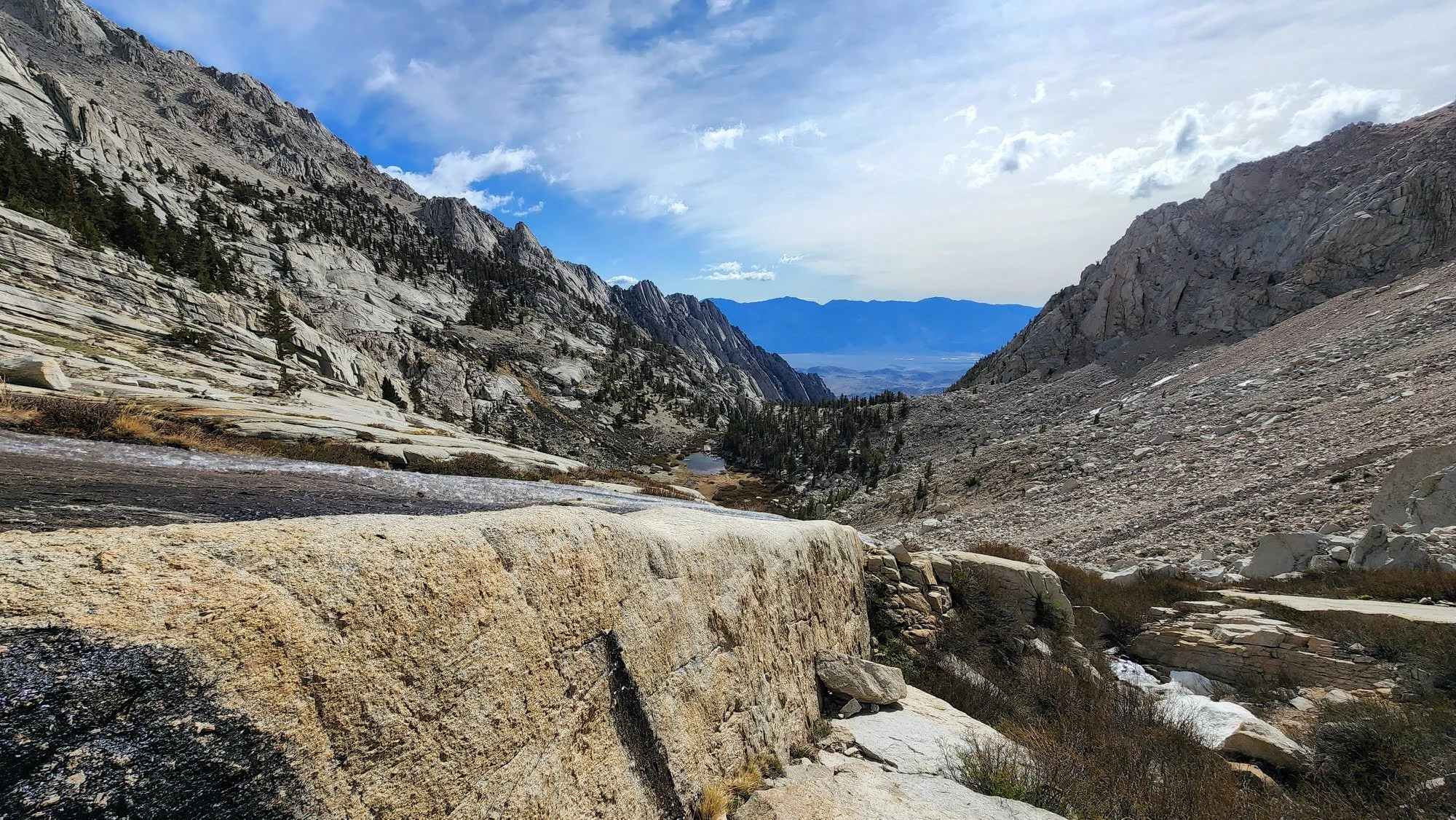
Looking down at the valley
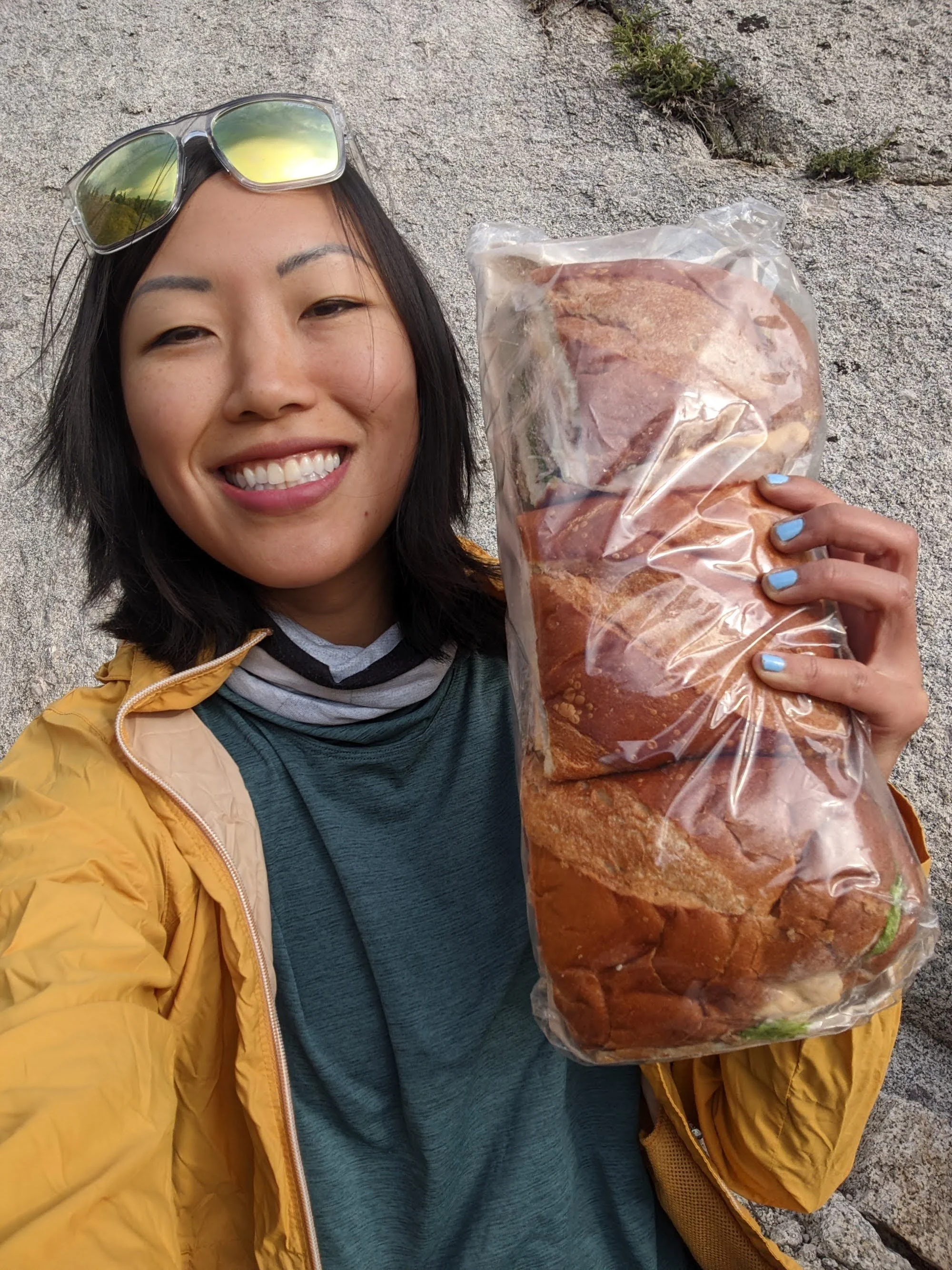
For the day, I opted a huge sandwich from the grocery store in Bishop. It must have weighed 3 pounds at least.
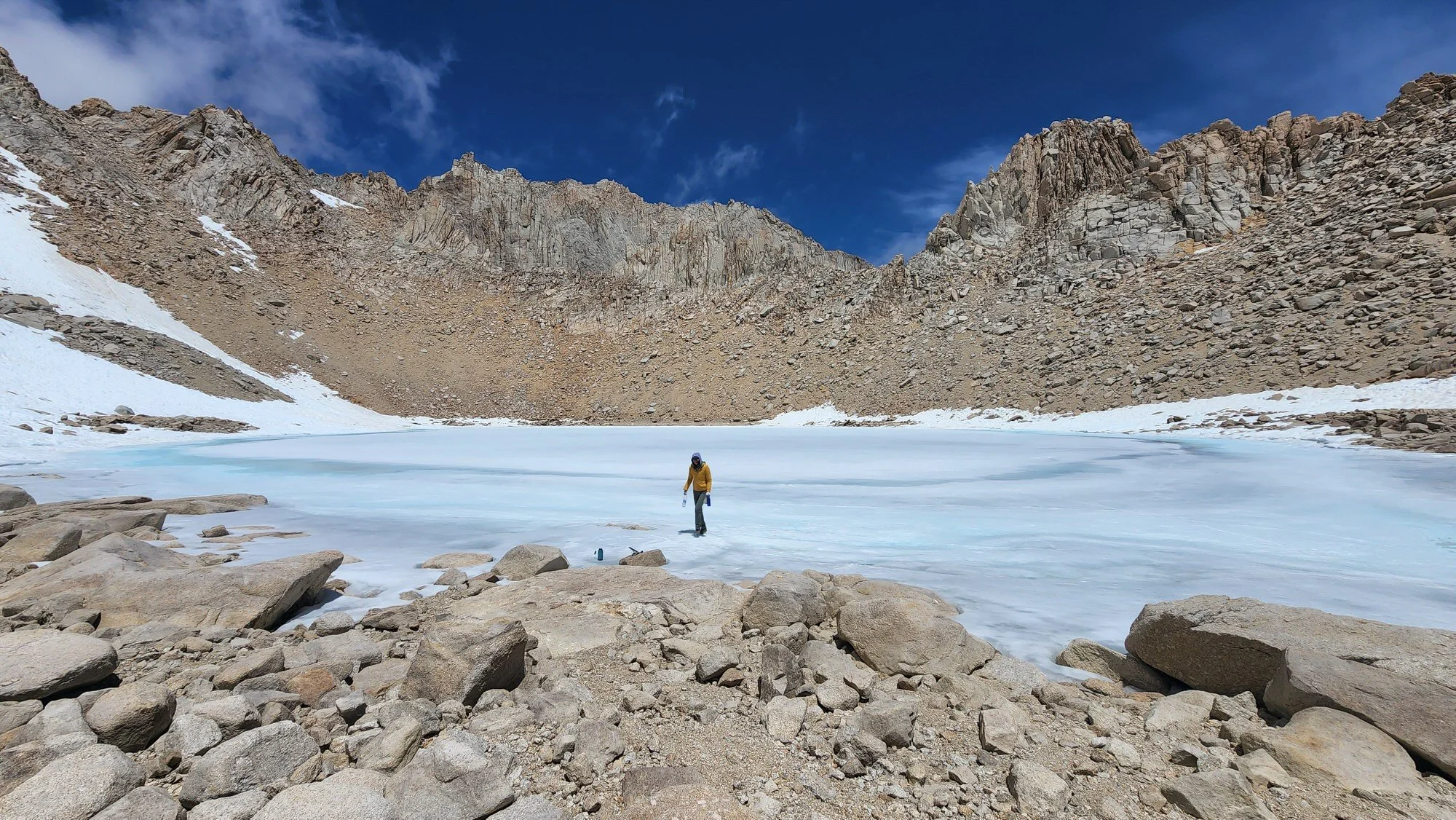
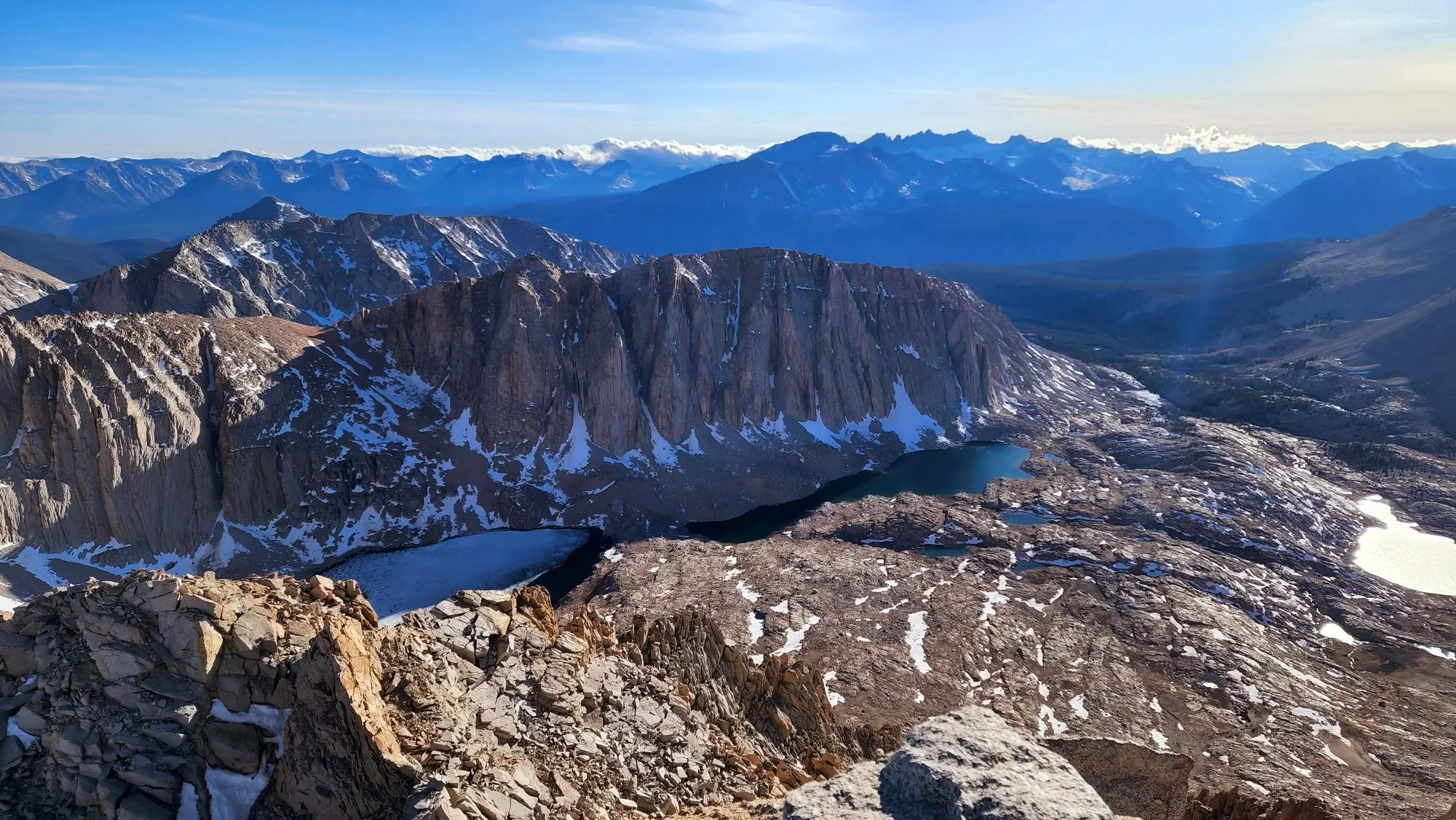
We paused to take in the stark beauty of the Whitney pinnacles as we continued toward Iceberg Lake. After grinding up loose scree and hopping across boulders, we reached the lake at 11:30 a.m., sitting at 12,600 feet.
A few tents dotted the area, and we could see climbers descending the chute above. The temperature had dropped noticeably—I had all my layers on and still felt the cold. I wondered whether filtering water from the frozen lake would even be possible.
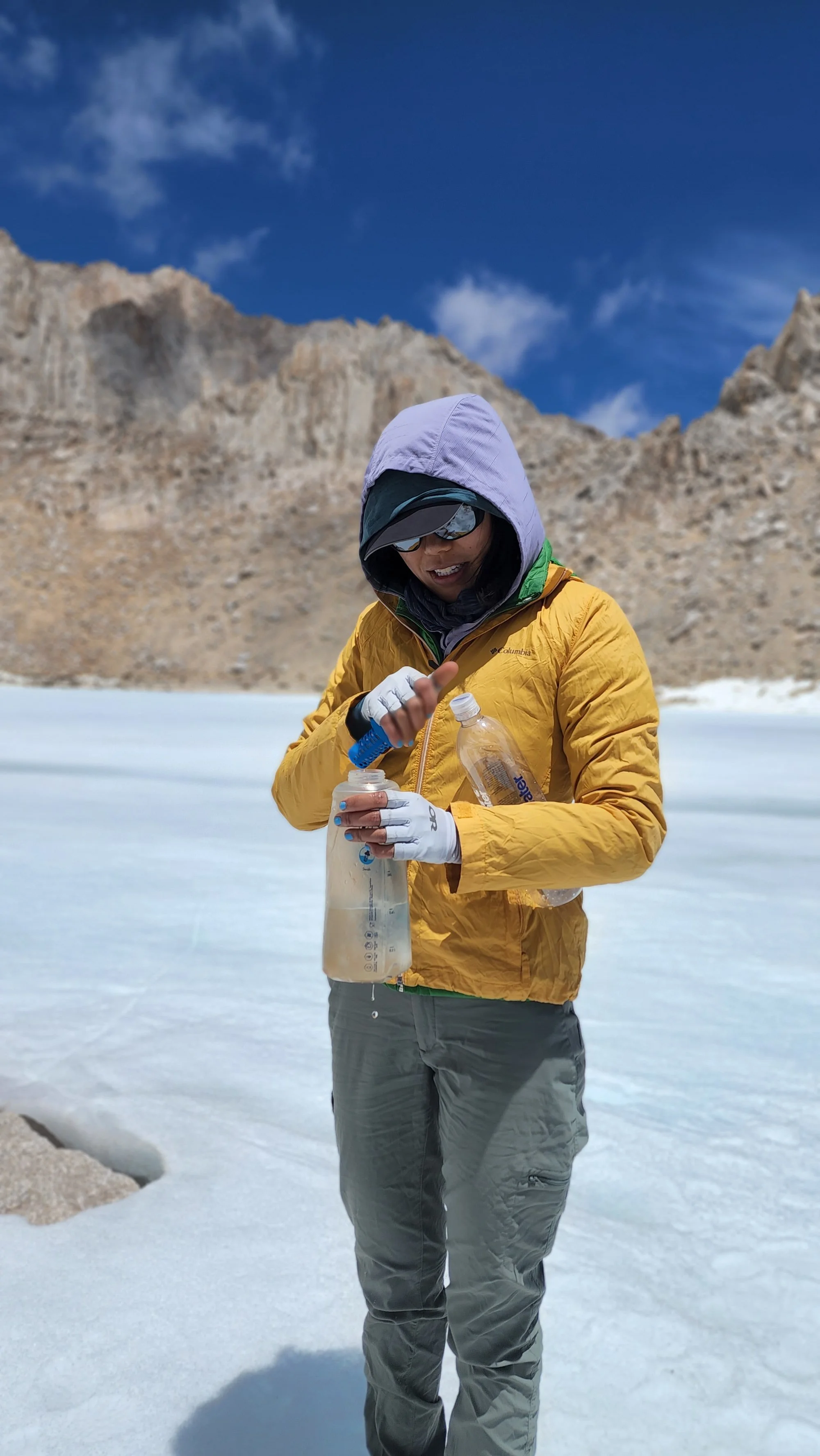
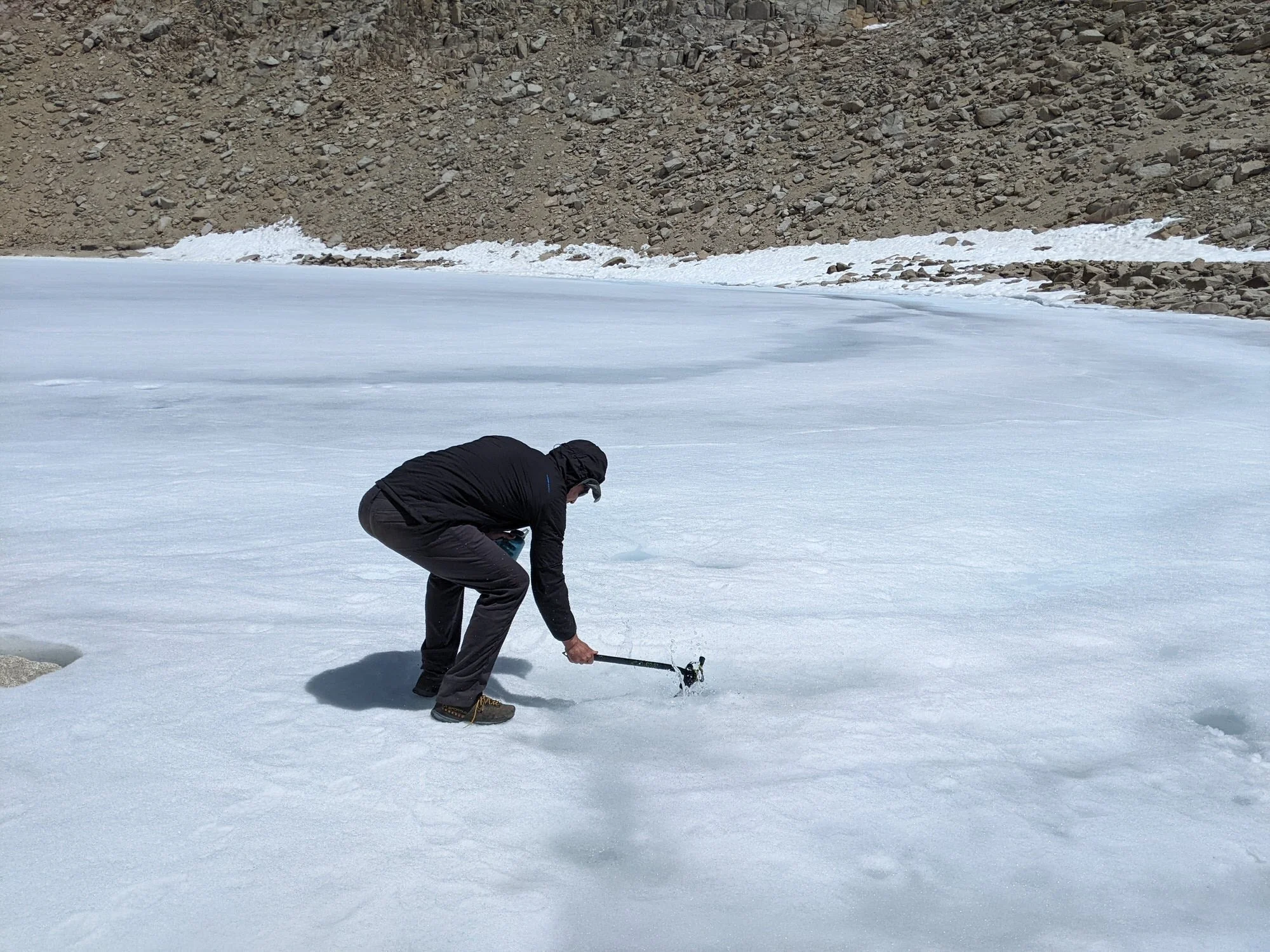
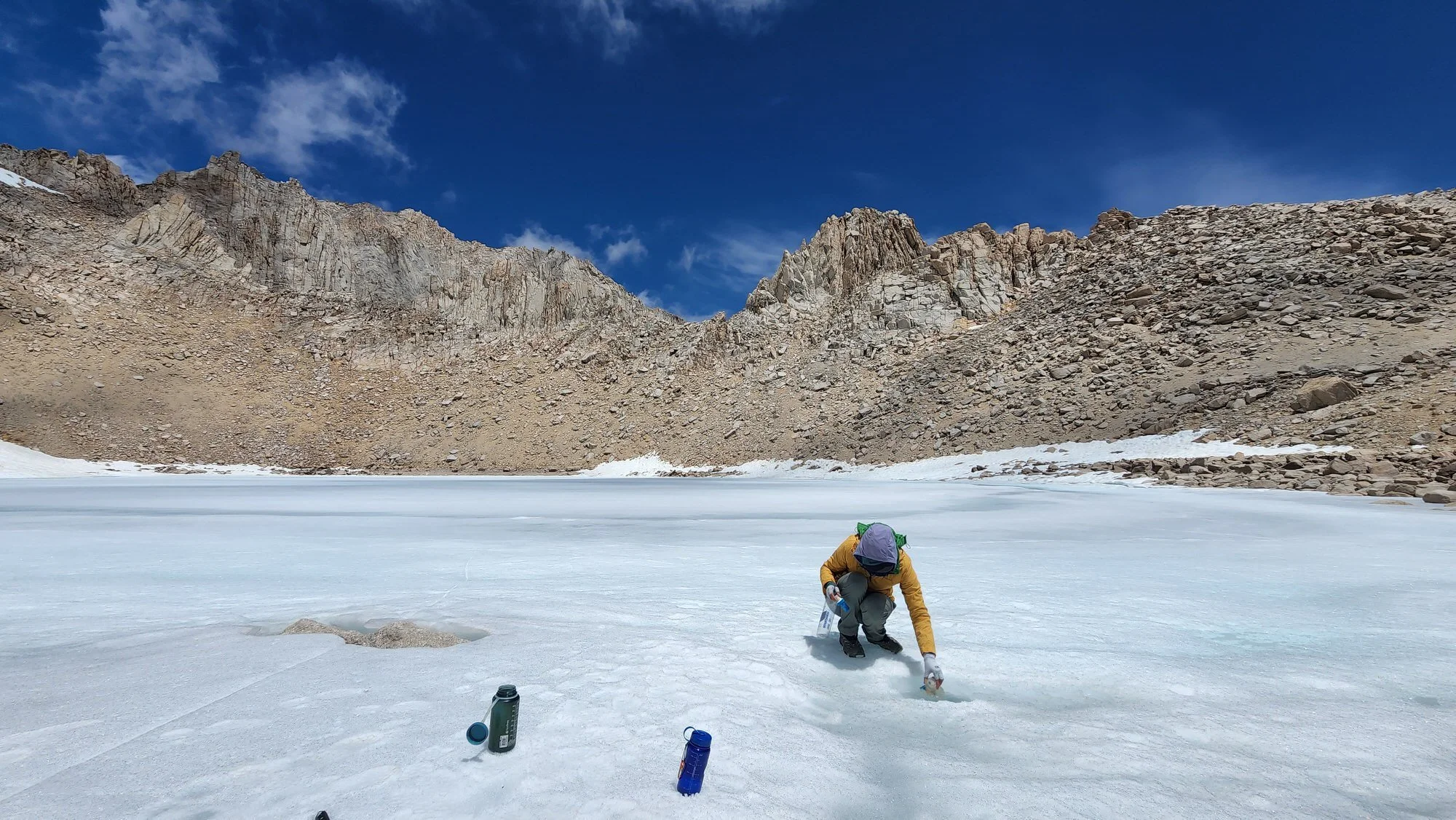
Stepping carefully onto the ice, we left faint impressions on its surface. Sean took his axe and chipped out a small well to reach liquid water beneath the frozen crust. Even with gloves on, our fingers quickly turned red from the cold. The water was nearly too cold to drink, but we managed to collect about two liters each—probably less than we should have carried.
We took a short break for lunch while watching climbers descend. One of them was postholing up to his waist, a slow and exhausting struggle. I estimated about four hours to the summit: two hours to gain the next 2,000 feet, plus an additional hour for every 1,000 feet above 10,000.
From where we stood, it didn’t look like crampons or ice axes would be necessary for the ascent—the snow could mostly be avoided. I felt a twinge of disappointment. I had been looking forward to practicing with crampons and putting them to use on the Mountaineer’s Route. Still, it gave me another reason to come back.
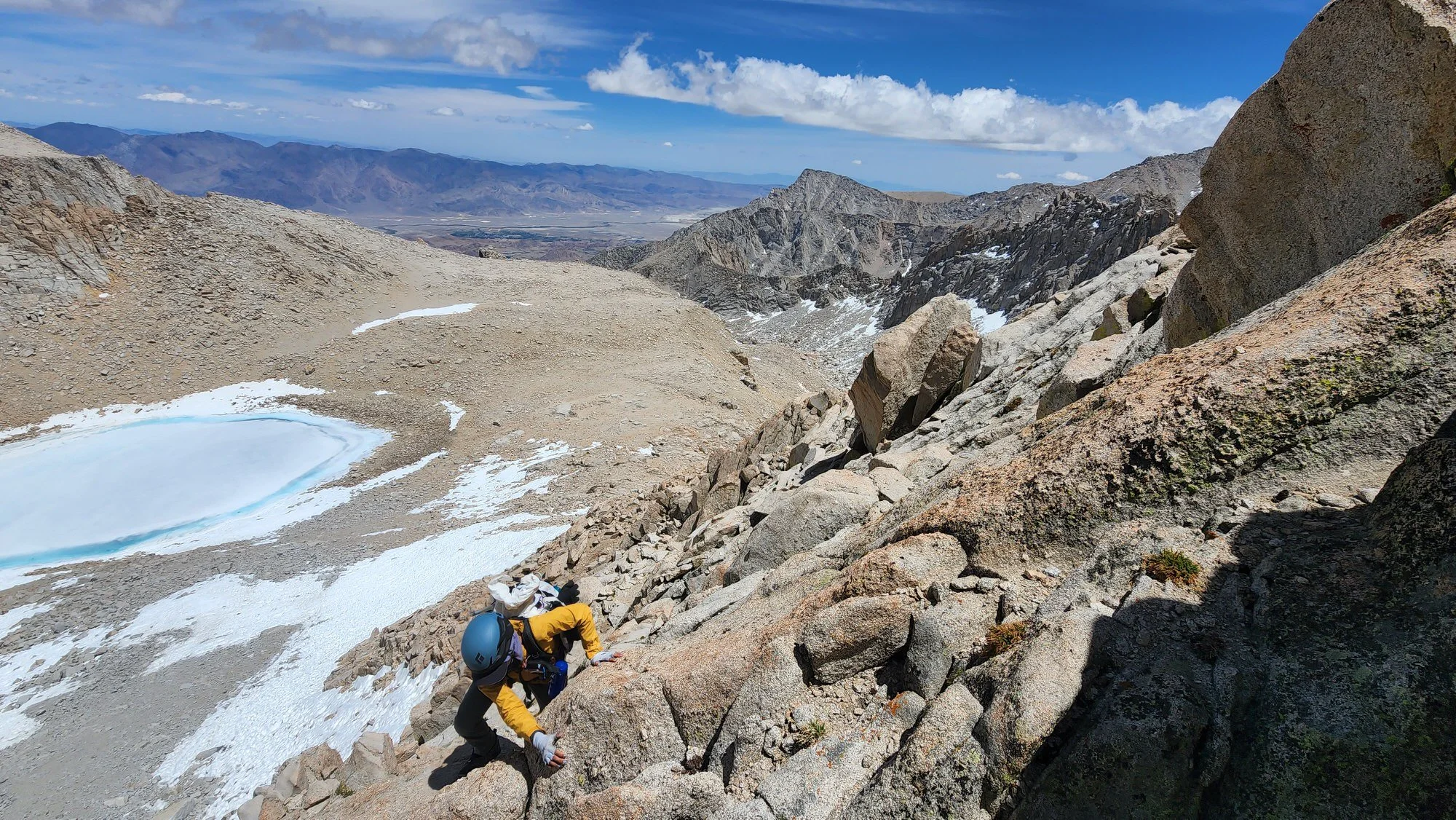
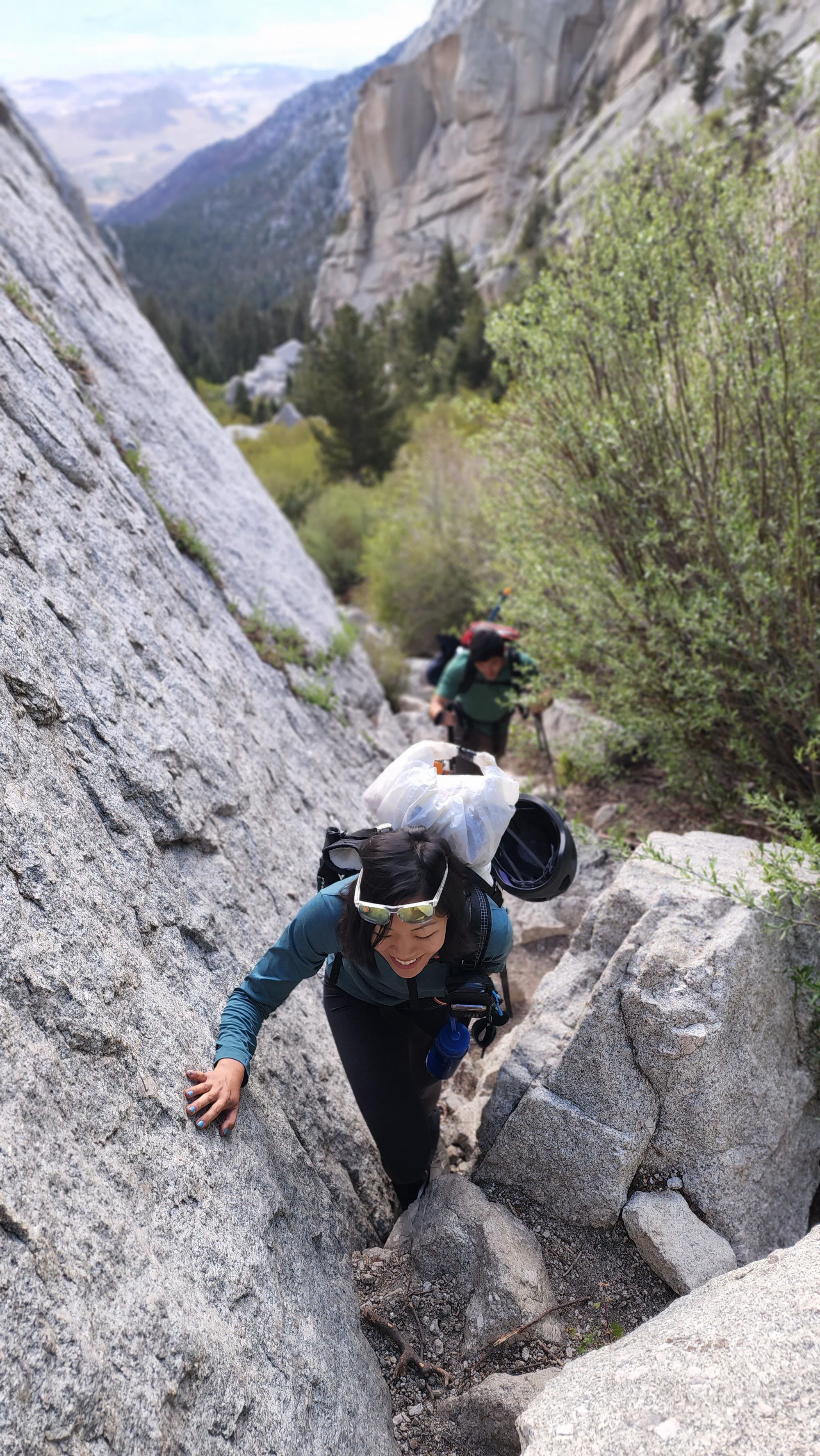
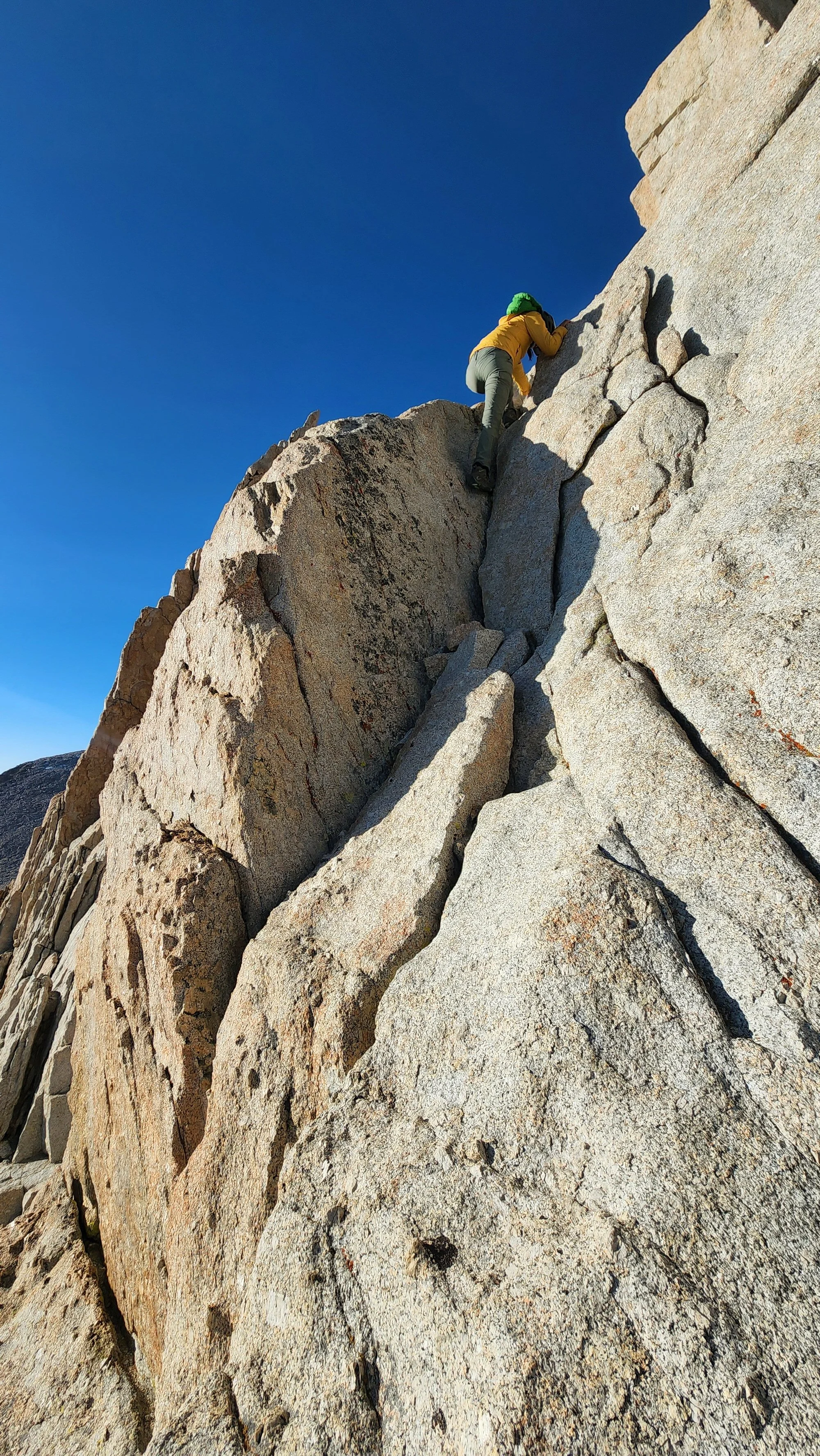
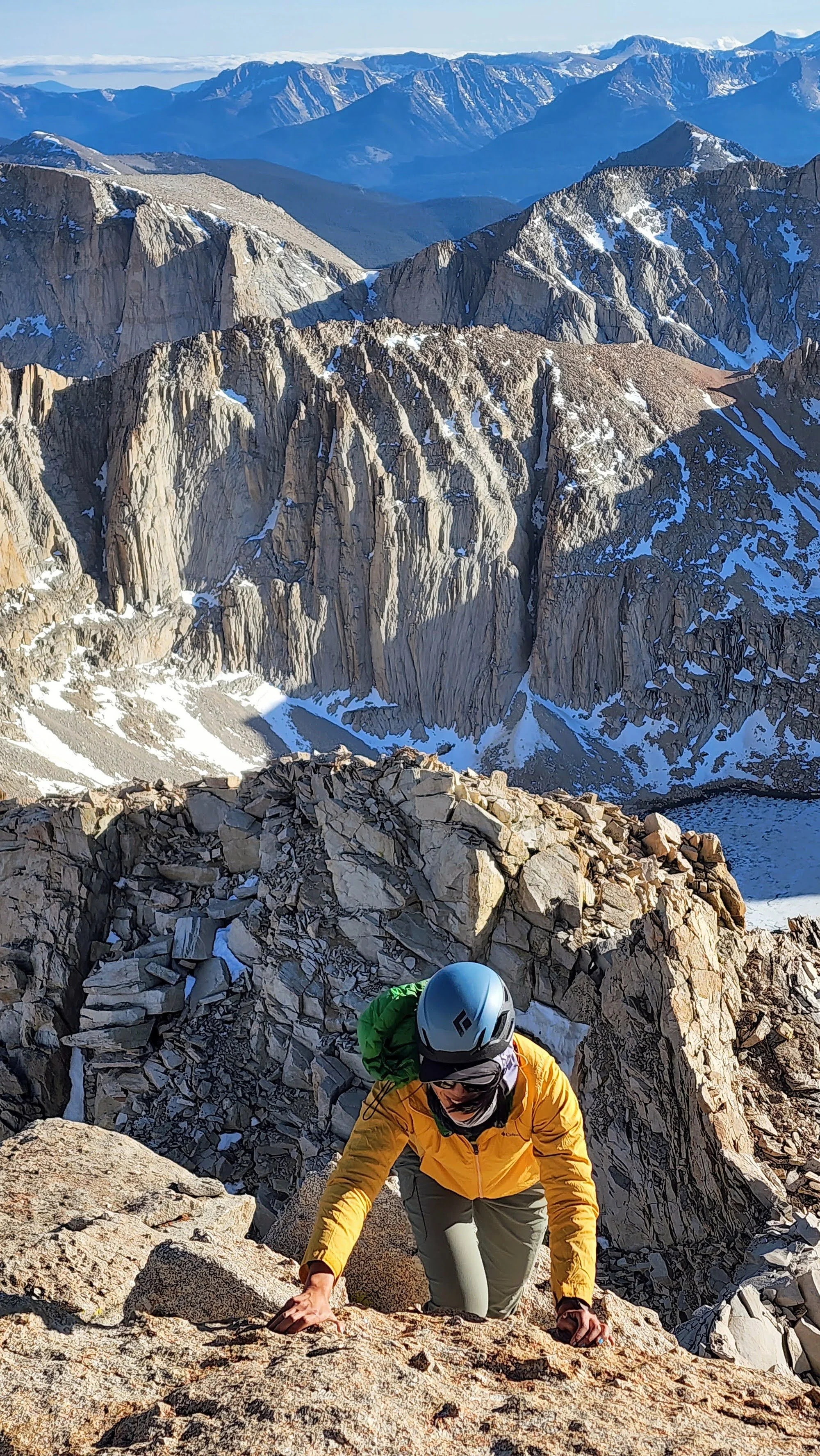
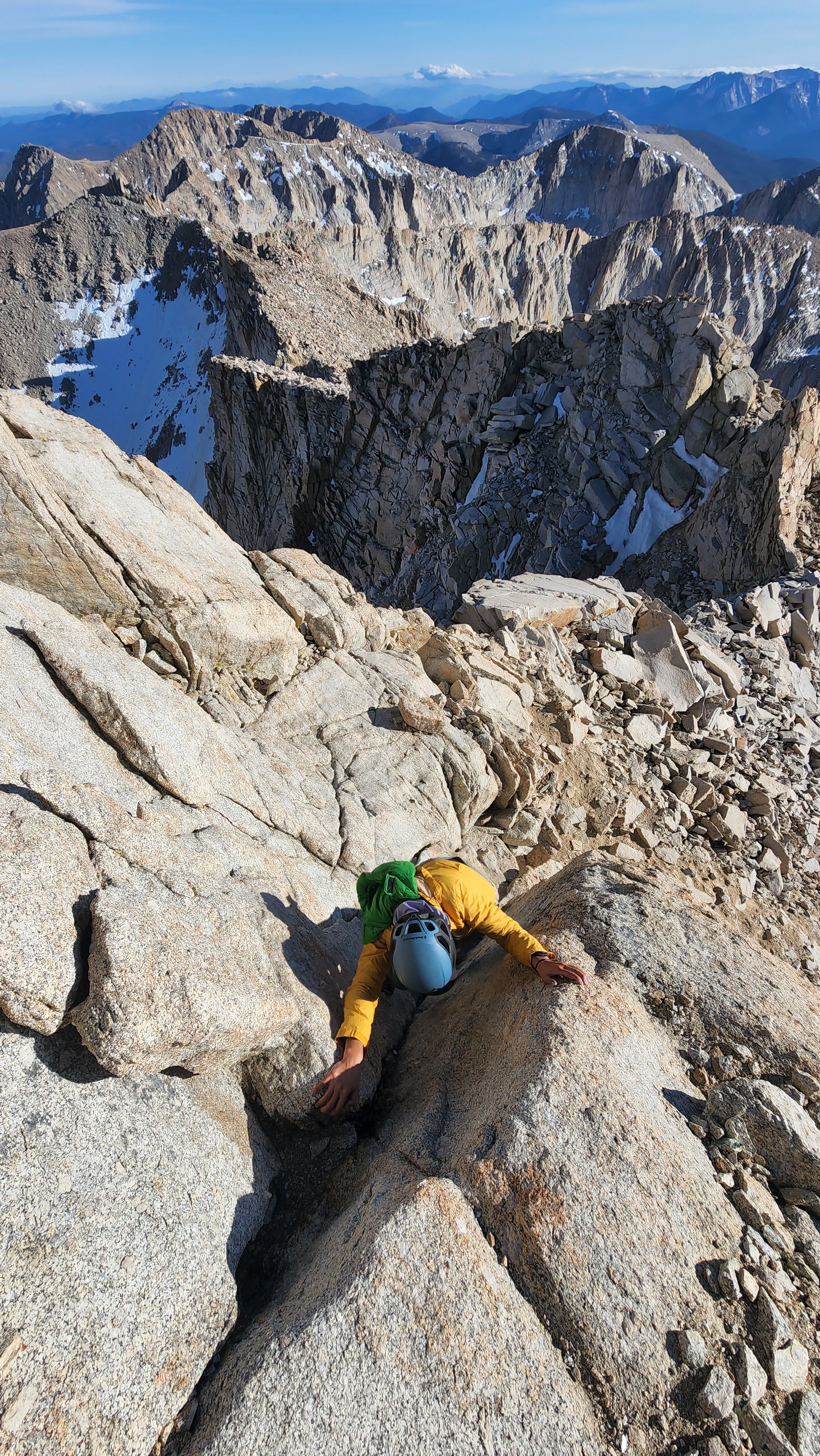
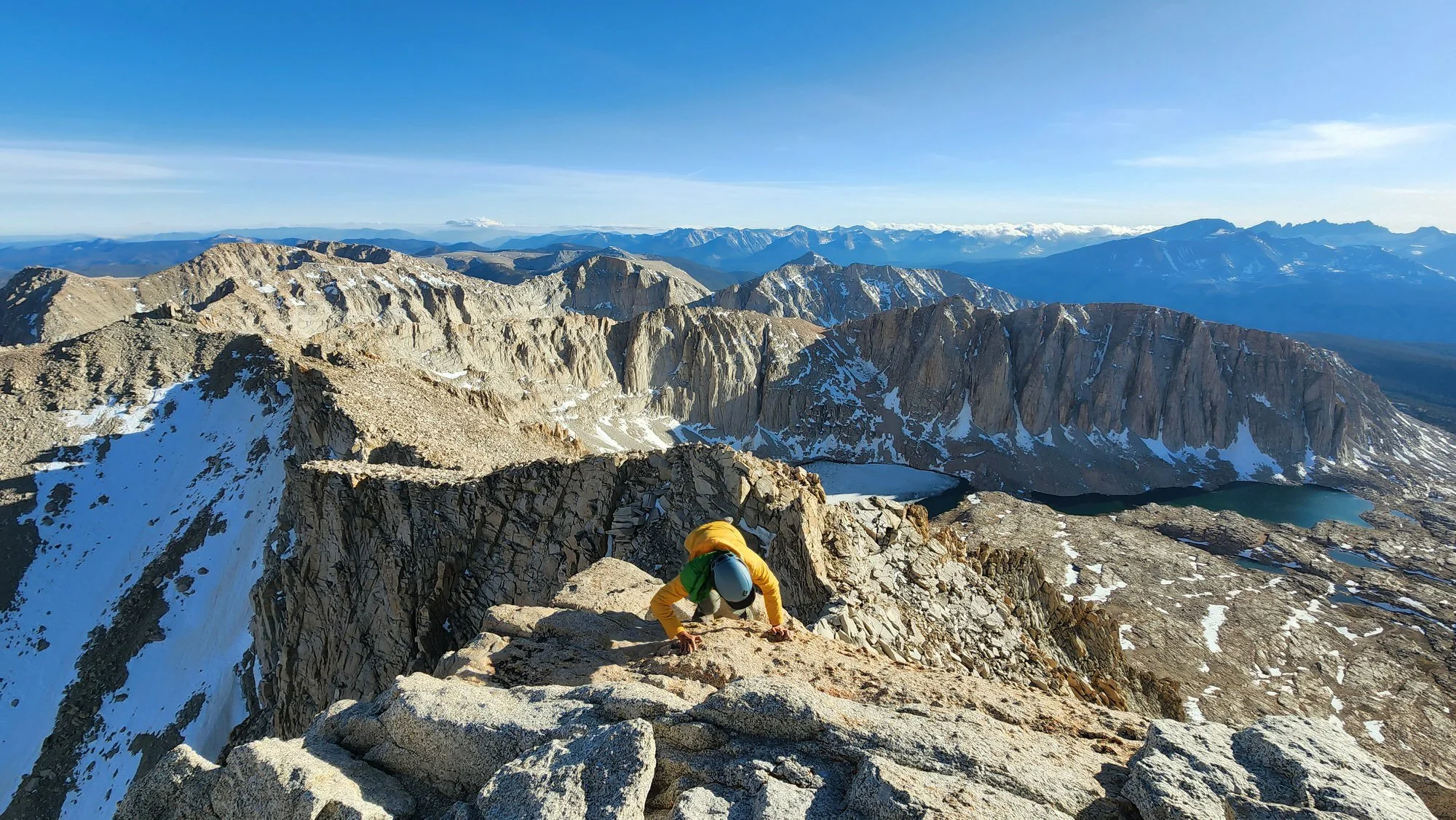
This was, without a doubt, the most fun I’ve had on any climb so far. The route offered stretches of Class 3 moves that made the scrambling feel exciting and engaging the entire way up. I’ve been dabbling at a rock climbing gym here and there—mostly on guest passes (thanks to friends)—and I could feel how much those experiences had boosted my confidence on this kind of terrain.
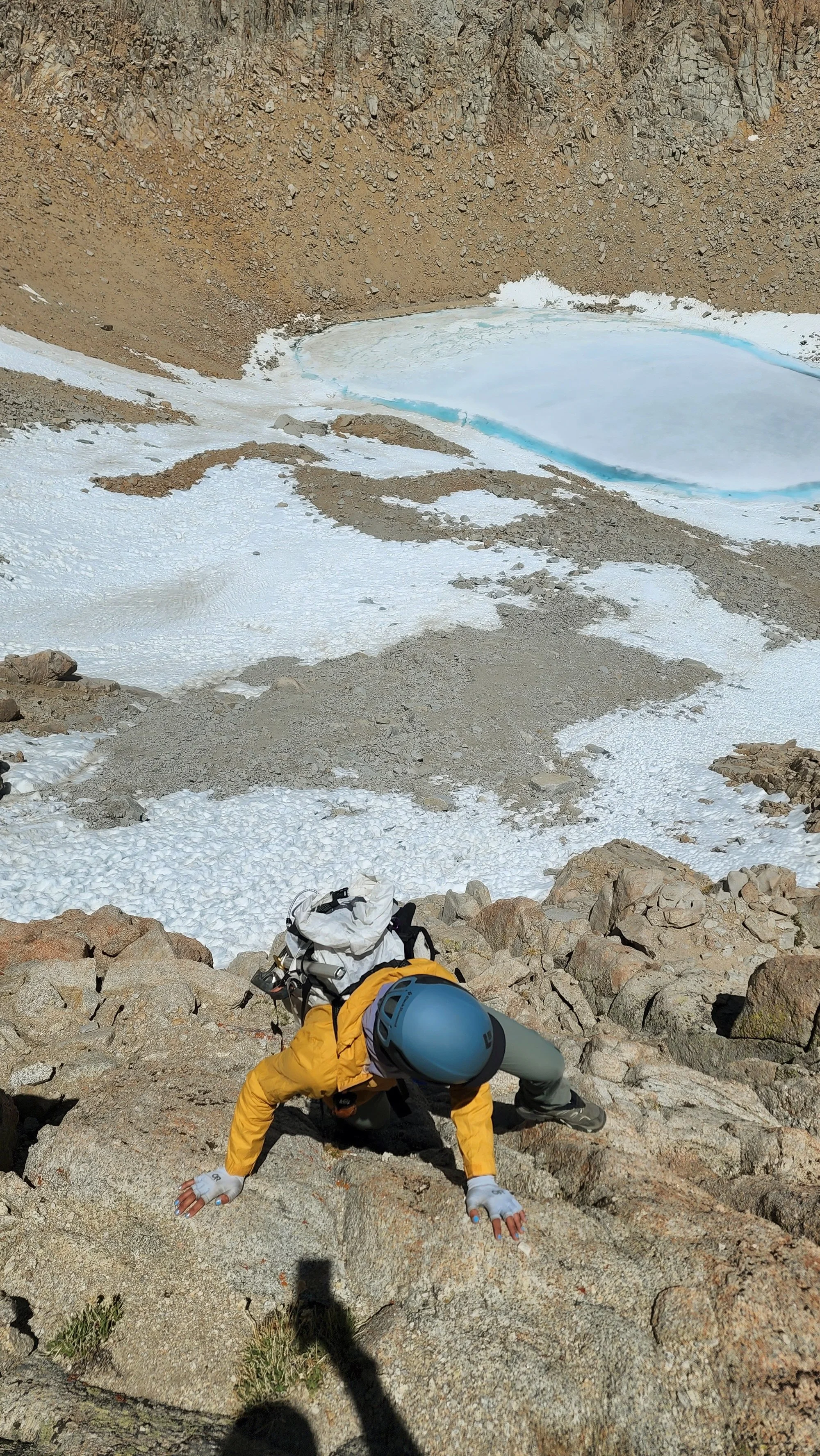
We reached the top of the chute, and with the windchill, it was absolutely freezing. The cold cut straight through us, making even a short stop uncomfortable. After a quick break to regroup, we pulled ourselves together and got ready for the Final 400.
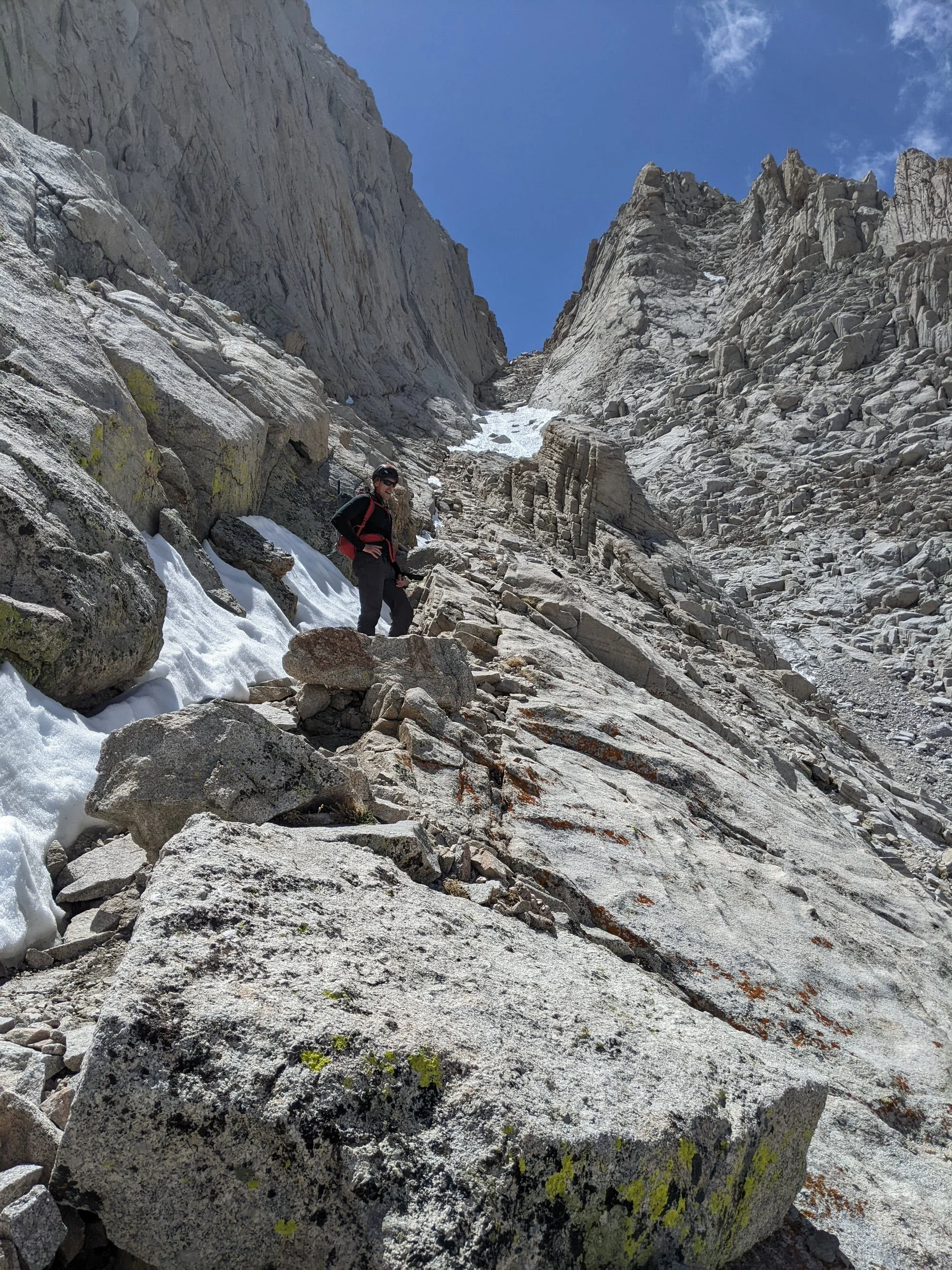
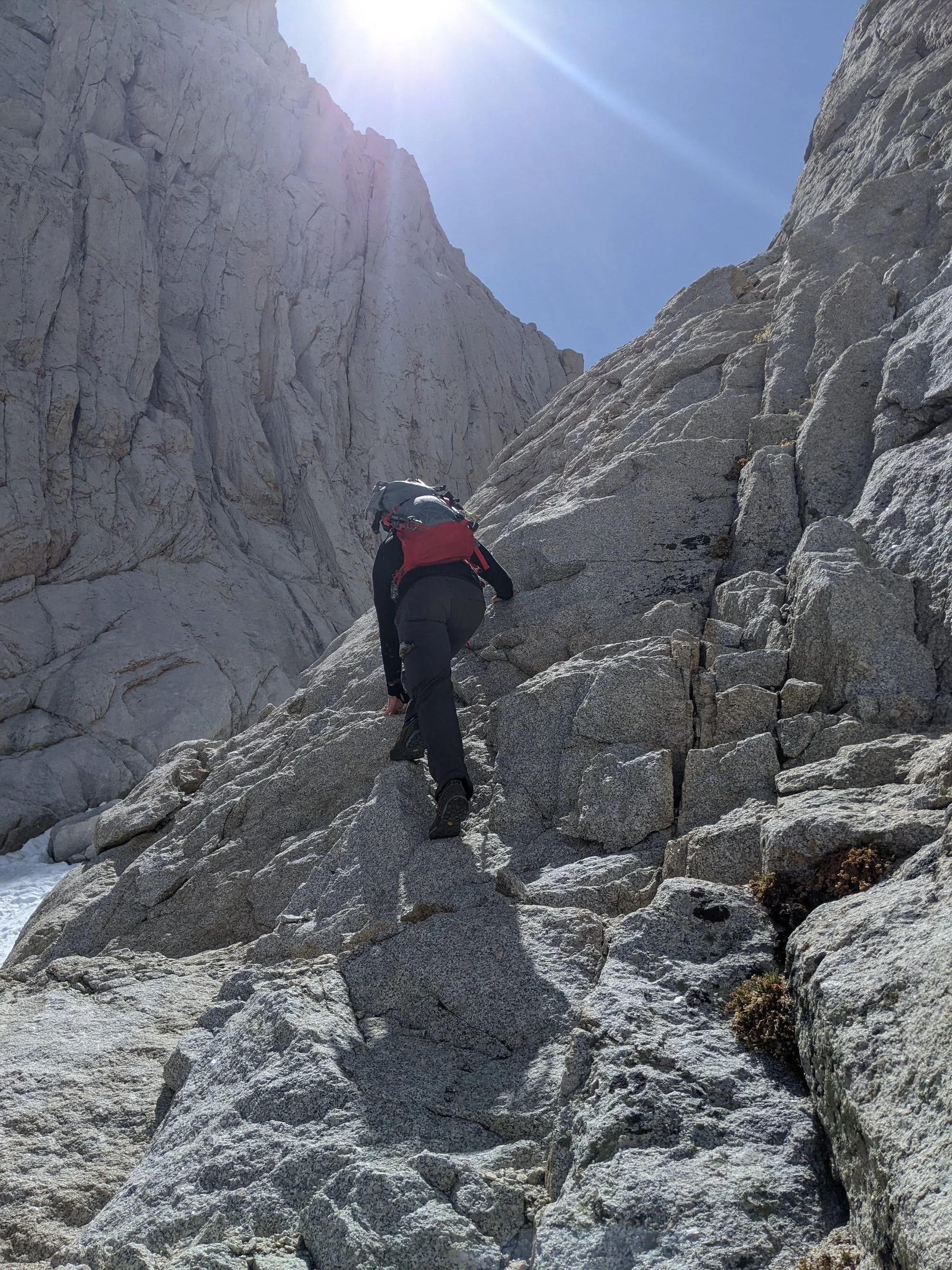
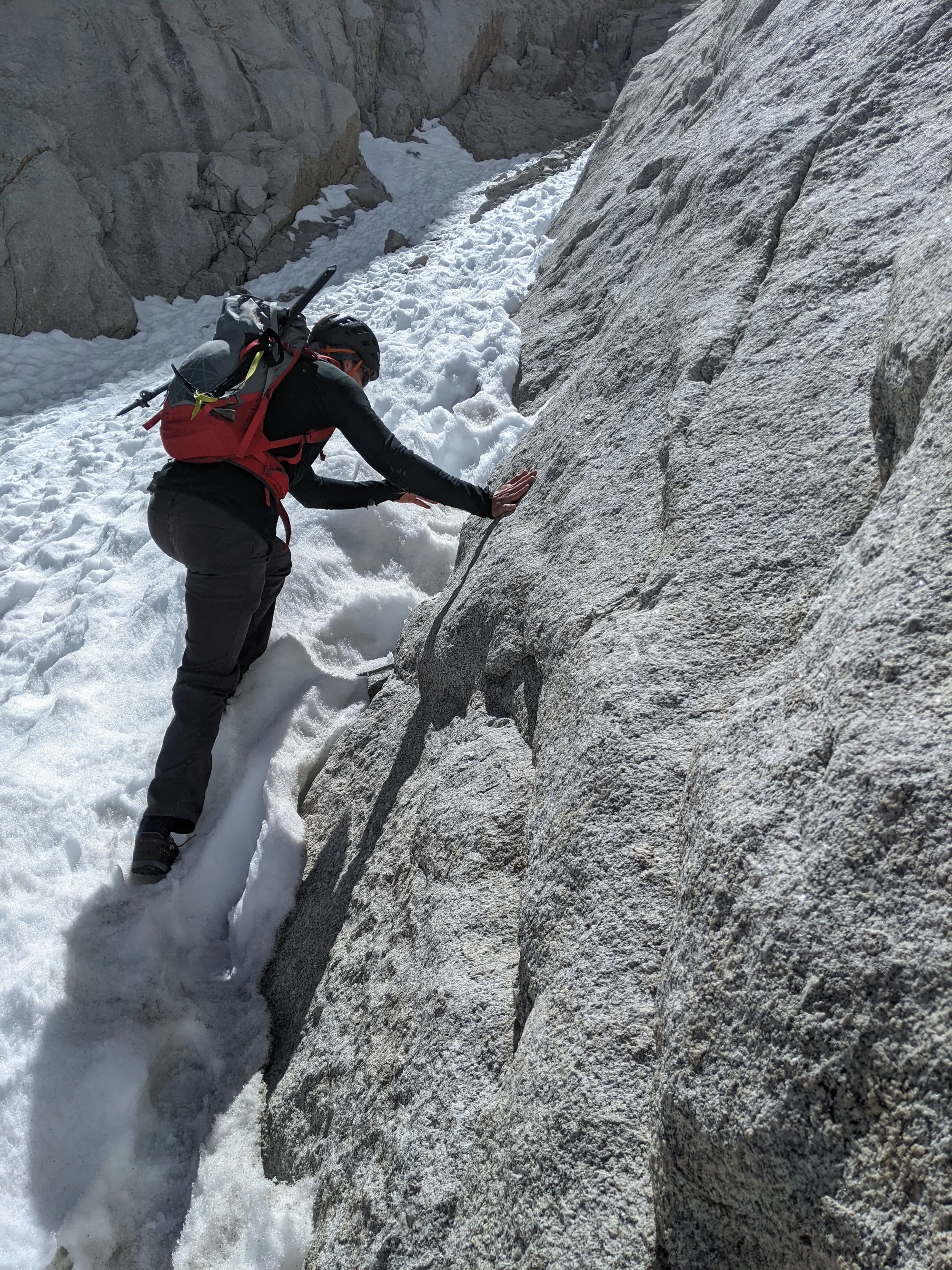
The “Final 400” delivered one last burst of spice on the Mountaineer’s Route. By this point, we had gained over 6,000 feet in less than five miles, and it had been nearly 12 hours since I’d woken up.
Looking back, especially after descending via the main trail, I don’t think I’d ever choose to go up the switchbacks and back down again—unless speed was the goal. I found them monotonous and surprisingly draining, more of a mental grind than a physical challenge.
I remembered the start of the Final 400 requiring a few big, committing steps, but after that, the climbing felt fairly straightforward—fun, exposed, and exactly the kind of movement I had been hoping for.
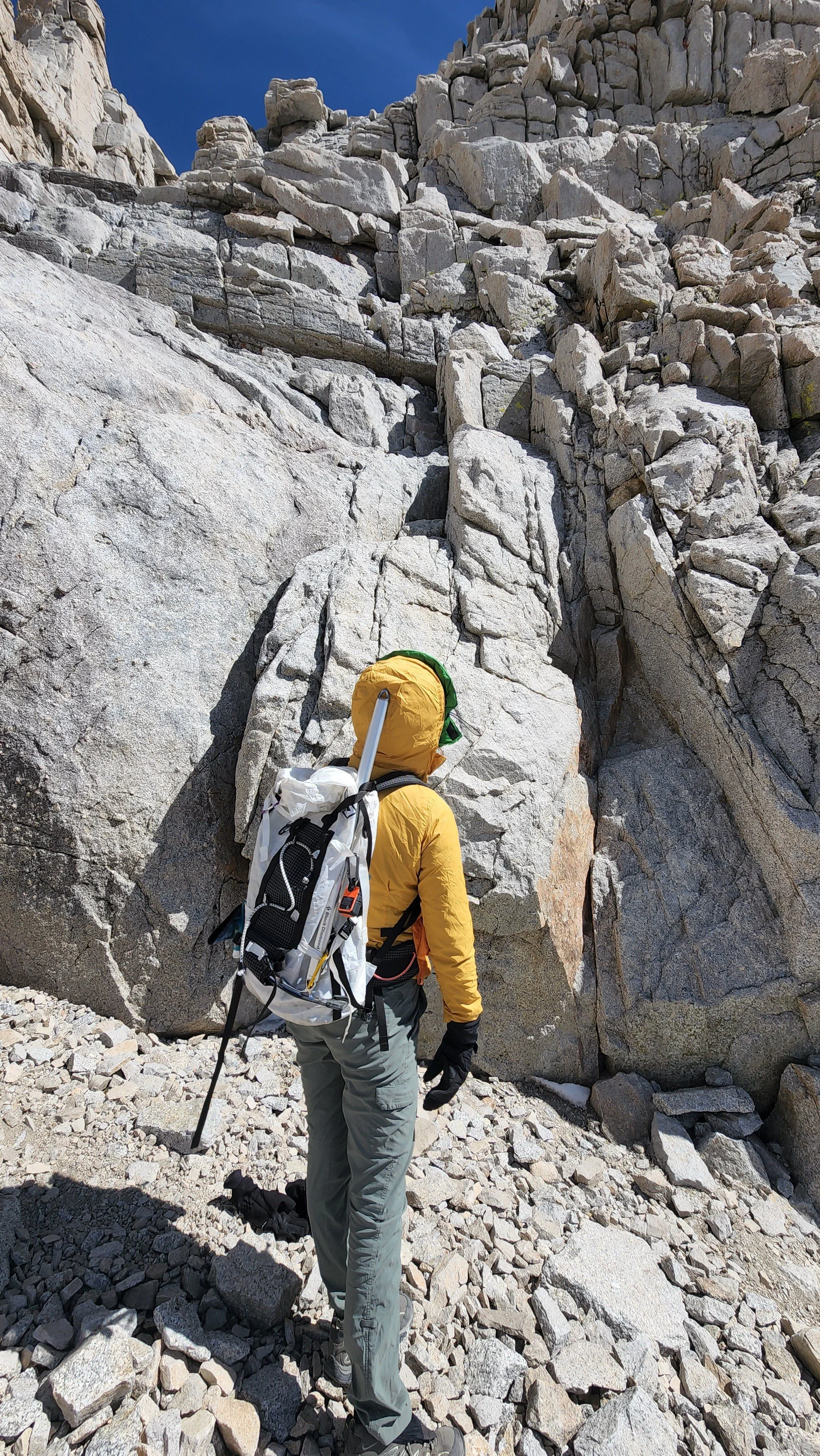
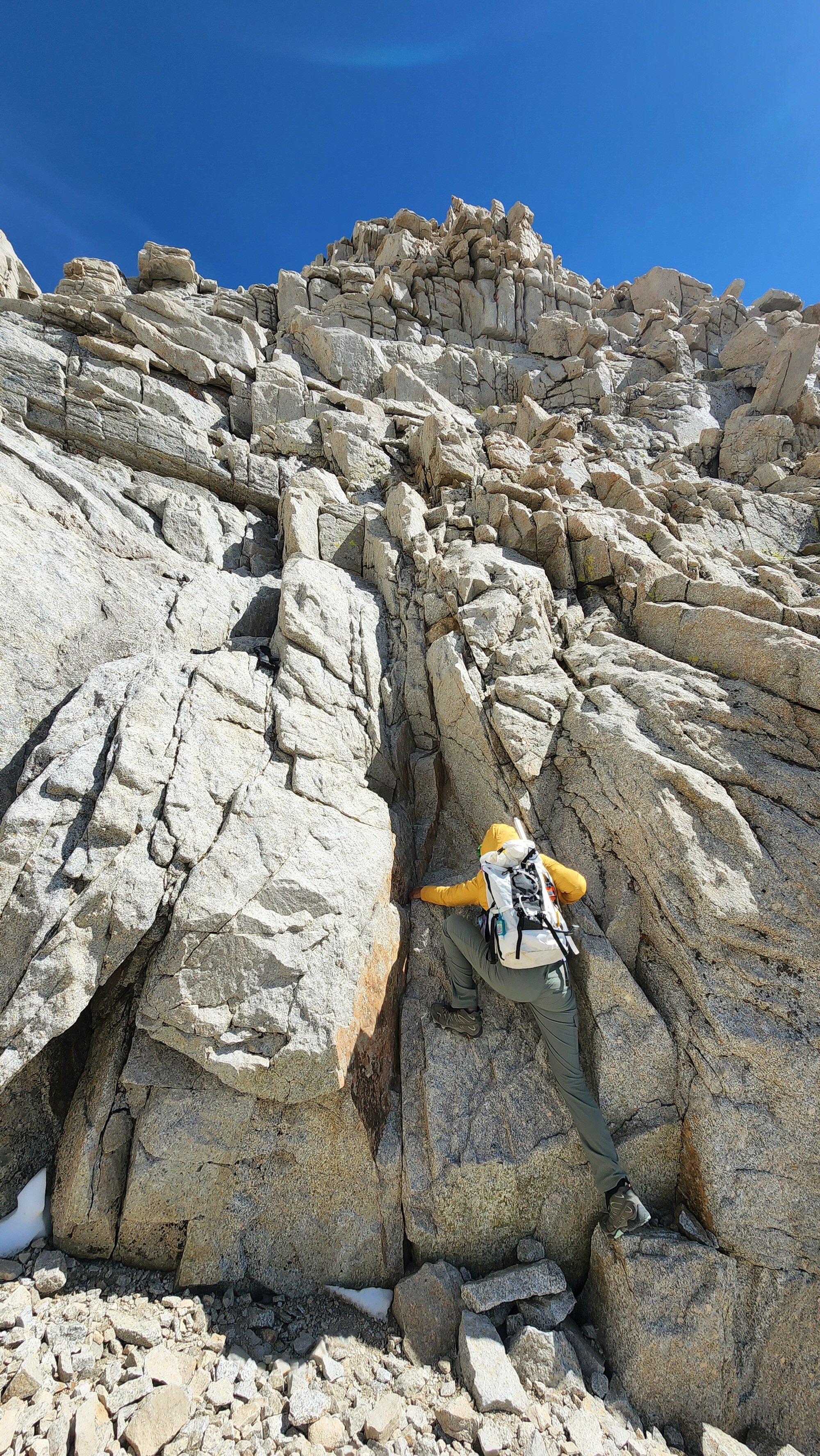
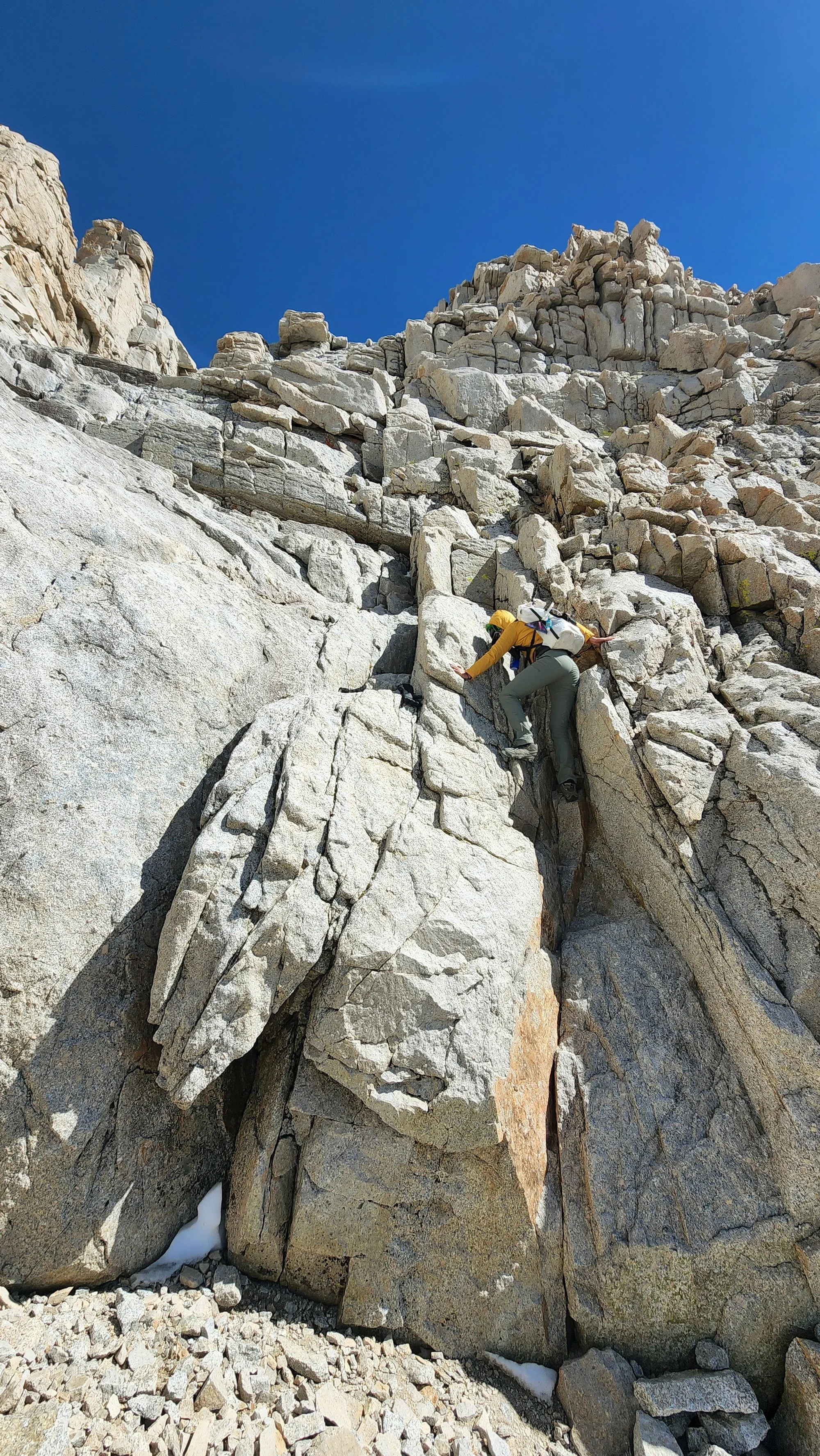
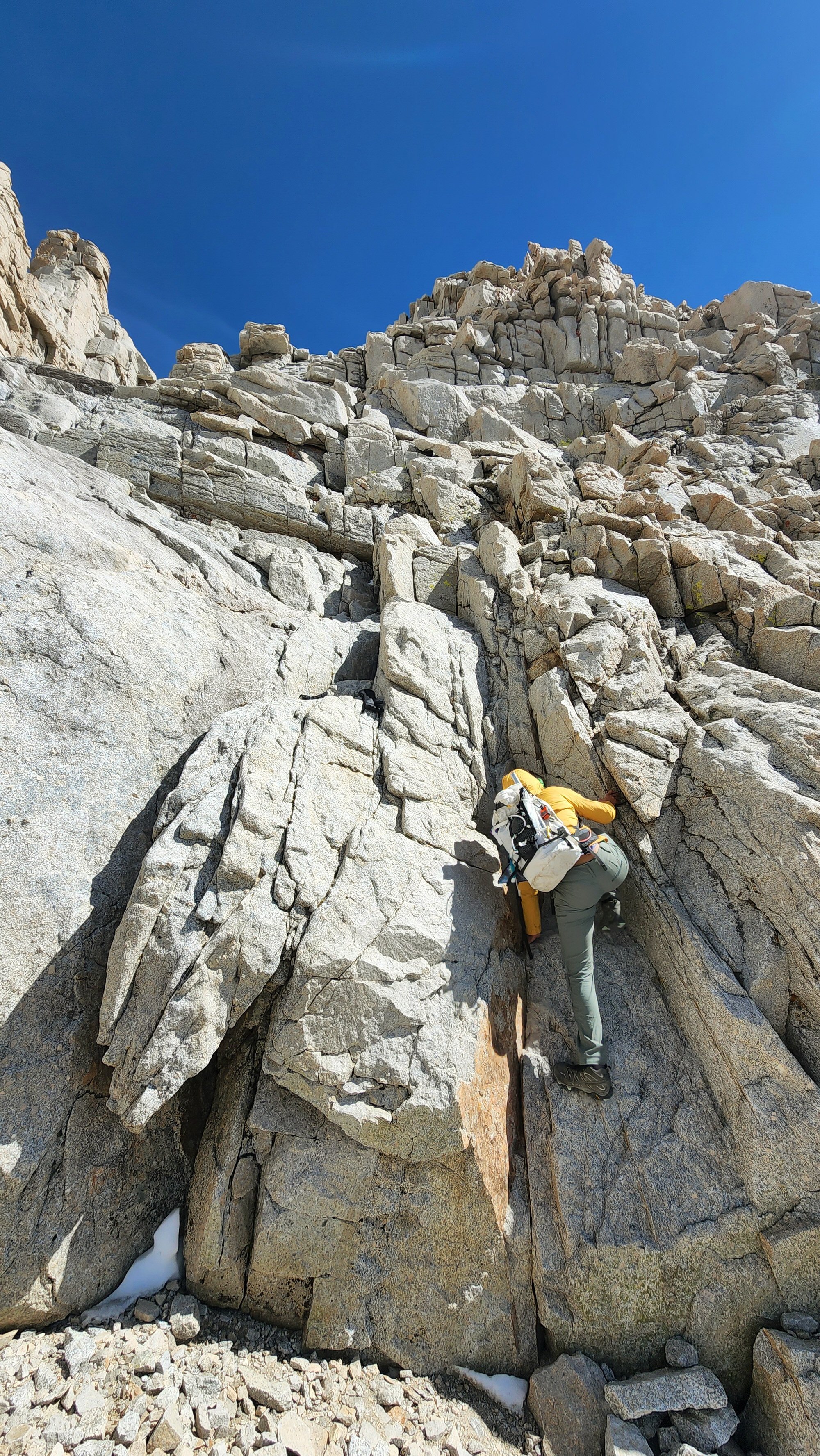
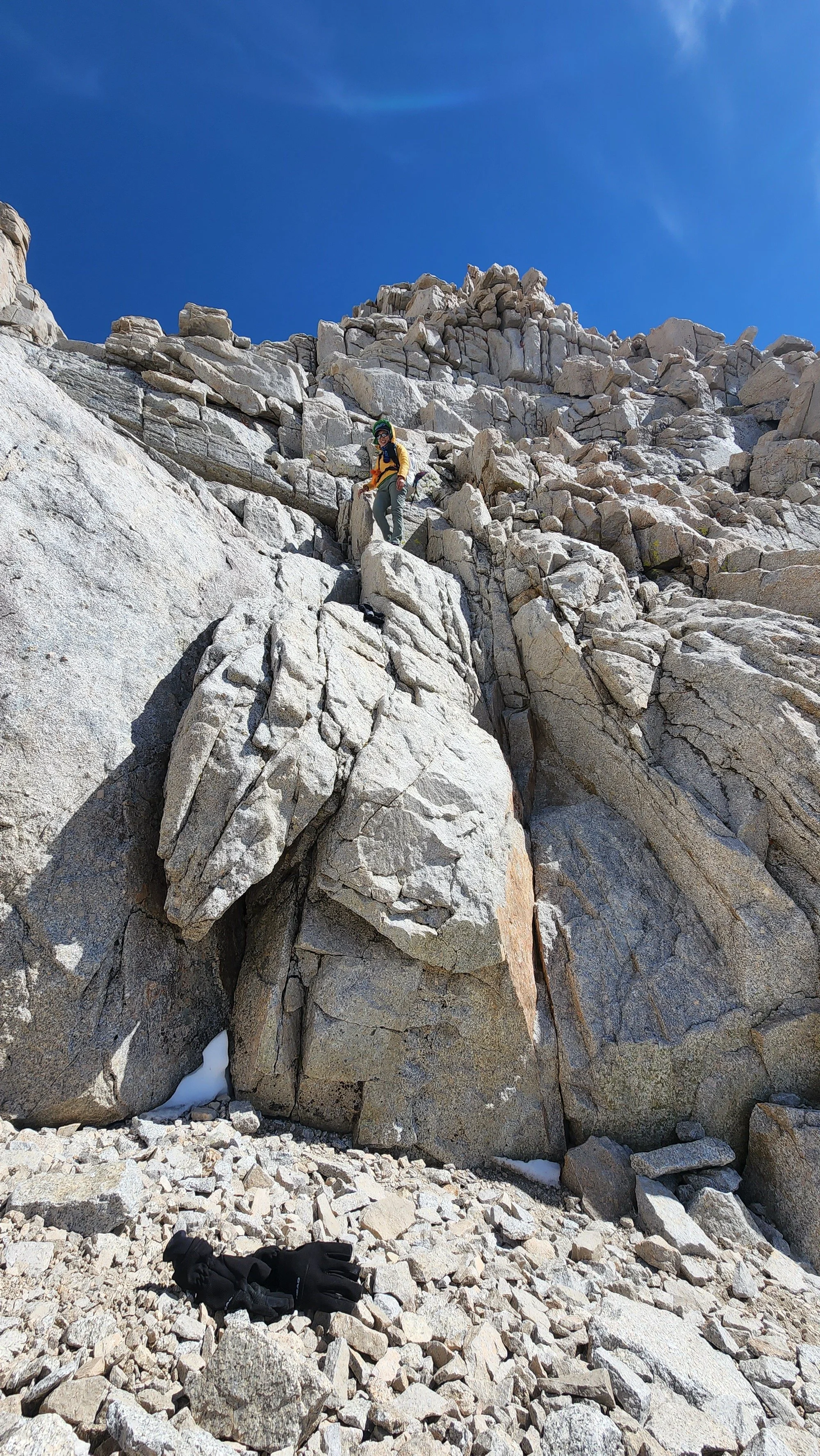
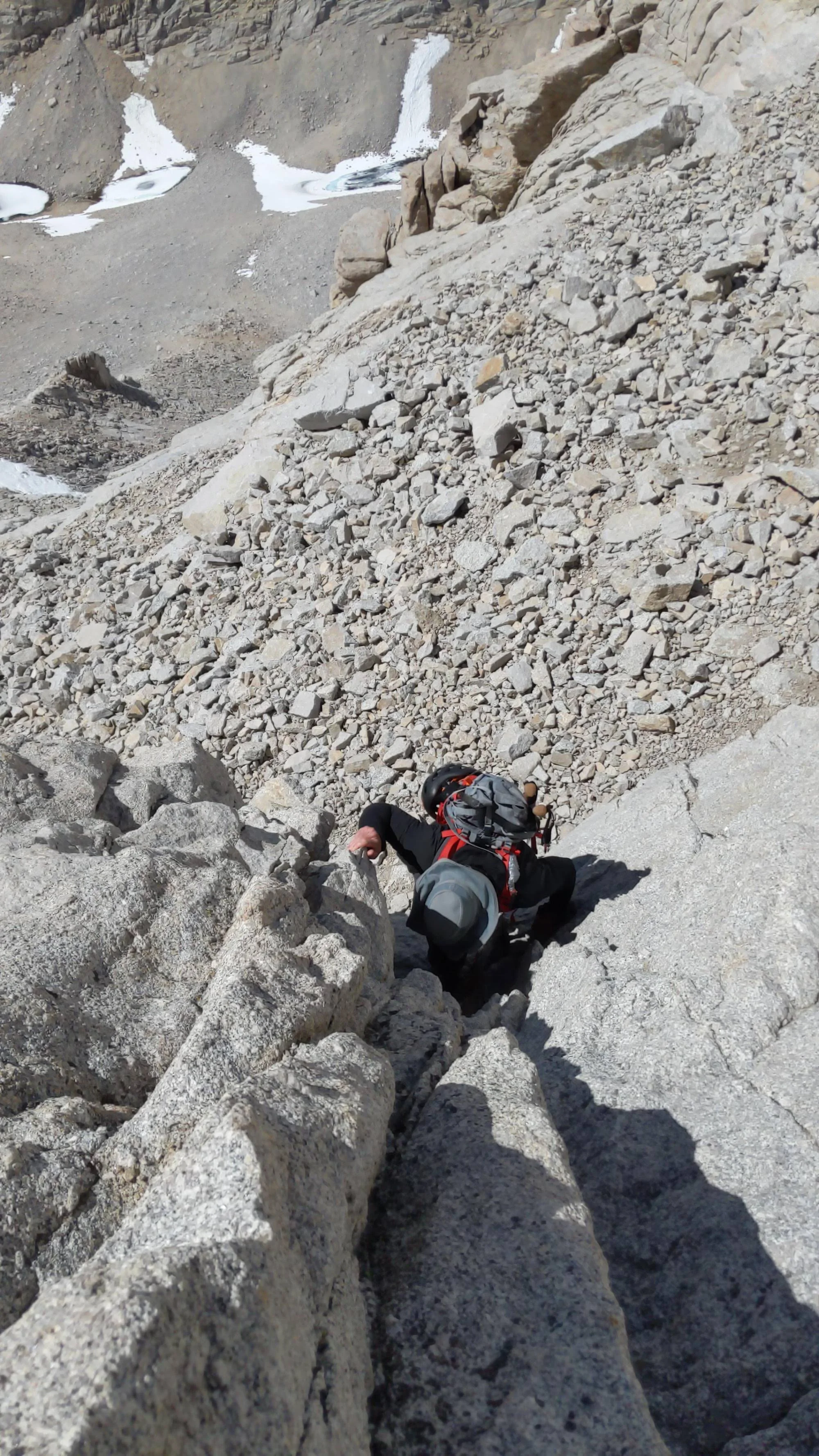
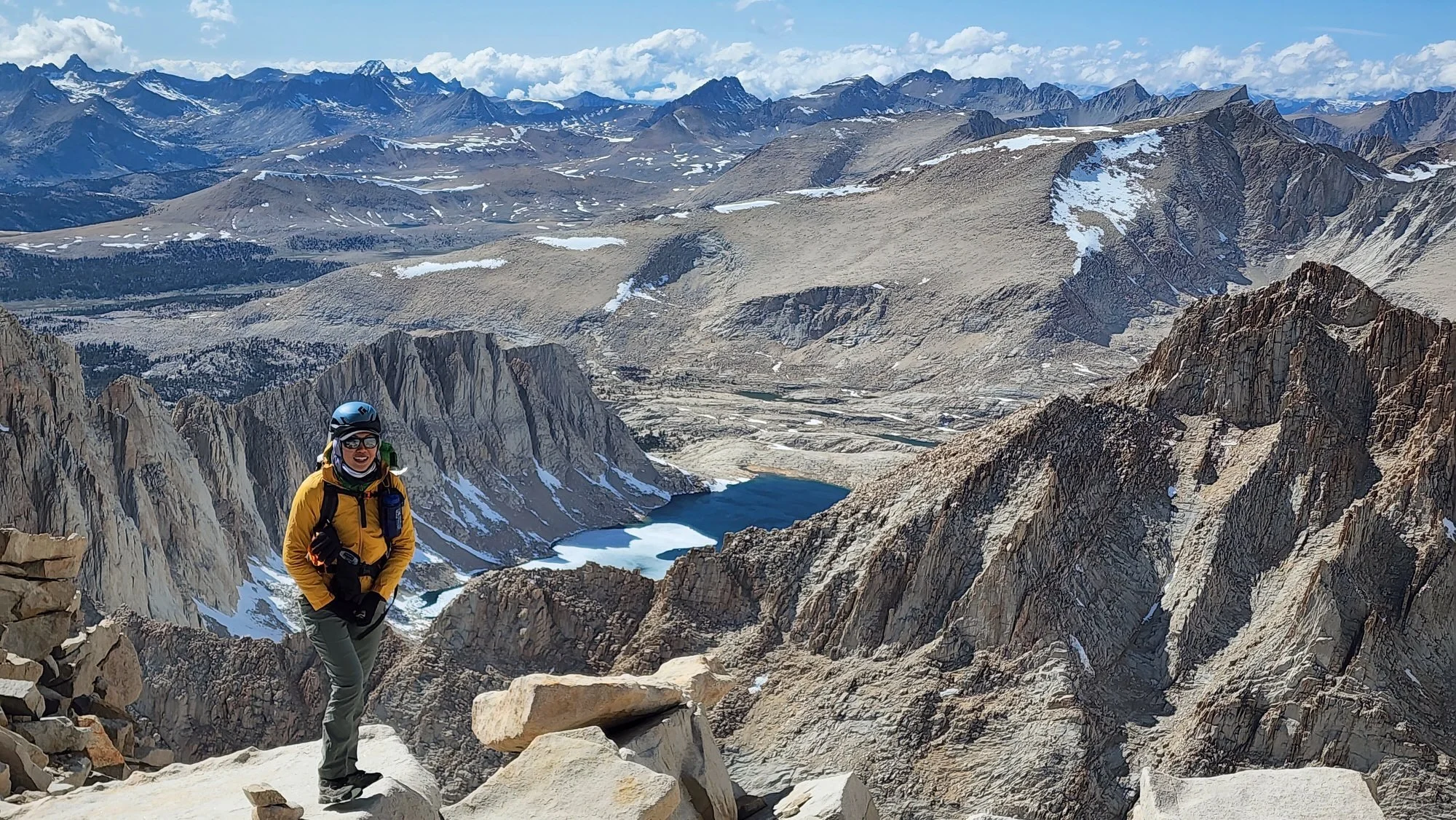
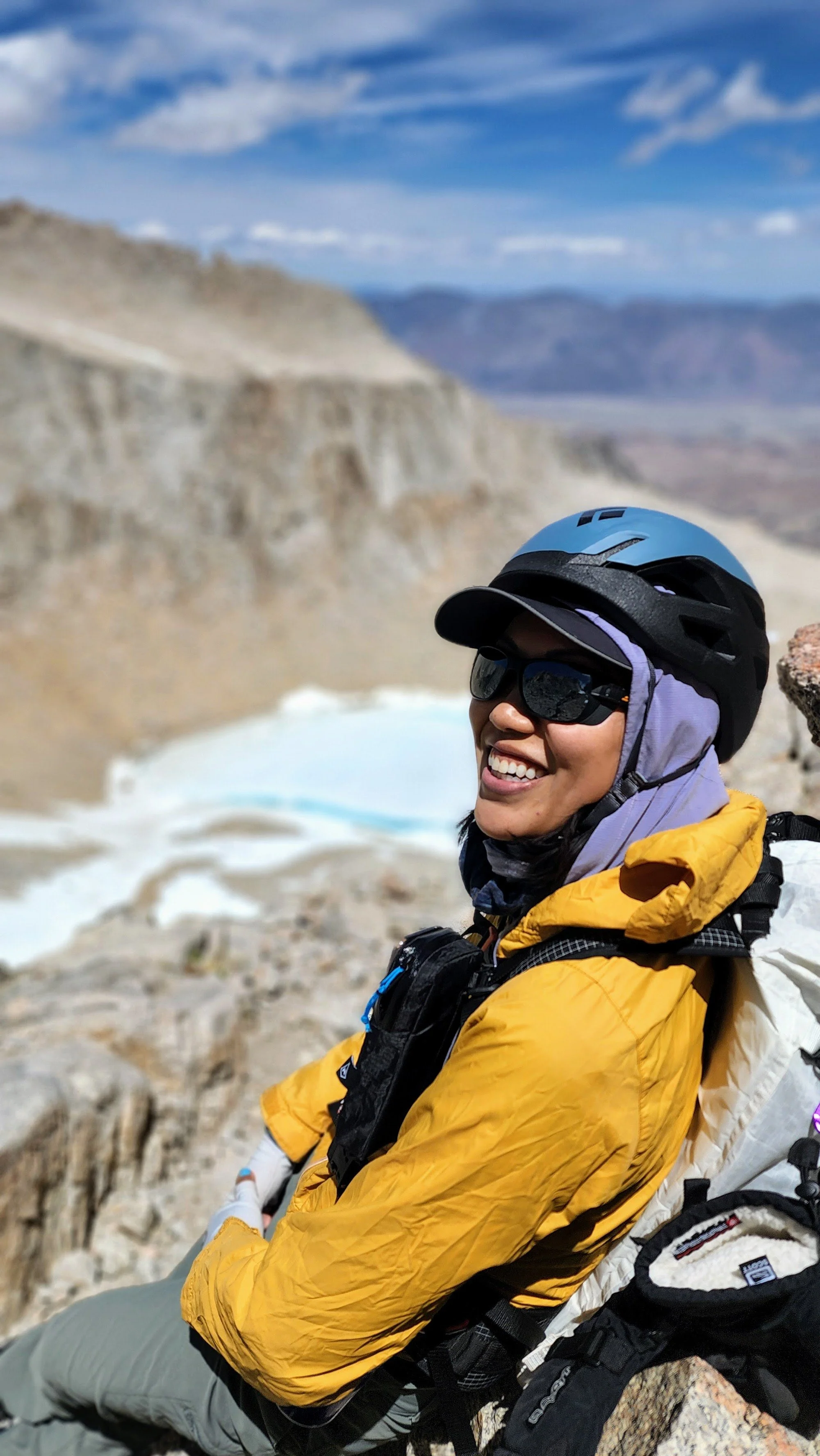
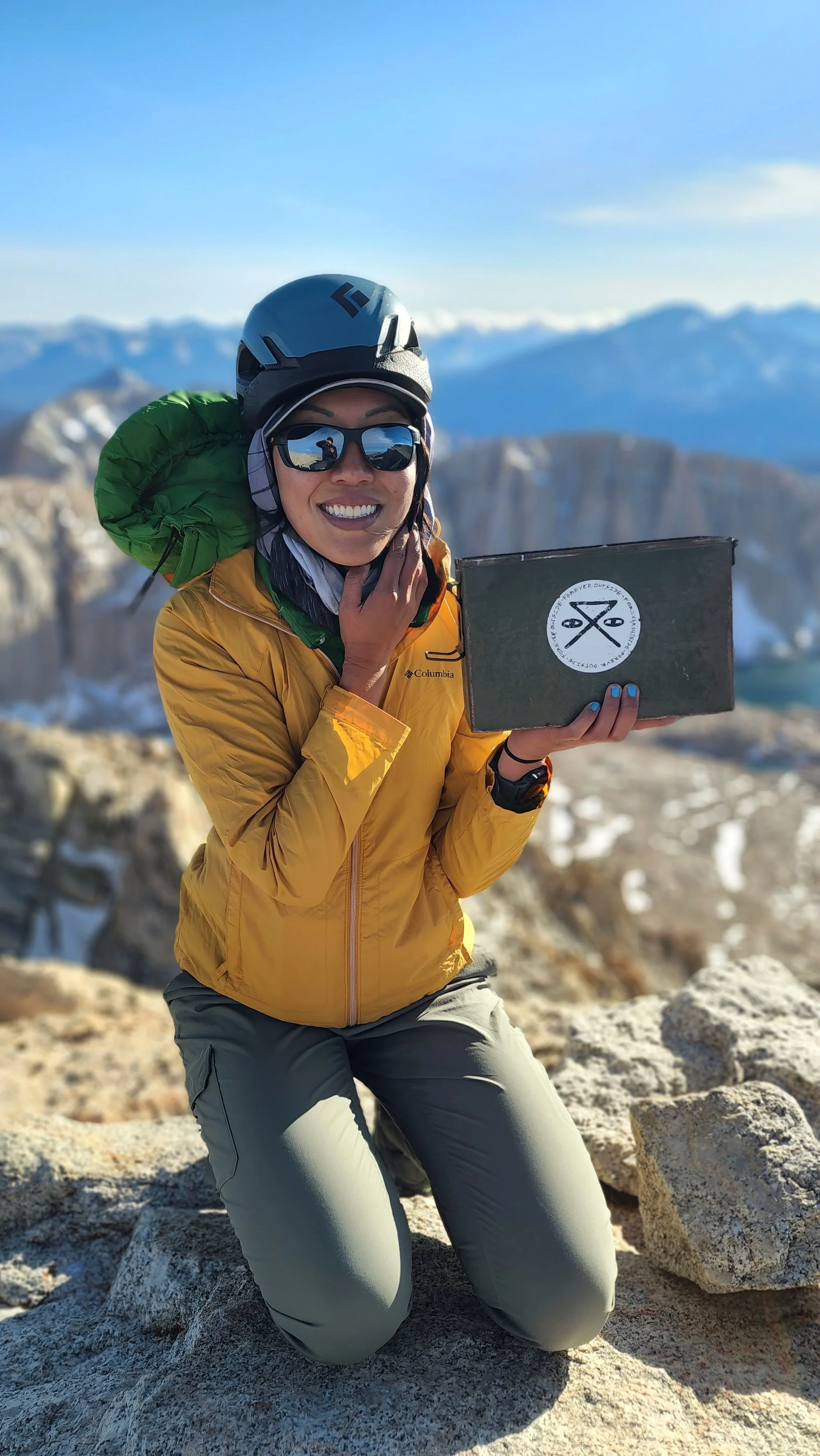
Atop of Whitney at 14505', the highest point in the continental US, I was thrilled to have made it to the top of the ascent, and was expecting to be flooded with emotions. But I knew instantly that the 'fun' was over, and that today, the journey was more meaningful than the destination.
We summitted Whitney at 4:30 PM and had the entire peak to ourselves for a brief minute. The wind was blowing relentlessly from the southwest at 20 to 30 mph, and the temperature felt like it was in the low 20s. Having been freezing for the last two hours of the climb, I prayed I wouldn't lose what little energy I had left to shivering on the descent.
From there, we took the Main Trail to the JMT, keeping an eye out for loose sand, scree, and signs of cross-country travel on the left side of the trail. There are no signs marking the start of the route; it’s a Class 2 scramble leading to a couple of Class 3 moves on the summit block. We summitted Mount Muir at 6:30 PM as the wind continued to howl at over 25 mph.
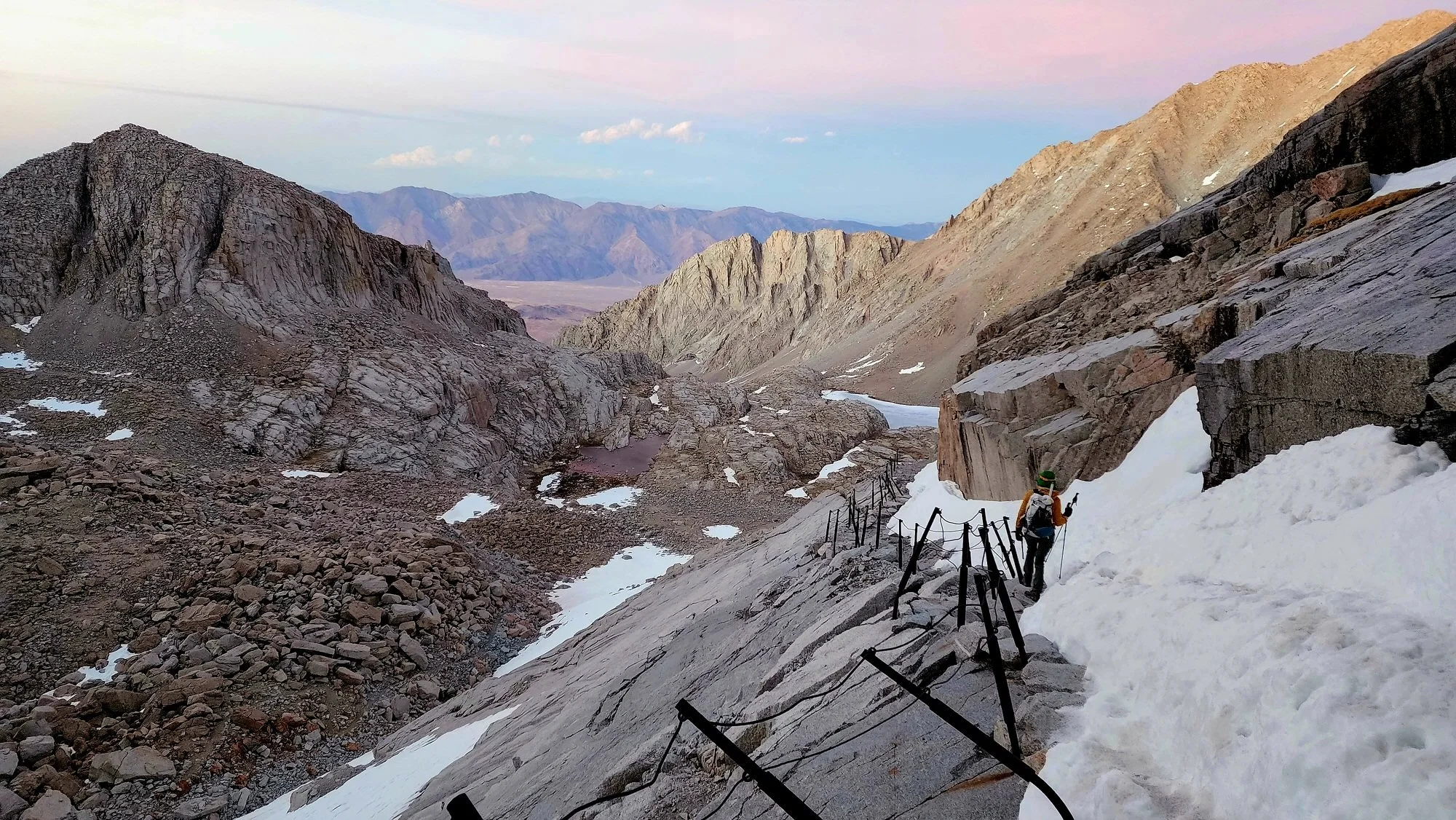
Passing the cables and heading back down was straightforward, but my body was thoroughly chilled from enduring the high winds and 20-degree weather since the afternoon. In hindsight, I should have packed another layer or two and forced myself to drink more water. Around 8 PM on the descent, a bout of AMS hit me, and I threw up twice. We finally finished at 2 AM, wrapping up a glorious, grueling 21-hour day!
I have gained a whole new respect and admiration for anyone who has climbed Mount Whitney, regardless of the route. It is incredibly difficult, and it requires a heightened level of physical and mental strength, stamina, and focus.
There are ordinary goals, and there are reach goals. A reach goal is any type of goal that can’t be achieved without extraordinary effort. It’s a goal that can be set knowing that you may try your hardest — and still come up short.
With a reach goal, the bar is set well beyond those ordinary limits — and then find out how far you can actually go.